
Defence
A Wake-Up Call for HAL: The Real Cost to India’s Aerospace Future
An in-depth look at how limited technology transfer, reduced HAL involvement, and urgent squadron gaps could shape India’s future

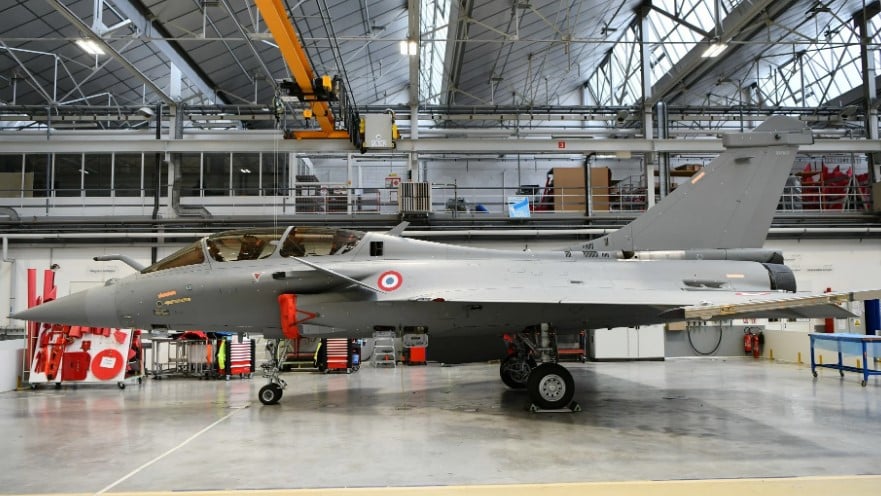
India is moving ahead with plans to acquire around 114 Dassault Rafale fighters from France’s Dassault Aviation — a deal that could become one of the largest defense procurements in the country’s history.
But alongside the scale of this acquisition, a major debate has emerged. Reports suggest that Dassault may prefer working with private Indian partners instead of Hindustan Aeronautics Limited (HAL) for production in India. If HAL is left out of a significant role, it raises serious questions about the future of India’s indigenous aerospace development.
If HAL is sidelined from full-scale production, India’s share in research and development (R&D) will significantly shrink. Without meaningful technology transfer, India will not gain deep design knowledge, source codes, radar algorithms, or core systems expertise.
That means we will remain dependent on the original manufacturer and will not be able to independently innovate, modify, or upgrade the platform in the future.
If production shifts primarily to private joint ventures where Dassault maintains majority control, then India’s role may be limited to assembly or low-value manufacturing work.
Dassault has clearly emphasized that aircraft coming from its production lines guarantee 100% quality output. In the current structure being discussed, 18 jets would come fully built from France, while the remaining aircraft assembled in India could be handled largely through private sector partnerships rather than HAL-led production.
From a long-term aerospace development perspective, this could be seen as a setback for India’s indigenous capability building. Reports suggest Dassault prefers to limit deep involvement of Indian public sector entities in sensitive systems. If there is no real technology transfer — no source code sharing, no design control, no high-end R&D participation — then India remains only a buyer, not a co-developer. That could weaken the broader “Make in India” vision in the defense aerospace sector.
Another important factor is negotiation leverage. When purchases are made urgently due to squadron shortages, the buyer’s bargaining power reduces. When time pressure exists — like India’s current squadron gap in the Indian Air Force — negotiations become less flexible. Price, technology transfer, local manufacturing depth, and long-term industrial benefits become harder to negotiate effectively.
There is no doubt that Dassault has become one of the world’s leading exporters of the Rafale, and the Rafale itself is a highly capable fighter aircraft. Its performance and combat capability are not in question. However, when other countries negotiate such deals, they often secure stronger industrial participation and technology clauses. Ideally, agreements and contracts should be structured with a long-term strategic vision, not just immediate operational urgency.
Fighter jets are extremely complex and expensive systems. Any mistake in contract structure today can create long-term economic burdens. Maintenance, upgrades, spares, and lifecycle costs will continue for decades. Without sufficient domestic capability, India could face financial strain in sustaining such fleets.
For HAL, this situation should serve as a major lesson. HAL has been a pillar of India’s aerospace sector for over four to five decades. A large portion of the Indian Air Force’s fleet — including platforms built under license from Russia like the Su-30MKI — has relied on HAL’s manufacturing and maintenance network. HAL has strong experience in licensed production and MRO (Maintenance, Repair, Overhaul) ecosystems.
However, when it comes to production efficiency, timelines, and quality assurance benchmarks, HAL has faced criticism in the past. Delays and cost overruns have affected its reputation. Moving forward, HAL must improve efficiency, transparency, quality control, and delivery timelines if it wants to compete in large global defense contracts.
At the same time, this is not about nationalism or whether HAL “deserved” the contract. The real issue is capability. HAL must demonstrate why it should be trusted with full-scale production responsibility. It must prove it can deliver on time, maintain global quality standards, and protect sensitive technologies.
For the Indian government, this is also a strategic lesson. Buying fighter jets purely with money is not enough. Long-term national interest lies in developing indigenous production capability. Contracts should not be rushed due to short-term operational gaps. Instead, they should be negotiated after detailed research, with strong industrial conditions placed before the seller.
When there is time and preparation, negotiations are stronger. When purchases are urgent, leverage weakens. India must learn to balance immediate defense needs with long-term industrial growth.
In the end, the real question is not whether Rafale is a good jet — it certainly is. The real question is whether India is building long-term aerospace independence or remaining dependent on foreign suppliers.
For more aerospace news, check out JetlineIntel.
Want to buy aviation merchandise? VisitJetshop.in.
To read Jetlinemarvel’s updates on Google News, head over to Google News.



