
Aviation
US Sells the F-35 Pitch to Riyadh—Israel Says No

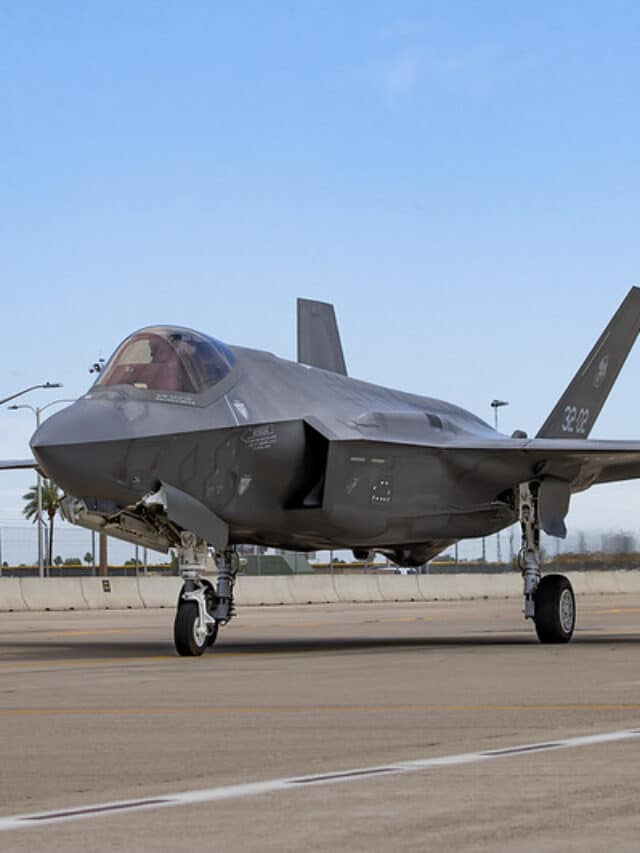
Saudi Arabia continues to weigh its fighter jet options, even as the United States and Lockheed Martin keep the F-35 Lightning II firmly in the conversation.
At World Defense Show 2026 and India’s major defence expo held from 8–12 February 2026, the F-35 featured prominently—but in a manner that was strategic, promotional, and symbolic, rather than indicative of any immediate sale or delivery.
Lockheed Martin went a step further by displaying a full-scale mock-up of the F-35 painted in Royal Saudi Air Force markings—the first public presentation of its kind tailored specifically to Saudi interests. This was widely interpreted as a calculated signal aimed at reviving long-discussed export prospects.
The event also included F-35 flyovers and aerial demonstrations. While some reports suggested that “Saudi F-35s” opened the show, these aircraft were U.S.-operated demonstration jets, intended to showcase future capability rather than confirm Saudi ownership.
Despite the growing visibility, the F-35 is not yet cleared for sale to Saudi Arabia. Although President Trump reportedly approved the principle of an F-35 sale to the Kingdom in late 2025, Washington remains divided over exporting fifth-generation fighters deeper into the Middle East. Any deal would require formal U.S. government approval, Congressional notification, technology-security agreements, and regional consultations. As of now, Saudi Arabia is not an official F-35 operator or program participant, and no delivery timeline exists.
As part of broader U.S.–Saudi strategic defence discussions, reports suggest a possible initial order of 24 to 48 aircraft, with follow-on purchases left open. However, Israel remains a decisive factor. To preserve Israel’s Qualitative Military Edge (QME), any Saudi F-35—if approved—would likely be a restricted export configuration, lacking the highly customized software, sensors, and mission systems fielded by the Israeli Air Force.
Meanwhile, Saudi Arabia is actively diversifying its fighter acquisition strategy. Talks are ongoing with Turkey over the KAAN fifth-generation fighter, although the program’s engine selection is still unresolved. Parallel discussions with France over advanced combat aircraft further underline Riyadh’s hedging approach—keeping multiple options open rather than relying solely on Washington.
The heavy F-35 presence at WDS 2026, including Lockheed Martin’s booth with cockpit demonstrations and integrated systems showcases involving THAAD and PAC-3, reflects a classic U.S. export playbook: maintain momentum, reinforce strategic alignment, and highlight localization opportunities under Saudi Vision 2030. It signals intent and industrial partnership—even if final approval and deliveries remain distant.
While the United States currently lacks major new fighter jet contracts in the Middle East, Saudi Arabia remains one of Washington’s closest defence and security partners, particularly in arms sales, sustainment, and long-term services. That enduring relationship explains why the F-35 pitch is still very much alive, despite political, regional, and technological constraints.
For now, the Saudi F-35 story remains unresolved—high on symbolism, strong on strategic messaging, but still navigating a long and complex approval process.
For more aerospace news, check out JetlineIntel.
Want to buy aviation merchandise? VisitJetshop.in.
To read Jetlinemarvel’s updates on Google News, head over to Google News.
