
Defence
India’s 114 Rafale MRFA Deal Explained: Strategy, Cost & Challenges
India’s plan to acquire 114 Rafale fighters could transform IAF strength, but high costs and limited source-code access raise long-term questions on self-reliance and strategic autonomy.

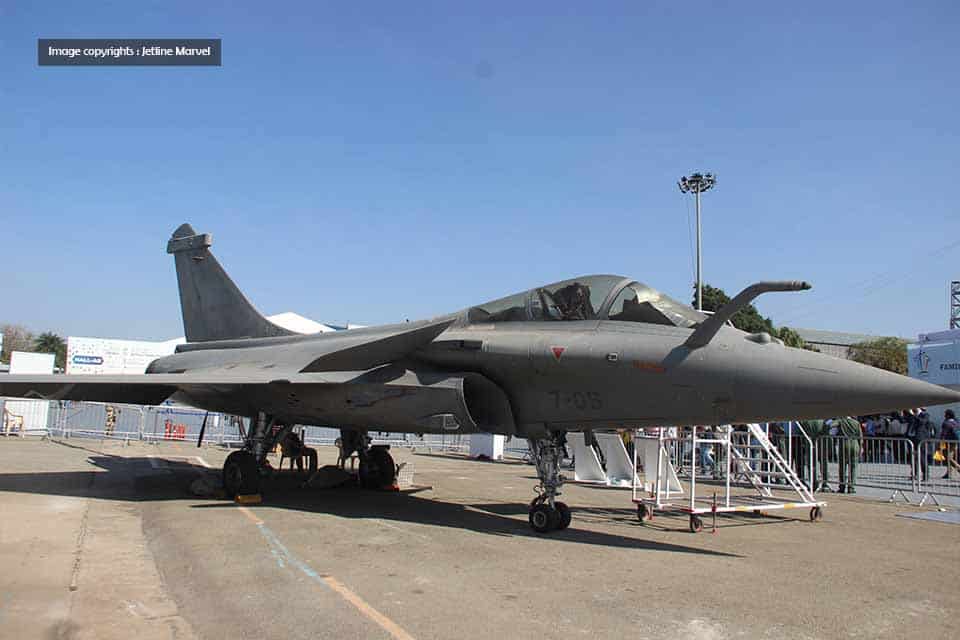
India is finally moving forward with its long-delayed acquisition of 114 Multi-Role Fighter Aircraft (MRFA), and all indications now suggest that the Dassault Rafale has emerged as the preferred choice.
This tender, issued nearly three years ago, remained under intense debate, with multiple global fighters competing for the contract. The latest signals, however, point toward a major breakthrough for the Indian Air Force (IAF).
If finalized, the deal would involve the acquisition of 114 additional dassault rafale fighter jets from France through a government-to-government agreement, significantly expanding India’s frontline combat aviation capability.
Why the MRFA deal matters
The MRFA program is designed to address the IAF’s critical fighter shortage. Currently, the Air Force operates only about 29 squadrons, far below the sanctioned strength of 42-plus squadrons needed to counter regional threats. The induction of 114 new fighters would play a decisive role in restoring operational balance.
India already operates 36 Rafale fighters, which are fully inducted and regarded as some of the most capable aircraft in the region. In addition, India has also placed orders for 26 Rafale M carrier-based fighters for the Indian Navy. This existing experience with the platform has heavily influenced India’s preference under the MRFA program.
Why Rafale is favored again
One of the biggest advantages of selecting Rafale is fleet commonality. The IAF already has:
- Trained pilots and ground crews
- Established maintenance and logistics infrastructure
- Integrated weapons and mission systems
- Operational familiarity with the aircraft
This significantly reduces induction time, training costs, and logistical complexity compared to introducing a completely new fighter type.
Cost and scale of the deal
The proposed deal is valued at approximately Rs 3.2 lakh crore, or USD 36–39 billion, making it potentially India’s largest-ever defence procurement.
The aircraft are expected to be delivered in an advanced rafale F4 or equivalent configuration, with each aircraft estimated to cost around USD 340 million, factoring in weapons, spares, infrastructure, training, and long-term support.
Manufacturing and Make in India
- Around 12–18 Rafale jets are likely to be delivered directly from France in fly-away condition.
- The remaining 96 or more aircraft are expected to be manufactured in India.
Initial indigenous content is expected to be around 30%, with India pushing for higher localization—possibly 50–60% under Make in India. However, such levels remain uncertain due to technology-transfer limitations.
Final assembly is expected to take place at Dassault Reliance Aerospace Limited (DRAL) in Nagpur, while Indian companies such as Tata Advanced Systems are likely to be involved in fuselage production, components, and lifecycle support.
Plans are also underway to establish maintenance, repair, and overhaul (MRO) facilities for the Safran M88 engines in Hyderabad, improving fleet availability and reducing overseas dependence.
Indigenous weapons integration: the biggest challenge
One of the most controversial aspects of the Rafale deal is India’s requirement to integrate indigenous weapons and systems, including Indian-made missiles, avionics, and electronic warfare components.
The core challenge lies in source code access. As per standard Western defence contracts, the source code for Rafale’s core systems remains with France and is not fully shared with customer nations. This restricts India’s ability to independently integrate local weapons without prior approval from Dassault Aviation and French authorities.
While such integrations are technically possible, they require:
- OEM permission
- Joint testing and certification
- Additional costs and extended timelines
This creates long-term dependence on French suppliers, particularly for weapons and missiles, which are typically more expensive than indigenous alternatives.
This issue has been a point of criticism since the original Rafale deal, raising concerns about India’s strategic autonomy and cost sustainability.
Comparison with the Russian model
In contrast, Russia has historically provided India greater access to source codes, particularly for platforms like the Su-30MKI, which is assembled in India.
This openness has enabled India to:
- Integrate indigenous weapons
- Modify avionics domestically
- Conduct upgrades without excessive foreign dependence
A clear example is the integration of the BrahMos supersonic cruise missile on the Su-30MKI, turning it into one of the most lethal strike fighters in the IAF while reducing reliance on imported weapons.
India is now pursuing a domestic upgrade program for the Su-30MKI fleet, further enhancing its combat potential—an approach that is far more difficult to replicate with the Rafale due to tighter OEM control.
Rafale: powerful but less flexible
While the Rafale is an exceptionally capable multi-role fighter, any major modification—whether weapons, sensors, or avionics—requires coordination with French suppliers. This makes upgrades more complex, cost-intensive, and politically sensitive, especially during geopolitical uncertainty.
As a result, Rafale operations may remain more tightly tied to the French weapons ecosystem, limiting India’s ambition for complete self-reliance in combat aviation.
Strategic timeline and geopolitical context
High-level discussions on the 114 MRFA deal are ongoing. Key momentum was seen during mid-January 2026, with further progress expected during French President Emmanuel Macron’s visit to New Delhi in February 2026, coinciding with an AI summit.
Formal approval could follow by late 2026 or early 2027, pending clearance from the Cabinet Committee on Security (CCS). Strategically, Rafale serves as a bridge capability, filling the gap until indigenous programs such as LCA Mk1A, LCA Mk2, and eventually the AMCA mature and enter operational service.
Recent operational experience, including missions like Operation Sindoor against Pakistan, has further reinforced confidence in the platform.
Why Rafale still wins over alternatives
Despite offers of aircraft such as the US F-35 and Russia’s Su-57, Rafale remains the preferred choice due to:
- Existing infrastructure and logistics
- Faster induction timelines
- High serviceability rates (reported up to 90%)
- Combat-proven reliability
India’s Rafale fleet at a glance
- 2016: India acquired 36 Rafale fighters for approximately ₹58,000 crore (all delivered).
- 2025: India signed a deal for 26 Rafale M fighters for the Indian Navy at around ₹63,000 crore (USD 7.5 billion), with deliveries expected from 2029.
If the MRFA deal is finalized, India’s total Rafale fleet will rise to 176 aircraft:
- 36 with the IAF (existing)
- 114 additional IAF fighters
- 26 Rafale M for the Indian Navy
This would make India one of the largest Rafale operators globally outside France.
Conclusion
There is no doubt that the rafale f4 is one of the most advanced and combat-proven fighter jets in the world today. It offers India immediate operational strength, high availability, and a powerful deterrent capability.
However, the high acquisition cost, restricted source code access, and continued dependence on foreign weapons ecosystems raise important long-term questions. While Rafale fills a critical capability gap, it also highlights the strategic trade-off between rapid force enhancement and true self-reliance.
As India advances its indigenous fighter programs, the Rafale will remain a crucial—but transitional—pillar of the nation’s air power.
For more aerospace news, check out JetlineIntel.
Want to buy aviation merchandise? VisitJetshop.in.
To read Jetlinemarvel’s updates on Google News, head over to Google News.



