
Defence
Why HAL Was Left Out of the Rafale Deal: The Untold Story
Why was HAL removed from the Rafale program despite decades of fighter jet manufacturing experience, and how could this decision affect India’s aerospace ecosystem, operational freedom, and future air power capabilities?

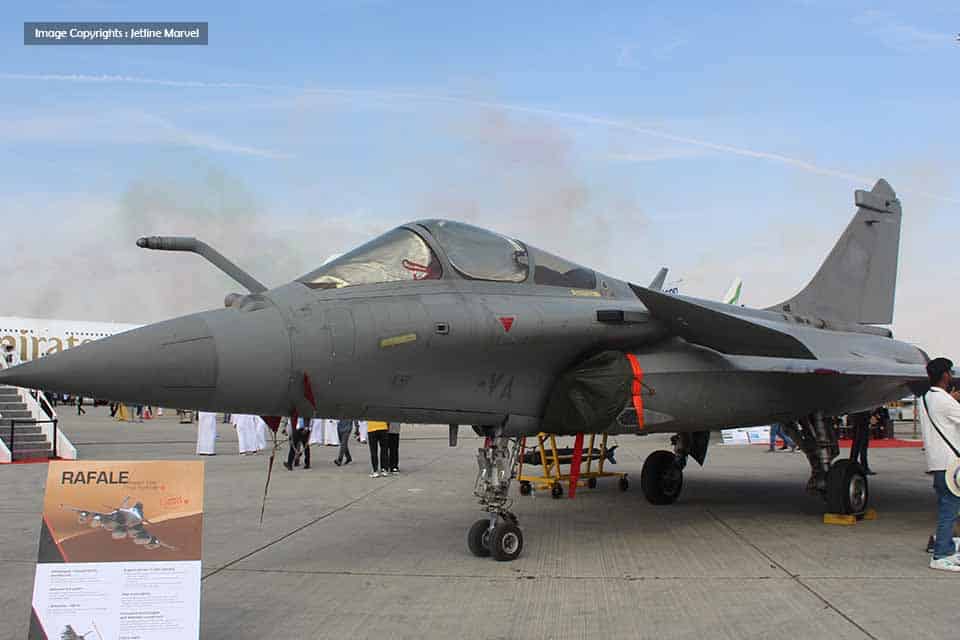
It is increasingly interesting—and controversial—to examine why Hindustan Aeronautics Limited (HAL) was excluded from the Rafale fighter jet deal with Dassault Aviation.
The government’s official explanation was that Dassault was unwilling to take responsibility for aircraft manufactured by HAL, which led to the decision to shift production involvement toward the private sector, specifically the Reliance Group.
However, this justification raises serious questions. HAL is not an inexperienced manufacturer. It has produced over 200 fighter aircraft, including Mirage 2000s, and has built more than 2,000 aircraft such as the Jaguar and the Su-30MKI.
HAL was also Dassault’s long-standing licensed production partner for the Mirage 2000, demonstrating a proven working relationship. Former HAL Chairman T. Suvarna Raju publicly stated that HAL was never consulted before being removed from the Rafale program, which further undermines the rationale behind its exclusion.
The decision becomes even more contentious when viewed through the lens of India’s offset policy. Initially, the offset framework favored participation by public sector undertakings like HAL. However, after the Rafale deal, the policy was tweaked to allow foreign vendors to choose their own Indian offset partners.
This change enabled Dassault to select Reliance Defence, a private firm with no prior aerospace manufacturing experience, which was incorporated only days before the deal was announced. This shift fundamentally altered the industrial and strategic implications of the deal.
By removing HAL from the program, India lost a crucial opportunity for deep technology transfer, strengthening of the domestic fighter manufacturing ecosystem, and long-term self-reliance.
Without HAL’s involvement, there was no meaningful transfer of aircraft design knowledge, source codes, or systems architecture. As a result, India remains permanently dependent on imports for upgrades, maintenance, and spares—contrary to the stated objectives of “Make in India.”
Another major concern is the lack of access to source codes. The Rafale does not provide India with full control over mission systems or avionics software. This severely limits India’s ability to integrate indigenously developed weapons and missiles without seeking repeated approvals from France.
In contrast, platforms like the Su-30MKI allow far greater flexibility due to access to source codes, enabling seamless integration of Indian weapons systems. With Rafale, every new integration becomes a bureaucratic and strategic hurdle.
There are also uncertainties surrounding delivery timelines. While Rafale Marine deliveries are expected for naval requirements, the proposed acquisition of 114 additional fighters remains unclear, with no firm guarantees on timelines.
This creates a capability gap at a time when the Indian Air Force urgently needs numbers, especially until indigenous platforms like Tejas Mk1A and future Mk2 variants become fully operational. The absence of a clear delivery framework adds to operational risk.
From a financial perspective, Dassault Aviation’s scale also invites scrutiny. The company’s total assets are estimated at USD 35–39 billion, with equity of around USD 6 billion. Entering into such a large and strategically critical deal without deeper industrial integration in India raises long-term sustainability concerns—especially when India lacks autonomy over upgrades, weapons integration, and lifecycle support.
In sum, excluding HAL from the Rafale program has created a challenging scenario for India’s defense ecosystem.
The absence of technology transfer, lack of source code access, limited industrial capability building, and continued dependence on foreign vendors may hinder India’s ability to operate and evolve its fighter fleet efficiently in the coming decades. Instead of empowering domestic aerospace manufacturing, the deal risks locking India into long-term operational and strategic constraints.
For more aerospace news, check out JetlineIntel.
Want to buy aviation merchandise? VisitJetshop.in.
To read Jetlinemarvel’s updates on Google News, head over to Google News.



