
Defence
Can India Swap Rafale’s Engine Into Tejas? Here’s the Truth
Despite surface similarities, the Rafale’s M88 engine cannot be integrated into the Tejas without a complete airframe redesign, making it impractical in real-world terms.

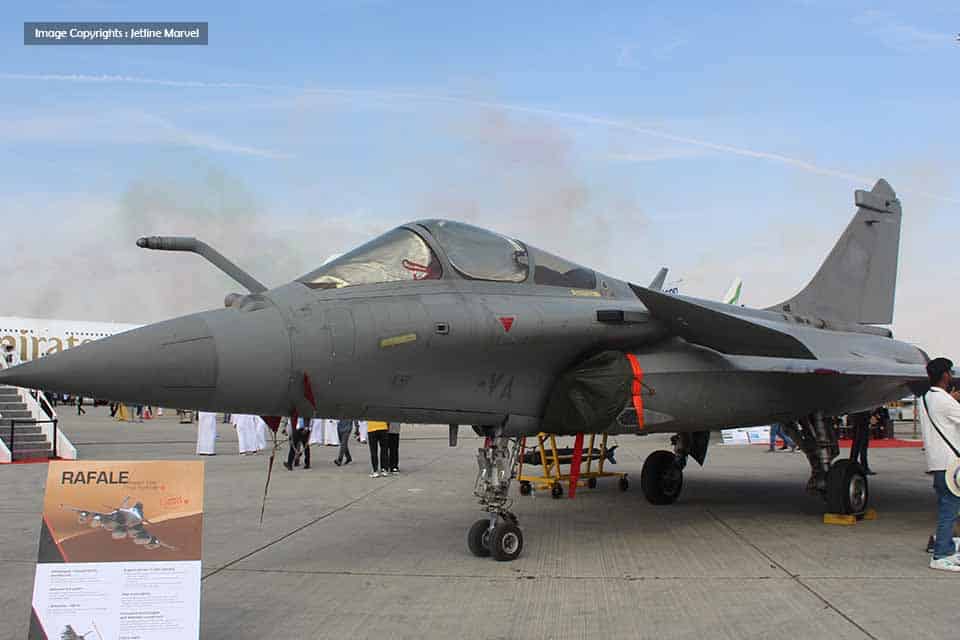
Today we’re diving into one of the hottest questions in Indian defense circles right now: Can we actually fit the Rafale’s M88 engine into the Tejas LCA? Spoiler alert — it’s not as simple as popping it in like swapping a car engine. Let’s break it down step by step!”
First off, let’s compare the two beasts side by side. The Tejas Mk1 and Mk1A run on the reliable GE F404-IN20. That bad boy pumps out around 84 to 85 kN of thrust with afterburner. It’s about 391 centimeters long, roughly 89 centimeters in inlet diameter, and weighs around 1,072 kilograms dry.
Solid performer, but many say Tejas could use even more punch.Now, the Rafale’s standard M88-2? It’s lighter at about 897 kilograms, shorter at around 354 centimeters, and slimmer with a 70-centimeter diameter. Sounds perfect for a smaller fit, right? But here’s the catch — it only delivers about 75 kN of thrust with afterburner.
That’s actually less power than what Tejas already has! Swapping to the stock M88-2 would be a downgrade — worse thrust-to-weight ratio, slower climb, and reduced payload. Not exactly what the IAF is dreaming of.”
“So, direct swap? No way. The engine bay in Tejas is built around the F404 family — and the upcoming Mk2 is locked in for the bigger, more powerful GE F414 at nearly 98 kN. Even though the M88 is physically smaller in some ways, cramming it in would mean major surgery: redesigning mounts, tweaking airflow and intakes, adjusting the exhaust nozzle, shifting the center of gravity, and re-certifying the whole aircraft for safety and performance. We’re talking years of work, massive costs, and delays. It’s not plug-and-play!”
But wait — things get interesting with the newer M88 variants! Safran has been pushing enhanced versions like the M88-4E and the brand-new M88 T-REX, which can hit up to 90–105 kN in recent proposals. That’s much closer to — or even matching — the F414 level. Safran has openly offered these for Tejas Mk2, with talks of local production in India, full tech transfer, and leveraging the new M88 MRO facility in Hyderabad that’s ramping up in 2026.
Fleet commonality with Rafale? Lower maintenance headaches? It sounds tempting, especially with any GE F414 delivery concerns floating around.Still, even these upgraded M88s aren’t a drop-in fix for Mk2. The airframe is designed around the F414’s thrust dynamics, intake angles, and power needs.
Switching engines this late would require airframe mods, more testing, and could push timelines back. Right now, reports show India sticking with the GE F414 path for Mk2 prototypes rolling out soon — but Safran’s proposal is definitely being evaluated seriously.”
Imagine this: side-by-side shots of the F404, M88-2, and the beefier T-REX variant — you can see why it’s not straightforward!”
Bottom line? The standard Rafale M88 won’t fit Tejas without huge redesigns — and even then, it’s not ideal. For real thrust gains and strategic independence, enhanced M88 derivatives are more of a serious alternative for Mk2 (or maybe even future upgrades), but the indigenous Kaveri path is still the long-term dream.
What do you think? Should India push harder for the M88 T-REX on Tejas Mk2, or stick with GE? Drop your thoughts in the comments below.
For more aerospace news, check out JetlineIntel.
Want to buy aviation merchandise? VisitJetshop.in.
To read Jetlinemarvel’s updates on Google News, head over to Google News.



