
Defence
Rafale Deal Confirmed: What Exactly Is India Getting?
India edges closer to its biggest-ever defence deal: 114 Rafale jets worth ₹3.25 lakh crore cleared for IAF, with heavy local manufacturing, cutting-edge weapons, and total fleet reaching ~176— a game-changer for air power and self-reliance!

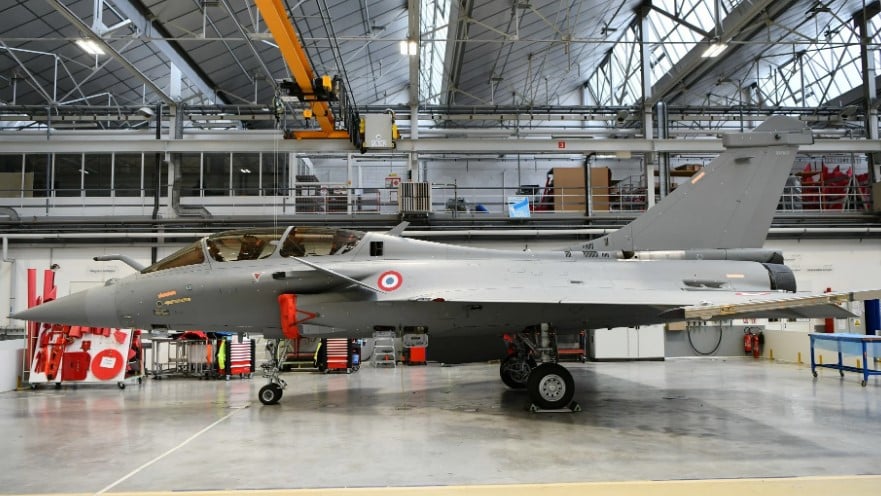
India’s proposed acquisition of 114 Rafale multirole fighter jets from France is shaping up to be one of the largest defence deals in the country’s history.
Valued at approximately $39–40 billion, according to various sources, the agreement is expected to be structured as a government-to-government contract, ensuring stronger negotiation leverage, sovereign guarantees, and long-term strategic cooperation.
But what exactly is included in this massive package? Let’s break it down. Aircraft Configuration & Breakdown The Indian Air Force is expected to procure 114 advanced Rafale fighters, likely in the latest F4 standard, with potential upgrades to the future F5 configuration. The projected aircraft mix includes:
- 88 single-seat fighters
- 26 twin-seat variants (capable of training, multirole missions, and long-range combat operations)
Under the current proposal:
- 18 jets will be delivered in fully built, flyaway condition from France, with deliveries expected around 2030.
- The remaining 96 aircraft will be manufactured or assembled in India under the Make in India initiative, in collaboration with Dassault Aviation and Indian industry partners.
Private-sector firms such as Tata Advanced Systems are likely to play a key role in component manufacturing and assembly. Indigenous content is expected to start at around 30% and potentially scale up to 50–60% or higher, depending on the final industrial agreement. Weapons Package – A Major Value Component A significant portion of the deal’s value comes from its advanced weapons package. Air-to-Air Missiles
- Meteor – long-range beyond-visual-range (BVR) air-to-air missile
- MICA – versatile BVR and close-combat missile
Air-to-Ground & Precision Strike
- SCALP cruise missile for deep-strike missions
- AASM Hammer precision-guided munitions
Importantly, integration of Indian-origin weapons is expected to be a non-negotiable part of negotiations. This would provide the Indian Air Force greater autonomy to deploy indigenous BVR missiles and precision systems without restrictive foreign controls. Support, Logistics & Industrial Ecosystem Beyond aircraft and weapons, the package includes:
- Long-term maintenance and spare parts support
- Pilot and ground crew training
- Full-mission simulators
- Infrastructure development
- Potential MRO (Maintenance, Repair, and Overhaul) facilities in India
- Possible engine support ecosystem for the Safran M88, potentially including facilities in Hyderabad
- Long-term logistics and sustainment agreements
This deal is not just about immediate capability enhancement — it is also designed to strengthen India’s defence industrial base through technology transfer, local production, and offset commitments. Current Status It is important to note that the project is still at the Acceptance of Necessity (AON) stage.
Final details — including exact weapon quantities, pricing, integration specifics, and timelines — will be negotiated between India and France before moving to the Cabinet Committee on Security (CCS) for final approval and contract signing.
On the same day, the Defence Acquisition Council (DAC) cleared a broader defence package worth approximately ₹3.6 lakh crore, which also includes additional Boeing P-8I Neptune aircraft, advanced missiles, and high-altitude pseudo-satellite systems.
However, the Rafale acquisition remains the flagship element of the package. What This Means for India If finalized, the deal would bring India’s total Rafale fleet to 176 aircraft, including:
- 36 existing Indian Air Force Rafales
- 26 Rafale Marine jets for the Navy
- 114 new multirole fighters
This would significantly enhance India’s air combat capability and help address long-standing squadron shortages.
Now the big question: Is this the most transformative defence deal in India’s history? Will it redefine the future of India’s air power and defence manufacturing ecosystem?
For more aerospace news, check out JetlineIntel.
Want to buy aviation merchandise? VisitJetshop.in.
To read Jetlinemarvel’s updates on Google News, head over to Google News.
