
Aviation
Why India Is Balancing Fighter Jet Deals Between France and Russia
India’s dual fighter jet strategy with France and Russia reveals a calculated move to deter China while securing long-term air dominance and strategic autonomy.

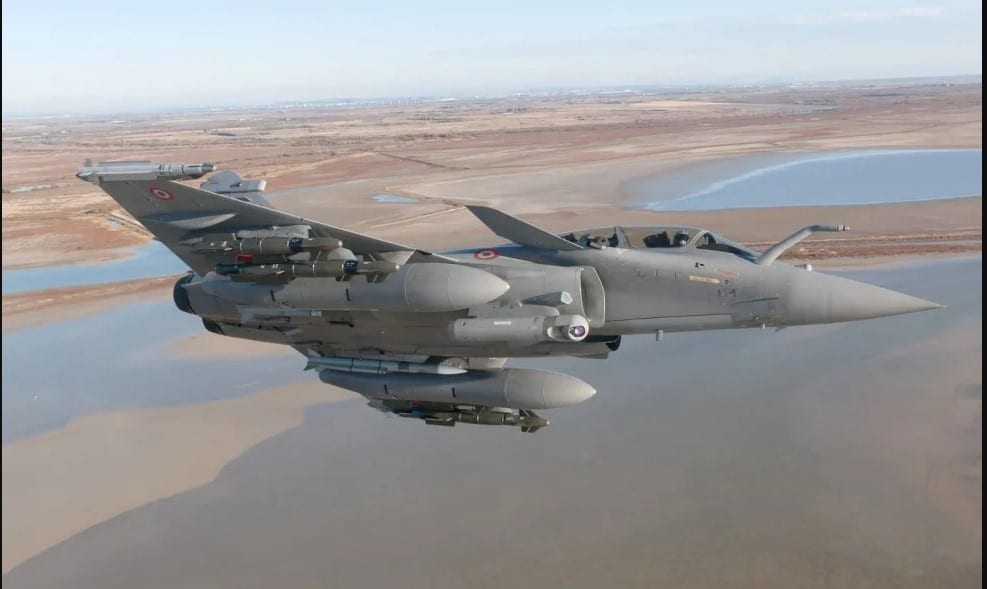
India is strategically planning to acquire fighter aircraft from two different countries—France and Russia. At first glance, this may appear unusual, but behind this decision lies a calculated and long-term defense strategy. In this video, let’s understand the real reasons behind India’s multi-country fighter jet approach and what it means for regional security.
India is currently balancing its defense procurement by strengthening ties with France—primarily through the Rafale fighter jets—while also keeping the option of Russia’s fifth-generation Sukhoi Su-57 under discussion. France has already proposed additional Rafale aircraft, and India has shown strong interest in expanding its Rafale fleet.
The Indian Air Force has already inducted 36 Rafale jets, and alongside this, India has also approved the procurement of Rafale Marine fighter jets for aircraft carrier operations. Recently, India has moved forward with a major proposal for 114 additional Rafale fighter jets to strengthen its air power. If finalized, this would make Rafale one of the most dominant fighter aircraft in India’s fleet, potentially exceeding 200 aircraft across the Air Force and Navy.
At the same time, Russia has offered India its fifth-generation stealth fighter, the Sukhoi Su-57. This aircraft features advanced stealth design, supercruise capability, and modern weapon systems. The key question is—why is India engaging with two different nations for high-end fighter jets?
The primary reason is China.
China’s rapid expansion of the People’s Liberation Army Air Force (PLAAF), including the induction of J-20 stealth fighters and other advanced aircraft, poses a significant strategic challenge. To counter this threat, India is deliberately avoiding over-dependence on a single supplier. By working with both France and Russia, India ensures flexibility, redundancy, and strategic autonomy.
Even if geopolitical shifts occur—such as Russia aligning more closely with China or France recalibrating its foreign policy—India retains multiple options. This two-track approach ensures operational continuity and dominance during any potential conflict.
India’s strategy reflects a broader multi-vendor diversification policy, designed to reduce reliance on any single country, especially amid global uncertainties such as Western sanctions on Russia and conditional export restrictions from the United States. India has also declined offers such as the F-35, primarily due to concerns over long-term reliability, supply chain control, and operational sovereignty.
Another major factor is the Indian Air Force’s squadron shortage. The IAF currently operates around 29 squadrons, while the sanctioned strength is 42. This gap has pushed India to seek proven, advanced fighter jets capable of serving for the next 30 years.
Rafale fits this requirement well. As a 4.5-generation multirole fighter, it is combat-proven, fully integrated with Indian weapons and systems, and equipped with powerful electronic warfare, precision strike, and deep-penetration capabilities—ideal for a two-front scenario involving China and Pakistan. Reports indicate that Rafale effectively bridges the gap between heavy Su-30MKI fighters and lighter Tejas variants.
The proposed 114-jet Rafale deal is valued at approximately ₹3.25 lakh crore (around USD 40 billion) and is expected to include significant domestic manufacturing, with nearly 30% indigenous content. This builds upon the existing 36 IAF Rafales and the 26 Rafale Marine aircraft ordered in 2025.
On the Russian side, the Su-57E export variant remains under discussion. Russia has reportedly offered India extensive technology transfer, local production, and even access to source codes—allowing India to integrate its own weapons and sensors. This level of access is rare in global defense deals. In contrast, Rafale does not come with source code access or deep technology transfer.
The Su-57 is being positioned as a potential interim fifth-generation solution, bridging the gap until India’s indigenous Advanced Medium Combat Aircraft (AMCA) becomes operational. However, no firm deal has been finalized yet. Factors such as sanctions risk, production timelines, and the aircraft’s operational maturity remain under evaluation.
China’s growing numerical and technological edge—particularly with stealth fighters—remains the core driver behind India’s urgency. While additional Rafales enhance deterrence through superior sensors, electronic warfare, and standoff weapons, a future Su-57 induction could add stealth-based deep-strike and air-dominance capabilities.
India, however, remains cautious. The current focus appears to be on rapidly scaling the Rafale fleet for reliability and quick induction, while simultaneously advancing indigenous programs like AMCA, expected to see prototype rollout around 2026–27. Full induction of a homegrown fifth-generation fighter may still take nearly a decade.
Meanwhile, Pakistan—along with China—is pushing the JF-17 fighter into the international market, with countries like Indonesia, the UAE, and Sudan showing interest. In response, India is prioritizing quality, survivability, and long-term dominance rather than export-driven platforms.
In conclusion, India’s balancing act between France and Russia is not confusion—it is strategy. By combining proven platforms like Rafale with potential fifth-generation options like the Su-57, India is building a strong defensive wall against threats from both China and Pakistan, while safeguarding its strategic independence.
For more aerospace news, check out JetlineIntel.
Want to buy aviation merchandise? VisitJetshop.in.
To read Jetlinemarvel’s updates on Google News, head over to Google News.
