
Defence
KF-21 Boramae Completes Four-Year Flight Test, Eyes Operational Service
After 1,600 sorties and zero accidents, South Korea’s KF-21 Boramae enters its final development phase as Seoul pushes toward full aerospace self-reliance.

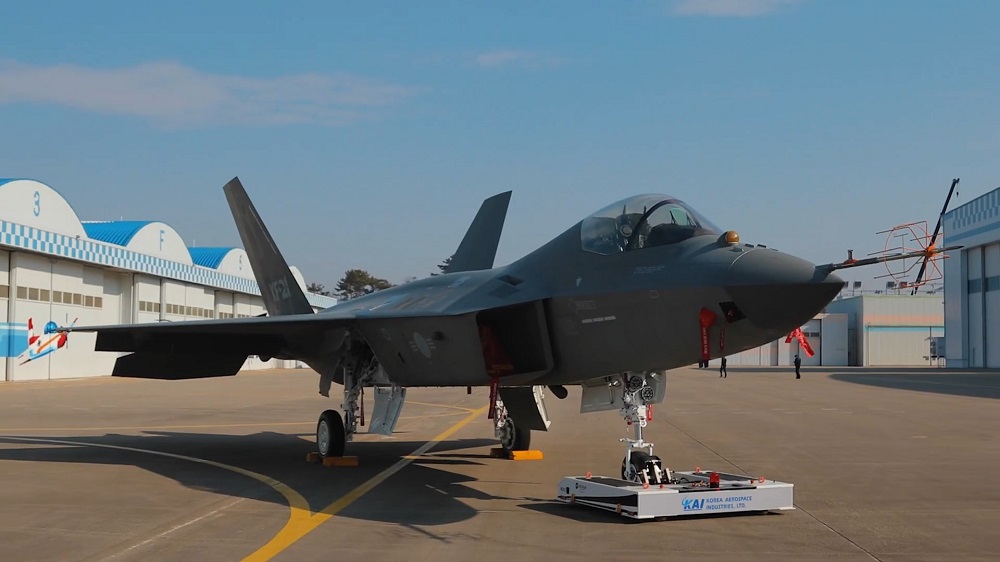
South Korea has crossed a decisive milestone in its push to emerge as a global aerospace power. Korea Aerospace Industries’ KF-21 Boramae fighter has successfully completed its four-year flight test campaign, a rare achievement for an indigenous combat aircraft programme of this scale.
Conducted without a single accident, the campaign places the KF-21 firmly on track for operational service while strengthening Seoul’s ambitions to position the jet as a future export contender beyond traditional Western and Russian fighter markets.
The flight test programme began with the KF-21’s maiden flight in July 2022 and concluded after 1,600 sorties, covering more than 13,000 test conditions. Six flying prototypes were used to validate the aircraft across a wide operational envelope, allowing engineers to steadily push performance limits while maintaining safety margins.
According to South Korea’s Defense Acquisition Program Administration (DAPA), testing encompassed demanding flight regimes such as high angle-of-attack handling, aerial refuelling operations, air-to-air weapon integration, and extensive evaluation of the aircraft’s indigenous Active Electronically Scanned Array (AESA) radar.
Notably, the entire campaign was completed two months ahead of schedule. The accelerated timeline was achieved by expanding test locations and making extensive use of air-to-air refuelling, enabling longer and more efficient sorties. For a complex twin-engine fighter programme, finishing early without incident is viewed within South Korea’s defence establishment as a strong endorsement of both the aircraft’s design maturity and the country’s growing aerospace engineering capabilities.
As flight testing draws to a close, the KF-21’s overall design philosophy has become clearer. The Boramae is intended to bridge advanced fourth-generation and fifth-generation fighter capabilities, offering high performance while remaining more affordable and easier to sustain than full stealth platforms.
Powered by twin GE F414-KI afterburning turbofans in its current configuration, the aircraft is capable of speeds approaching Mach 1.8, with a combat radius of around 1,000 kilometres depending on mission profile. With external fuel tanks, its ferry range extends beyond 2,900 kilometres, providing the reach required for regional power projection.
The aircraft’s aerodynamic layout emphasises agility and sustained supersonic performance, while measures to reduce radar cross-section enhance survivability in contested airspace. Its twin-engine configuration adds an additional layer of redundancy, a feature highly valued by air forces operating over maritime or hostile terrain.
Internally, the KF-21 integrates sensor fusion, an advanced mission computer and network-centric warfare capabilities, allowing pilots to process and act on battlefield data more effectively.
With flight testing now complete, development of the KF-21 is scheduled to conclude by mid-2026. Deliveries to the Republic of Korea Air Force are expected to begin in the second half of that year, marking the transition from development to frontline service. Initial operational units will focus on air-to-air missions, with progressively expanded roles as additional capabilities are integrated.
Despite the programme’s technical success, the KF-21 has yet to secure its first international customer. Export sales remain a high priority for the South Korean government, which sees the aircraft as a strategic tool for defence diplomacy as well as industrial growth. Potential customers frequently mentioned include Indonesia, the Philippines, Poland and the United Arab Emirates, each seeking modern fighters that balance capability, cost and technology transfer.
Looking beyond the current aircraft, South Korea is also accelerating its broader push for aerospace self-reliance. This includes plans for advanced variants such as the KF-21EX, which are expected to incorporate greater stealth features and next-generation systems. Central to this ambition is propulsion independence. Seoul has committed $3.4 billion to the Advanced Aviation Engine Development Project, running from 2027 to 2040, with Hanwha Aerospace leading the effort.
The programme aims to produce an indigenous turbofan delivering around 16,000 pounds of military thrust and up to 24,000 pounds with afterburner, surpassing earlier design targets. This engine is intended to power the Block 3 KF-21, reducing reliance on foreign suppliers and strengthening long-term sustainment security.
While Block 1 and Block 2 aircraft will continue to use the GE F414 engine produced locally under licence, the long-term objective is full domestic control over fighter propulsion technology.
To support this effort, South Korea has established an inter-ministerial coordination body to align government policy, industry development and military requirements. In parallel, Hanwha is also developing a 1,400-horsepower indigenous engine for a domestically produced MALE drone, expected to enter service by 2028. Together, these initiatives are laying the foundation for a robust and self-sustaining aerospace engine ecosystem.
With its flight test campaign complete, the KF-21 Boramae now stands at the threshold of operational service. More than just a new fighter aircraft, it represents a strategic shift in South Korea’s defence and industrial posture—one that signals the country’s arrival as a serious, long-term player in the global combat aviation landscape.
For more aerospace news, check out JetlineIntel.
Want to buy aviation merchandise? VisitJetshop.in.
To read Jetlinemarvel’s updates on Google News, head over to Google News.



