
Defence
Iran’s New War Strategy Explained: How Tehran Is Responding to U.S.–Israel Strikes
A detailed breakdown of Iran’s retaliation strategy, regional attacks, advanced weapons deployment, and China’s indirect role

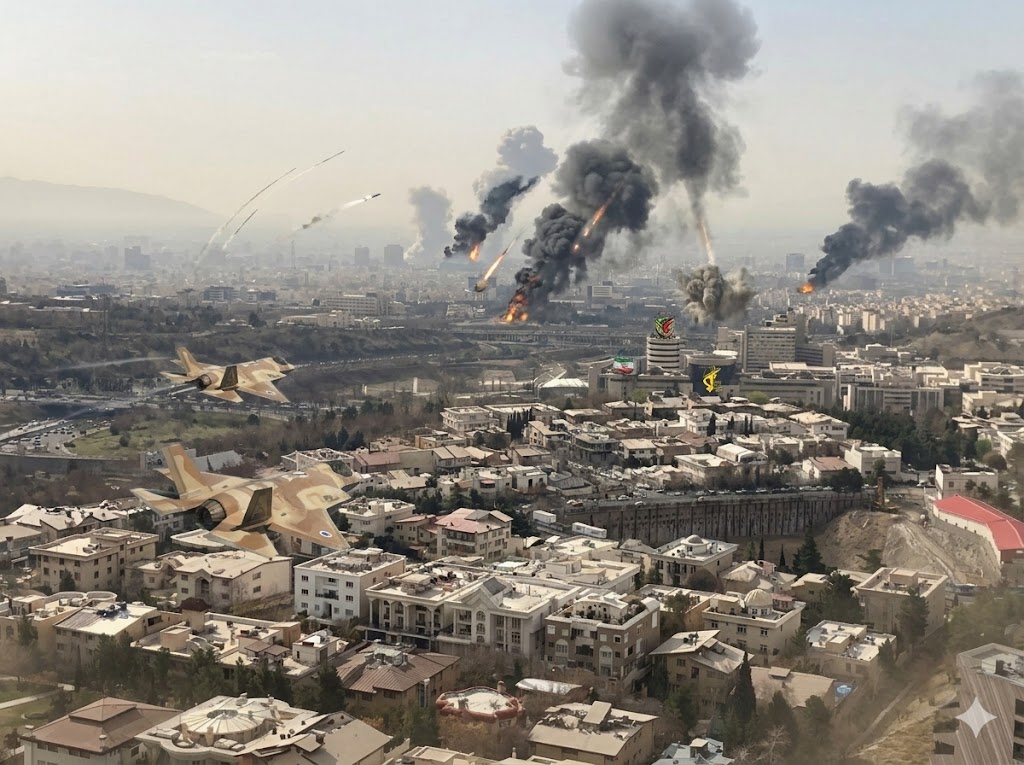
As tensions between Iran, Israel, and the United States rapidly escalate, the conflict has entered one of its most dangerous phases as of March 2026.
What began as targeted military operations has now evolved into a wider regional confrontation involving missile strikes, drone warfare, naval threats, and advanced technological support networks.
Escalation Across the Middle East
In late February and early March 2026, U.S. and Israeli forces launched extensive strikes against Iranian military infrastructure. According to military reports, hundreds of targets inside Iran were hit, including air defense systems, missile launch sites, and command facilities.
In response, Iran initiated a large-scale retaliation campaign using ballistic missiles, drones, and coordinated attacks through its regional “Axis of Resistance.”
Iranian strikes reportedly targeted multiple U.S. military installations across the Persian Gulf region, including:
- U.S. Fifth Fleet headquarters in Bahrain
- Al Udeid Air Base in Qatar
- Military facilities near Abu Dhabi in the UAE
- Logistics hubs in Kuwait and Jordan
- Airbases hosting U.S. troops across the region
Iran also launched a missile barrage toward Israel, firing approximately 35–40 missiles during the initial phase. Reports indicate casualties in Tel Aviv, with one fatality and dozens injured.
Gulf countries hosting U.S. assets, including Saudi Arabia and the UAE, were also drawn into the escalation through missile and drone threats.
Massive Air Campaign Against Iran
The United States and Israel responded with coordinated air operations involving multiple fighter aircraft conducting long-range strikes over distances exceeding 1,000 kilometers.
Western sources claim nearly 900 targets inside Iran have been struck so far. However, independent verification remains difficult due to widespread internet restrictions currently imposed within Iran.
Reports also emerged claiming that Iran’s Supreme Leader, Ayatollah Ali Khamenei, was killed during early strikes on a Tehran compound, though confirmation remains highly contested amid limited information flow.
China’s Quiet but Critical Role
While Russia has largely remained on the sidelines, China’s involvement appears to be indirect but strategically significant.
Rather than direct military intervention, Beijing is believed to be supporting Iran through technology, economic channels, and defense systems integration.
1. Satellite Navigation Support
Iran reportedly transitioned portions of its military navigation systems from U.S.-controlled GPS to China’s BeiDou-3 satellite navigation system, providing improved resistance against Western electronic jamming and enhancing missile accuracy.
2. Anti-Stealth Radar Systems
China is believed to have supplied advanced UHF-band radars such as the YLC-8B, designed to detect low-observable aircraft including stealth fighters like the F-35 and F-22.
3. Drone and Loitering Munition Supply
Intelligence reports suggest shipments of attack drones arrived shortly before the escalation, helping Iran replenish losses caused by earlier strikes on domestic drone factories.
4. Air Defense Reinforcement
Chinese-origin air defense platforms, including HQ-16 and HQ-17AE systems, are reportedly helping Iran rebuild layered air defenses after earlier degradation.
5. Cyber and Digital Infrastructure
China has also assisted Iran in replacing Western software systems with closed Chinese digital infrastructure, strengthening command-and-control resilience against cyber operations allegedly conducted by Western intelligence agencies.
6. Economic Lifeline
Through non-dollar trade systems and independent refinery networks, China continues to provide Iran with an economic channel to bypass sanctions and sustain wartime operations.
Naval Flashpoint: The CM-302 “Carrier Killer”
One of the most concerning developments is Iran’s deployment of the Chinese-designed CM-302 supersonic anti-ship missile.
Key characteristics include:
- Speed: Around Mach 3
- Flight Profile: Sea-skimming to avoid radar detection
- Range: 290–460 km
- Role: Designed to threaten high-value naval assets such as aircraft carriers
Iranian sources claimed attacks against U.S. naval forces, including the USS Abraham Lincoln carrier group. However, U.S. Central Command denied these claims, stating the carrier continues normal combat operations.
Western intelligence suggests Chinese satellite guidance and technical assistance may have helped integrate these missiles into Iranian coastal launch systems shortly before escalation.
Strait of Hormuz Crisis
The situation at sea has become increasingly volatile. Iran’s Revolutionary Guard declared the Strait of Hormuz effectively closed, prompting major shipping companies like Maersk and MSC to suspend transit operations.
In response, the U.S. Navy has intensified countermeasures, deploying surveillance aircraft and strike drones to hunt mobile missile launchers along Iran’s coastline.
Iran’s Emerging Strategy
Iran’s current approach reflects a shift toward asymmetric warfare:
- Distributed missile and drone attacks
- Regional proxy coordination
- Anti-access/area-denial (A2/AD) tactics in maritime zones
- Reliance on external technological ecosystems rather than direct alliances
Instead of confronting U.S. and Israeli forces symmetrically, Iran appears focused on raising operational costs, stretching defenses across multiple fronts, and challenging freedom of movement in the Gulf.
Final Assessment
The conflict is no longer limited to direct strikes between nations. It is becoming a technologically layered confrontation involving cyber warfare, satellite navigation systems, economic networks, and advanced missile threats.
Iran’s strategy aims to offset conventional disadvantages by leveraging precision missiles, drones, and external technological support — transforming the battlefield into a complex multi-domain conflict.
What do you think about Iran’s evolving military strategy in this conflict? Share your thoughts in the comments.
For more aerospace news, check out JetlineIntel.
Want to buy aviation merchandise? VisitJetshop.in.
To read Jetlinemarvel’s updates on Google News, head over to Google News.



