
Aviation
Shifting Middle East Alliances: U.S.-Saudi Arms Deal, Syria Sanctions, and Israel’s Strategic Concerns

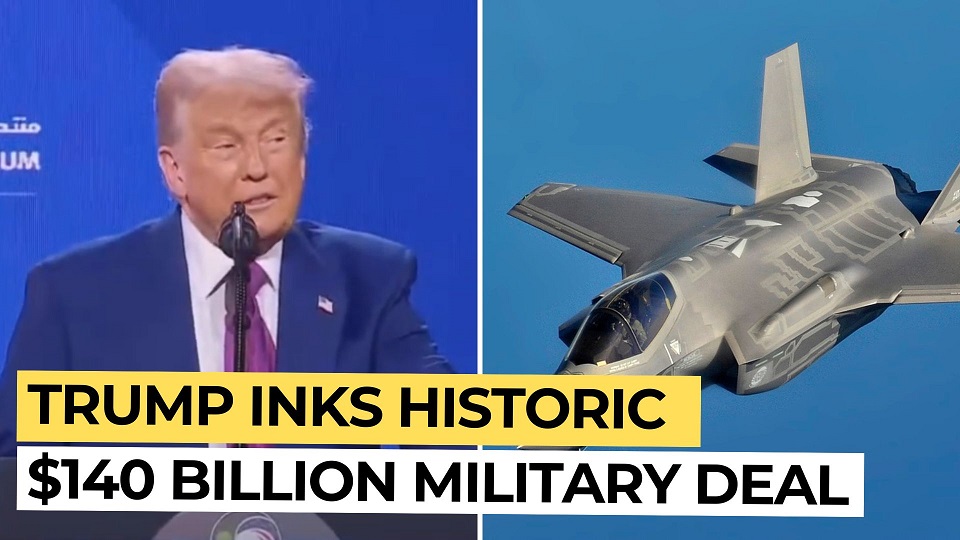
Amid intensifying regional shifts, Saudi Arabia has captured global attention with its announcement to purchase a portion of a massive $142 billion arms package from the United States.
This move comes during former President Donald Trump’s high-profile visit to Riyadh on May 13, 2025, where he also unveiled a landmark $600 billion economic investment commitment from Saudi Arabia.
Spanning energy, mining, artificial intelligence, space, communications, and the arts, this deal marks one of the largest U.S. business agreements in history—aimed at creating jobs and reinforcing U.S.-Saudi ties.
Saudi Arabia’s Strategic Rise
Saudi Arabia’s economic strategy has increasingly focused on diversification through tourism, foreign investment, and regional diplomacy. It is actively encouraging international companies to invest, promoting mutual growth and strengthening global partnerships.
The arms deal forms a critical part of this broader vision, enabling the Kingdom to become one of the most technologically advanced military powers in the region. U.S. support includes cutting-edge fighter jets, missile defense systems, and military training tailored to Saudi defense needs.
Israel’s Growing Unease
However, these developments have caused concern in Israel. While Saudi Arabia and Israel share a common adversary in Iran, the scale and sophistication of the U.S.-Saudi arms deal has triggered alarms in Jerusalem.
Israel fears that the sale of advanced systems—such as the F-35 fighter jet, even if not yet confirmed—could shift the regional military balance and erode its long-standing qualitative military edge.
Compounding these concerns is the fact that former President Trump did not include Israel in his Middle East tour, opting instead to focus on economic partnerships with Saudi Arabia, Qatar, and the UAE.
This exclusion suggests a potential de-prioritization of Israel in U.S. regional strategy, which could weaken Israel’s diplomatic influence, especially in the absence of progress on Saudi-Israel normalization.
The Syria Sanctions Surprise
Further complicating matters for Israel is the U.S. decision to lift sanctions on Syria. On May 30, 2025, during his visit to Saudi Arabia, Trump announced the removal of all U.S. sanctions on Syria, stating the need to give the country “a chance at greatness” following the fall of the Assad regime.
This policy shift, influenced by Saudi Crown Prince Mohammed bin Salman, aligns with the emergence of a new interim government in Syria led by Ahmad al-Shara. The move is seen as part of a broader effort to stabilize Syria and integrate it into the evolving regional order—again, without direct benefit to Israel.
Israel’s Strategic Isolation
Israel’s silence or limited response to the lifting of Syria sanctions may reflect both diplomatic caution and concern. These parallel developments—the arms deal and Syria’s reintegration—are perceived by many in Israel as signs of a shifting Middle East that increasingly sidelines Israeli interests.
Saudi Arabia’s tightening grip on regional diplomacy, fueled by its trillion-dollar investment pledges and rising influence, may serve as a counterbalance to Israeli power in the region.
Meanwhile, Israeli Prime Minister Benjamin Netanyahu faces growing domestic pressure over the prolonged Gaza conflict, further straining relations with Washington.
The U.S. appears increasingly frustrated with Israel’s lack of movement toward a ceasefire, particularly as other regional conflicts, such as those involving the Iran-backed Houthis, see U.S.-brokered ceasefires excluding Israel.
The Palestinian Factor
Adding to Israel’s challenges is the resurgence of the Palestinian issue. Saudi Arabia continues to insist on progress toward a Palestinian state as a precondition for broader normalization.
The inclusion of Palestinian Authority figures, such as Abbas Riaz, in recent regional meetings underscores that the Palestinian cause remains central to Arab diplomacy.
Israel’s efforts to bypass the issue appear to be failing, and it may soon be compelled to address the Palestinian question more directly as part of any future regional agreements.
Conclusion
Together, these developments point to a rapidly changing Middle East. The U.S.-Saudi strategic partnership—fueled by record-breaking arms and investment deals—reflects Washington’s pivot toward economic gain and regional stabilization, even at the risk of sidelining Israel’s traditional concerns.
As Saudi Arabia asserts its influence in both military and diplomatic spheres, and the Palestinian issue regains prominence, Israel finds itself facing a new and more complex geopolitical landscape—one where its longstanding dominance may no longer be guaranteed.
For more aerospace news, check out JetlineIntel.
Want to buy aviation merchandise? Visit Jetshop.in.
To read Jetlinemarvel’s updates on Google News, head over to Google News.



