
Airlines
Iran Interest in Russia’s MC-21: A Sanctions-Driven Aviation Shift
Iran eyes Russia’s MC-21 jet to modernize its aging fleet under sanctions, but political hurdles and production delays may shape the outcome.

Iran’s civil aviation sector has long struggled under the weight of severe U.S. and Western sanctions, which have restricted access to aircraft, parts, and maintenance services for decades.
These restrictions have left many of Iran’s commercial aircraft grounded or poorly maintained. A stark example of this deterioration came to light recently with the use of a 50-year-old helicopter for presidential transport—a symbol of the sector’s pressing need for modernization.
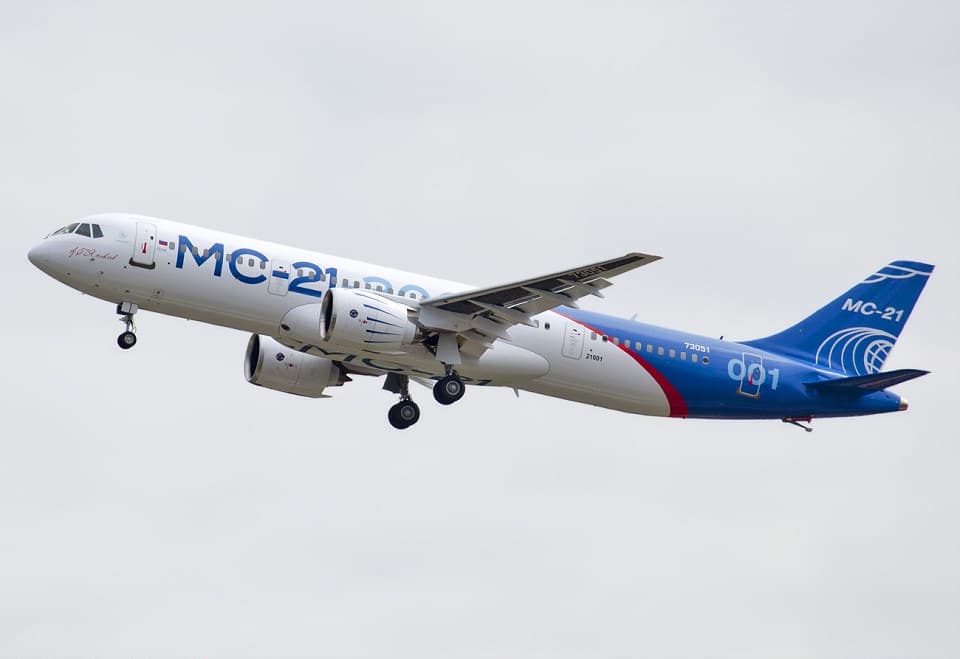
In light of these challenges, Iran has turned its attention to Russia’s MC-21, a modern, narrow-body, fuel-efficient commercial aircraft developed by Irkut Corporation, part of the United Aircraft Corporation.
Discussions about a potential purchase date back to early 2016, when Iran expressed interest not only in acquiring the aircraft but also in participating in component production. This aligned with Tehran’s strategy to circumvent Western sanctions and modernize its aging fleet.
The MC-21 program itself has not been without obstacles. Originally reliant on Western components, including U.S.-made Pratt & Whitney engines, the aircraft’s development was disrupted by sanctions imposed on Russia following its 2014 annexation of Crimea and further escalated after the 2022 invasion of Ukraine.
In response, Russia shifted focus to the MC-21-310 variant, powered by the domestically produced PD-14 engine, and aimed to replace 97% of the aircraft’s components with Russian-made alternatives by 2022. This localization effort has made the MC-21 more resilient to sanctions and a more plausible option for countries like Iran.
However, production delays—primarily due to engine integration and sanctions-related supply chain issues—have pushed the MC-21’s delivery timeline further into the future. The latest estimates suggest that deliveries may not begin until 2026.
Russia is currently prioritizing its own domestic airlines, which are in urgent need of replacements for the Airbus A320 and Boeing 737 aircraft they can no longer source due to sanctions. As a result, any potential deliveries to Iran may be delayed.
Despite these setbacks, Iran remains a strong candidate for future MC-21 exports. The aircraft’s sanction-resistant design and Russia’s increasing need for allies in aviation and defense make Iran a logical partner. Furthermore, Iran has openly supported Russia in recent years, notably through the supply of drones, strengthening bilateral cooperation.
Yet, significant hurdles remain. U.S. sanctions—especially those imposed on Iran Air since 2011 and expanded in 2024 in response to Tehran’s support for Russia’s military—pose serious legal and logistical risks. Any aircraft deal involving Iran could trigger further scrutiny and countermeasures from the U.S., particularly under laws that aggressively target the military and aviation sectors of both countries.
Nevertheless, Iran appears undeterred by these risks and continues to pursue closer ties with Russia. While no formal agreement has been confirmed as of May 2025, the MC-21 remains a potential cornerstone in Iran’s efforts to modernize its aviation sector outside of Western influence.
For more aerospace news, check out JetlineIntel.
Want to buy aviation merchandise? Visit Jetshop.in.
To read Jetlinemarvel’s updates on Google News, head over to Google News.



