
Defence
Russia Intensifies Jet Deal Push with Su-57E, Su-35M and Full IPR for India
Amid rising regional tensions, Russia proposes Su-57E and Su-35M fighters to India with unmatched ToT, source code access, and integration of indigenous tech for next-gen air dominance.

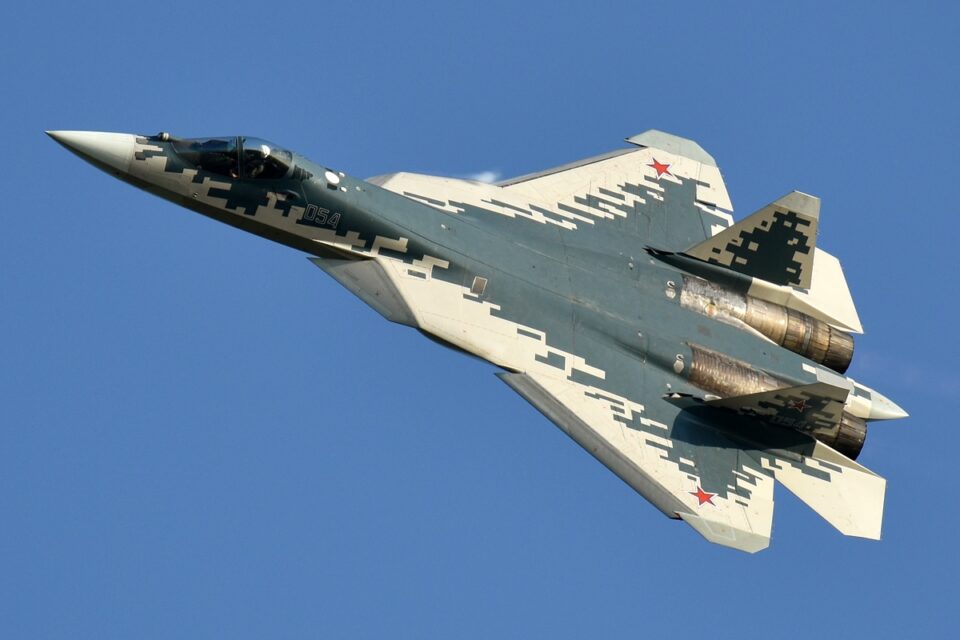
In a bold bid to reshape regional airpower dynamics, Russia is aggressively offering India two of its most advanced fighter jets—the fifth-generation Su-57E and the highly capable Su-35M—with unprecedented terms.
The offer includes full transfer of technology (ToT) and even access to the source code, a game-changing proposition that could strengthen India’s air dominance amid rising tensions in the Indo-Pacific.
With China expanding its stealth fleet and Pakistan acquiring advanced J-10C fighters, the timing of this Russian proposal could not be more strategic. It’s not just about aircraft—it’s about securing India’s technological edge, operational flexibility, and aerospace self-reliance.
Russia’s Offer: Su-57E with Source Code Access
At the center of Moscow’s pitch is the Su-57E, the export variant of Russia’s fifth-generation stealth fighter. Designed for air superiority, ground strike, and maritime missions, the Su-57E offers:
- Advanced Avionics capable of resisting electronic warfare
- Supercruise ability for sustained supersonic flight without afterburners
- Extreme Maneuverability aided by 3D thrust-vectoring engines
- 12 Hardpoints, including 6 internal bays to maintain stealth
- Payload Capacity of up to 7,500 kg
Performance-wise, the Su-57E delivers a combat range of up to 7,800 km with aerial refueling, and a top speed of 1,350 km/h, powered by two Saturn AL-41F1S engines, each producing 14,500 kgf of thrust.
India is carefully evaluating various fighter jet options to strengthen its air defense capabilities amid growing regional threats. Recent tensions with Pakistan have highlighted the critical role of air superiority and precision ground strike capabilities in modern warfare. However, India has also come to realize that many Western fighter jets come with restrictions—such as limited or no transfer of technology (ToT) and the inability to integrate indigenous weapons systems.
A key example is the Rafale deal, where India faced challenges in integrating its indigenous missile systems due to lack of access to source code. Moreover, Western manufacturers are often reluctant to share critical software and technical documentation, limiting India’s ability to customize and upgrade platforms independently.
In contrast, Russia has presented a compelling offer by proposing the export of two of its most advanced fighter jets—the fifth-generation Su-57E and the heavily upgraded Su-35M. Unlike Western deals, Russia is offering full technology transfer and even access to the source code, empowering India to enhance its aerospace self-reliance and operational flexibility.
The timing of this offer is especially significant. China is expanding its stealth fleet, and Pakistan has already inducted the advanced J-10C. In this strategic context, acquiring advanced platforms like the Su-57E could help India maintain a decisive edge.
The Su-57E, Russia’s stealth fifth-generation fighter, is built for air superiority, ground strike, and maritime missions. It boasts advanced avionics, resistance to electronic warfare, supercruise capability (sustained supersonic flight without afterburners), and a stealthy design with six internal and six external hardpoints. It can carry a payload of up to 7,500 kg.
In terms of affordability, the Su-57E is significantly more cost-effective than its Western counterparts. Moreover, Russia has proposed that production can be localized at India’s HAL Nasik facility, enabling rapid adaptation and indigenous manufacturing without major delays.
This proposal is not just about acquiring aircraft—it’s about ensuring India’s long-term defense independence, technological sovereignty, and strategic air power dominance.
What sets this offer apart is Russia’s willingness to provide full source code access and collaborate on avionics and stealth enhancements. This would allow India to integrate indigenous technologies—such as GaN-based AESA radars and mission computers developed for the AMCA—directly into the Su-57E platform, enabling a customized “Super-30” configuration.
Su-35M: A Proven and Cost-Effective Multirole Fighter
The Su-35M, though a 4++ generation aircraft, remains one of the most lethal multirole platforms globally. Key capabilities include:
- Supermaneuverability via advanced thrust-vectoring nozzles
- Irbis-E Radar for long-range multi-target tracking
- Extended Range of over 3,500 km without refueling
- Versatile Armament including long-range R-37M hypersonic missiles (400 km) and K-77M BVR missiles
Priced at $65–80 million per unit, the Su-35M is notably cheaper than the Rafale ($120 million) or the F-35A ($80–100 million), making it an appealing choice for high-altitude operations in the Himalayas or rapid-response scenarios against Pakistan’s J-10C or future J-35 fighters.
Building on Existing Infrastructure: HAL Nashik
Russia’s proposal is also infrastructure-ready. HAL’s Nashik facility, which has assembled over 920 AL-31FP engines and built Su-30MKIs since 2004, would serve as the production and maintenance base for both the Su-57E and Su-35M.
This not only accelerates timelines but also supports Make in India by strengthening the domestic ecosystem for spares, upgrades, and future exports.
The Strategic Catch: CAATSA and Reliability Concerns
Despite the enticing offer, challenges remain. The U.S. CAATSA sanctions, as seen with India’s S-400 deal, could complicate future defense procurement and interoperability with Western platforms.
Additionally, historical concerns over spare parts and maintenance delays with Russian aircraft—highlighted in a 2018 Jane’s Defence Weekly report noting 30–40% of Su-30MKIs grounded at times—raise red flags.
Still, the transfer of full IPR, integration flexibility, and open-source architecture of the Su-57E contrast sharply with the restricted Rafale deal from France and the tight limitations surrounding U.S. F-35 technology.
A Strategic Decision Ahead
Russia’s latest pitch is more than a fighter jet deal—it’s a long-term aerospace partnership. By offering cutting-edge platforms like the Su-57E and Su-35M with full ToT, joint development of stealth systems, and integration with Indian tech, Moscow is betting big on India as a future co-developer and defense partner.
The decision before New Delhi is critical: accept proven Western reliability with restrictions, or embrace Russian openness with strategic risks. The outcome could define the Indian Air Force’s capabilities and strategic autonomy for decades to come.
For more aerospace news, check out JetlineIntel.
Want to buy aviation merchandise? Visit Jetshop.in.
To read Jetlinemarvel’s updates on Google News, head over to Google News.



