
Defence
Russia Delivers New Su-35S Fighters Despite Sanctions
UAC hands over a fresh batch of Su-35S jets to Russia’s Aerospace Forces as Iran prepares to join Algeria in acquiring the advanced multirole fighter.

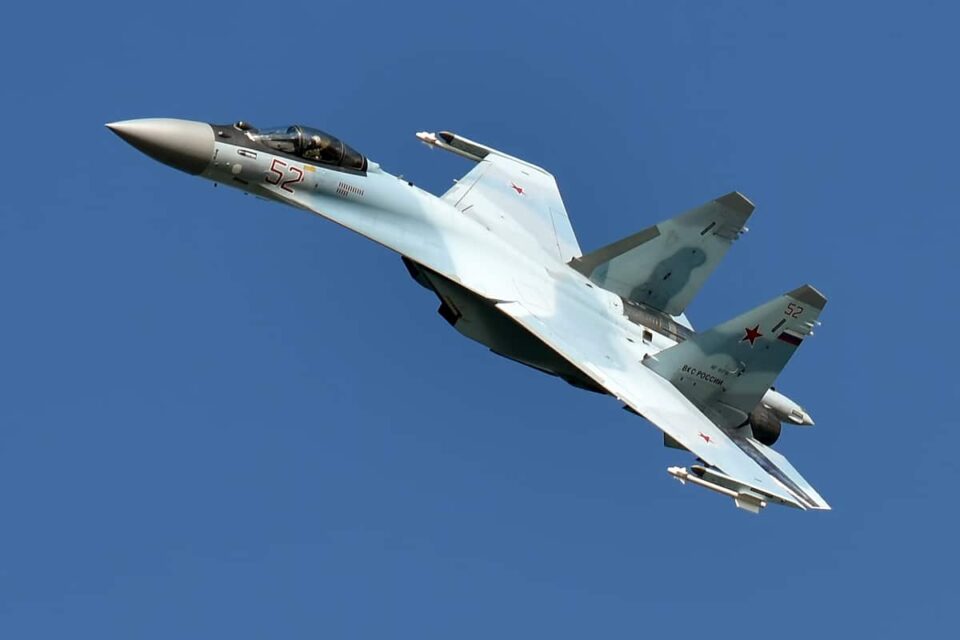
Despite mounting Western sanctions and escalating geopolitical tensions, Russia continues to push forward with its military modernization efforts.
In a significant show of resilience, United Aircraft Corporation (UAC), part of the state-owned Rostec conglomerate, has delivered a fresh batch of Su-35S Flanker-M multirole fighters to the Russian Aerospace Forces.
This delivery not only fulfills a key segment of Russia’s state defense order but also signals the country’s determination to maintain air superiority amid increasing global scrutiny.
Meanwhile, Iran has expressed keen interest in the Su-35, with deliveries expected to begin before the end of 2025, following Algeria’s acquisition earlier this year. The move could mark a major shift in the balance of power across the Middle East, as Iran looks to upgrade its aging air fleet with one of Russia’s most advanced combat aircraft.
Factory-Tested and Frontline Ready
Rostec confirmed that each Su-35S fighter underwent comprehensive factory testing, evaluating the aircraft’s performance across multiple flight regimes. Once approved, the jets were handed over to Aerospace Forces pilots, who then flew them to their operational bases.
Pilots from the Russian Aerospace Forces expressed their appreciation to the engineers and assembly workers at UAC for their contribution to national defense. Vladimir Artyakov, First Deputy General Director of Rostec, highlighted the aircraft’s reputation:
Foreign Interest: Algeria and Iran Enter the Arena
The Algerian Air Force became the second international customer for the Su-35 in early 2025. Now, all eyes are on Iran, which is expected to start receiving its first batch of Su-35s before year-end. For Iran, long under sanctions and struggling with an outdated air force, the Su-35 represents a dramatic leap in capability.
This growing interest comes at a time when Russia’s newer-generation projects—like the Su-57 fifth-generation fighter and the PAK DP next-generation interceptor—face continued delays. As a result, the Su-35 has taken on a larger role in Russia’s front-line air defense and export strategy.
Su-35S: Capabilities That Rival the Best
The Sukhoi Su-35 is not just a stopgap; it is a proven platform for both air superiority and multirole missions. Some of its standout features include:
- Supermaneuverability: Thrust-vectoring engines allow for extreme agility and advanced dogfighting maneuvers.
- Irbis-E Radar: A powerful radar system capable of tracking multiple targets at long range, enhancing battlefield awareness.
- Extended Range: With over 3,500 km of unrefueled range, it can cover vast operational distances—especially critical for a country like Iran.
- Versatile Armament: Compatible with a wide arsenal of air-to-air and air-to-ground weaponry, the Su-35 can perform a wide variety of missions under diverse conditions.
Strategic Implications
The continued production and delivery of the Su-35S show that Russia remains committed to sustaining its aerial dominance, even under severe international sanctions. The fighter’s increasing role in export markets, especially with Middle Eastern clients like Iran, also reflects Moscow’s strategy to expand its defense ties beyond traditional allies.
With delays in newer aircraft programs, the Su-35 is no longer just a bridge—it’s become a critical pillar of Russian and allied air forces alike. As the global balance of power shifts, the Su-35S continues to fly high—undeterred by sanctions and emboldened by demand.
For more aerospace news, check out JetlineIntel.
Want to buy aviation merchandise? Visit Jetshop.in.
To read Jetlinemarvel’s updates on Google News, head over to Google News.
