
Defence
KAAN fighter project faces turbulence as US halts engines
US Congress blocks engine supply for Turkey’s KAAN jet, casting uncertainty over its timeline and Indonesia’s $10B deal.

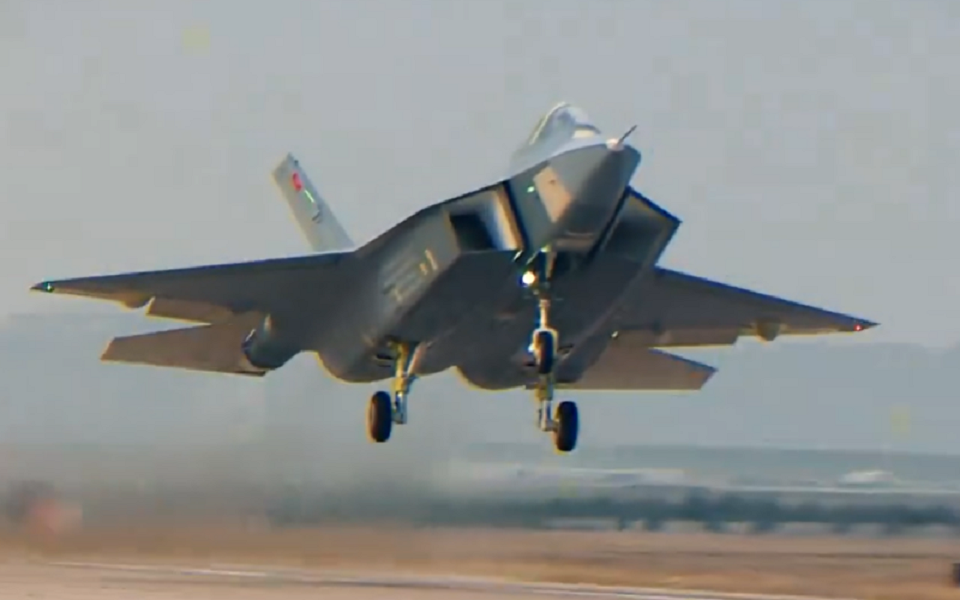
When a country sets out to build a fifth-generation fighter jet, the stakes are enormous. Billions of dollars, decades of research, and the credibility of a nation’s defense industry all hinge on success.
For Turkey, the KAAN program is not just an aircraft project—it is the symbol of its ambition to join the elite club of advanced aerospace powers. But now, a political roadblock in Washington threatens to slow down Ankara’s boldest defense gamble.
According to recent reports, Turkey’s foreign minister Hakan Fidan and Haluk Görgün, the head of the country’s defense procurement agency (SSB), offered conflicting statements this week about engine supply for the KAAN fighter jet. The dispute highlights uncertainty around Turkey’s flagship defense project at a critical stage.
US Congress in the Spotlight
Speaking in New York on the sidelines of a Trump–Erdogan meeting on September 26, 2025, Fidan revealed that “the KAAN’s engines are waiting for approval in the US Congress” and that required licenses had been suspended. This suggests that Washington’s restrictions could delay the program’s timeline.
The issue comes at a sensitive moment—when the US is simultaneously pushing to sell F-35 jets to Turkey. Any pause in KAAN’s development not only dents Ankara’s aerospace ambitions but also raises questions about how President Erdogan will respond to former President Donald Trump’s maneuvering.
On the other hand, Görgün sought to reassure the public, stressing that “the KAAN program faces no delays” and underlining Ankara’s determination to avoid dependence on a single supplier.
Features of KAAN Fighter Jet
To understand why this project matters so much, here are some of the key features of Turkey’s KAAN:
- 5th-Generation Multirole Design: Built to rival the US F-35 and Chinese J-20.
- Stealth Capabilities: Radar-absorbing surfaces and advanced low-observable design.
- Supersonic Performance: Designed for Mach 1.8+ speeds.
- Avionics & AI: Indigenous radar, electronic warfare systems, and AI-assisted cockpit.
- Weapons Capacity: Equipped for beyond-visual-range air-to-air missiles, precision-guided bombs, and long-range strike missions.
- Dual Engine Platform: Initially powered by foreign-supplied engines, with plans to transition to Turkey’s indigenous TF-35000 engine by 2032.
International Stakes and Indonesia’s Big Bet
Beyond Turkey’s borders, the KAAN project has already drawn international attention. In July 2025, Indonesia became the first export customer, signing a landmark deal for 48 jets valued at around $10 billion. Each aircraft is estimated to cost $192 million—putting it on par with the American F-35 and slightly above the French Rafale, which Indonesia is also buying.
Although Turkish officials insist that export deals will not be affected, any prolonged delay in securing engines risks disrupting early test schedules, deliveries, and Ankara’s credibility with its partners.
The Road Ahead
Turkey plans to start ground testing the indigenous TF-35000 engine in 2026, with integration into KAAN expected by 2032. But analysts like Burak Yıldırım caution that matching this timeline will be extremely difficult, given the challenges faced by other nations in similar programs.
For now, the KAAN project sits at a crossroads: one path leads to Turkey’s aerospace independence, while the other is clouded by political wrangling in Washington. What remains clear is that the fighter jet is more than just a defense platform—it is a statement of national pride, international ambition, and Turkey’s place in the future of air combat.
For more aerospace news, check out JetlineIntel.
Want to buy aviation merchandise? Visit Jetshop.in.
To read Jetlinemarvel’s updates on Google News, head over to Google News.



