
Defence
India, U.S. Discuss Poseidon Maritime Jets and Chinook Heavy-Lifters
India and the U.S. resume high-stakes defense talks this week, with Boeing pushing a $4B P-8I Poseidon deal and Chinook sales amid tariff tensions and China’s naval rise.

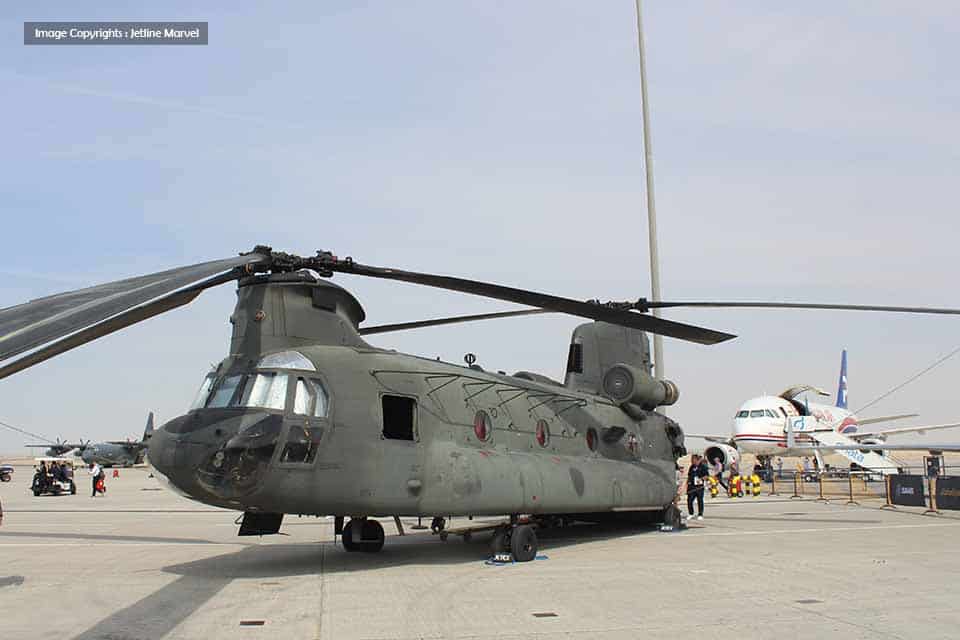
Amid shifting geopolitics and escalating regional tensions, New Delhi is preparing to host a high-stakes round of defense negotiations that could redefine India–U.S. military cooperation.
A senior U.S. Department of Defense delegation, accompanied by aerospace giant Boeing, is arriving in India this week to pursue landmark defense deals—headlined by a $4 billion contract for six additional P-8I Poseidon maritime patrol aircraft and a fresh proposal for more CH-47F Chinook heavy-lift helicopters.
The talks come at a critical moment, with India recalibrating its naval and airlift capabilities in response to China’s growing military presence in the Indian Ocean Region (IOR).
P-8I Poseidon: India’s Maritime Sentinel
The Indian Navy’s P-8I fleet—first inducted in 2013—has already flown more than 200,000 hours, cementing its role in maritime surveillance, anti-submarine warfare, and intelligence gathering. The aircraft proved invaluable during the 2020 Galwan standoff with China and continue to play a crucial role in exercises with Quad partners.
Currently operating 12 aircraft, the Navy has long sought six more P-8Is to achieve its operational requirement of 18 units. Equipped with Harpoon anti-ship missiles, advanced sensors, and sonobuoys for submarine detection, each aircraft—priced at $600–700 million—offers a 1,200 km combat radius and persistent monitoring capability across the IOR.
The package also includes training, spares, and long-term maintenance support, with potential $3 billion+ in industrial offsets for Indian firms.
Tariffs, Costs, and Negotiation Roadblocks
This long-pending deal has not been without turbulence. Initially cleared by the U.S. State Department in 2021 at an estimated $2.42 billion, the price ballooned by nearly 50% by mid-2025, reaching $3.6 billion, due to inflation and global supply chain disruptions. The situation worsened after a July 2025 U.S. tariff hike on key platforms, which temporarily stalled India’s final approval.
Now, with Boeing and the Pentagon pushing to revive talks, the deal appears back on track, albeit with tough negotiations on pricing and offsets.
Chinooks Back in Play
Parallel to the P-8I push, Boeing is also advancing a renewed proposal for additional CH-47F Chinook helicopters, aiming to strengthen the Indian Air Force’s (IAF) heavy-lift capabilities. These helicopters have proven indispensable in high-altitude operations along the Himalayan frontier, ferrying troops and equipment to forward bases.
Boeing’s strategy of bundling its platforms—Poseidons for the Navy and Chinooks for the Air Force—reflects a broader bid to consolidate its footprint in India’s defense market, even as U.S. tariffs and trade frictions loom in the background.
Strategic Significance
With China rapidly expanding its naval and submarine footprint across the Indo-Pacific, India sees the P-8I as a linchpin of its blue-water naval strategy. An 18-aircraft fleet would allow near-continuous coverage of the IOR, monitoring over 20,000 merchant ships and dozens of warships daily.
For Washington, meanwhile, securing this deal not only strengthens Boeing’s balance sheet but also cements the India–U.S. defense partnership, signaling deeper interoperability within the Quad and beyond.
For more aerospace news, check out JetlineIntel.
Want to buy aviation merchandise? Visit Jetshop.in.
To read Jetlinemarvel’s updates on Google News, head over to Google News.



