
Aviation
China’s COMAC C919 Slows 2025 Production Target
COMAC reduces its C919 jet production forecast for 2025 as reliance on Western suppliers, delayed deliveries, and limited global orders slow China’s aviation ambitions.

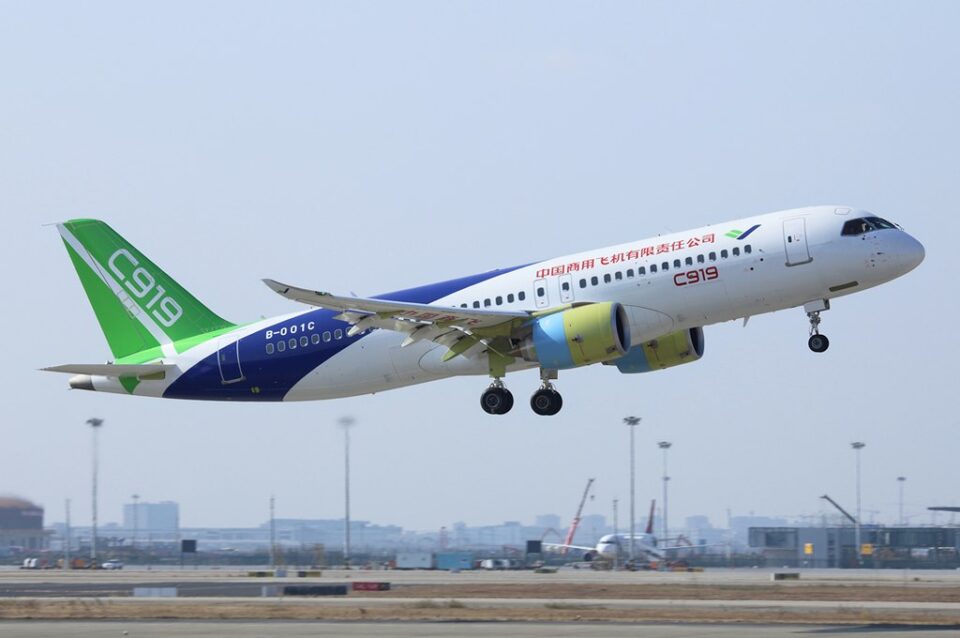
The dream of challenging the long-standing Boeing–Airbus duopoly faces yet another hurdle. China’s ambitious homegrown passenger jet, the COMAC C919, has been hailed as the country’s ticket to aviation independence.
But fresh reports suggest that its production line is struggling to keep pace with earlier promises, raising questions about timelines, foreign dependence, and its global future.
Production Cuts Confirmed
According to reports from Bloomberg, the Commercial Aircraft Corporation of China (COMAC) has quietly scaled back its 2025 production targets for the C919. Despite strong demand from domestic carriers, delivery numbers remain modest. As of September, only five C919 aircraft had reached customers—far below expectations.
Financial filings on the Shanghai Stock Exchange reveal the official delivery outlook:
- Air China expects 10 C919s in 2025.
- China Eastern Airlines anticipates another 10.
- China Southern Airlines forecasts 12.
In total, these airlines hold commitments for up to 100 aircraft each, yet actual handovers fall well short, confirming a growing production shortfall.
Heavy Reliance on Western Suppliers
While the C919 is branded as China’s “indigenous jet,” it remains heavily reliant on foreign technology. Analysts at Bank of America estimate that the aircraft integrates components from 48 US companies, 26 European firms, and only 14 Chinese suppliers.
At its heart, the C919 is powered by LEAP-1C engines, co-developed by GE Aerospace and Safran. These engines, along with Western avionics and flight-control systems, are essential for meeting global safety standards and enabling international operations. However, this dependency leaves COMAC vulnerable to trade frictions, tariffs, and political restrictions.
A Smaller Player in a Duopoly World
Unlike Airbus and Boeing—whose A320neo and 737 MAX families dominate the narrow-body market—the C919 is a late entrant.
Its global order book is far smaller, making COMAC a low-priority customer for many suppliers. Industry partners understandably prioritize the larger contracts from Airbus and Boeing, which complicates COMAC’s supply chain and delays its ability to scale production.
Signs of Progress, But Global Sales Lag
In a significant policy shift, the United States recently resumed the supply of aircraft engines to COMAC, marking a turning point for the program. This decision ensures that at least for now, C919 production will not grind to a halt.
Domestically, the aircraft enjoys solid sales. Chinese airlines continue to place large-scale orders, aligning with Beijing’s strategy of promoting aviation self-reliance. Yet, outside China, the jet has failed to secure traction. Notably, no Southeast Asian carriers have committed to the C919, highlighting its uphill battle in global markets.
China’s Push for Aviation Independence
The C919 is not just another airplane—it symbolizes China’s ambition to reduce reliance on Western aerospace technology. Beijing views narrow-body and wide-body aircraft programs as pillars of industrial independence, ensuring resilience against geopolitical shocks.
In the long term, China aims to replace Western engines, avionics, and control systems with domestic alternatives. Until then, the C919’s success depends on balancing foreign technology partnerships with its national goal of self-sufficiency.
For more aerospace news, check out JetlineIntel.
Want to buy aviation merchandise? Visit Jetshop.in.
To read Jetlinemarvel’s updates on Google News, head over to Google News.



