
Defence
Ukraine Eyes 150 Gripen Jets from Sweden as France Plans 60 New Rafales by 2035
Sweden and Ukraine move closer to a historic defense partnership as both nations agree on a framework for up to 150 Gripen E fighter jets

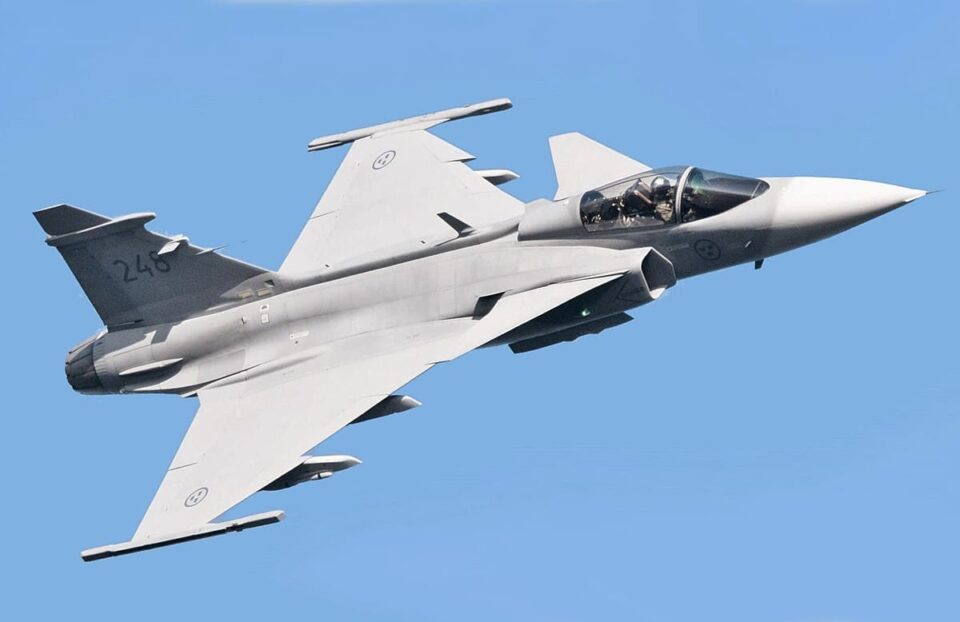
In a groundbreaking development that could reshape Europe’s defense landscape, Sweden and Ukraine have taken a major step toward one of the largest fighter jet deals in modern history.
During a joint appearance in Linköping on October 22, 2025, Swedish Prime Minister Ulf Kristersson and Ukrainian President Volodymyr Zelensky announced the signing of a letter of intent that paves the way for the potential sale of more than 100 Saab JAS 39 Gripen E multirole fighters to Ukraine.
The move signals not just a major leap for Ukraine’s air defense modernization but also a defining moment for Sweden’s defense industry and Saab’s global ambitions.
A Step Toward a Landmark Defense Partnership
According to Swedish broadcaster TV4, the newly signed document outlines a framework for the possible transfer of between 100 and 150 Gripen E aircraft, marking what could become one of Saab’s largest-ever fighter exports. Prime Minister Kristersson hailed the agreement as a key milestone that “brings us closer to a major export deal.”
“Probably somewhere between 100 and 150 fighter jets of the model Gripen E that are now beginning to be made,” Kristersson noted, adding that the agreement could span a 10- to 15-year timeline.
He further emphasized that the collaboration would open immense opportunities not only for the Ukrainian Air Force but also for Sweden’s defense ecosystem, encouraging deeper industrial cooperation and technological exchange between the two nations.
Production and Delivery Prospects
Under current manufacturing capacity, the first Gripen E deliveries could take place within three years of a finalized contract. However, Kristersson clarified that the letter of intent represents only the start of negotiations and is not a binding sale.
Swedish Defense Minister Pål Jonson had earlier stated in September 2025 that no deliveries of new-build Gripen E/F fighters would occur before the end of the war with Russia, citing the political and operational risks associated with supplying advanced fighters into an active combat zone.
Gripen E — A Fighter Built for the Future
The Saab JAS 39 Gripen E is not just another fighter jet—it is a symbol of efficiency, adaptability, and independence. Designed to perform across multiple combat roles, it has gained global recognition for its performance and practicality.
Key Features of the Gripen E:
- Multirole Capability: The Gripen E is a lightweight, single-engine fighter capable of performing air-to-air, air-to-ground, and reconnaissance missions with equal proficiency.
- High-Speed Performance: With a top speed of Mach 2 and an operational ceiling of around 59,000 feet, it delivers exceptional agility and power.
- Advanced Design: Equipped with delta wings and forward canards, it ensures superior maneuverability even in high-stress combat conditions.
- Short Takeoff and Landing (STOL): Unlike many Western fighters, the Gripen can operate from short or improvised runways, including roadways, providing unmatched flexibility in dispersed warfare scenarios.
- Low Operating Costs: The aircraft’s streamlined maintenance and fuel efficiency make it one of the most cost-effective fighters in its class.
- Technological Autonomy: The Gripen allows operators to maintain and upgrade systems independently, reducing reliance on foreign suppliers—a significant advantage for nations seeking defense self-reliance.
Strategic Significance for Ukraine and Sweden
For Ukraine, the potential acquisition of the Gripen E represents a game-changing modernization step, aligning its air combat capabilities with NATO standards. The fighter’s ability to launch from highways and unprepared runways fits perfectly with Ukraine’s need for dispersed and survivable air operations amid ongoing security threats.
For Sweden, this prospective deal reinforces its status as a leading defense technology exporter and underscores the growing trust and cooperation between Stockholm and Kyiv.
A Vision for the Next Decade
While the letter of intent is just the beginning, the implications are far-reaching. If finalized, this agreement could see Ukraine fielding one of Europe’s most modern and versatile fighter fleets within the next decade—powered by Swedish engineering excellence and mutual strategic cooperation.
As Prime Minister Kristersson summarized, this step “creates great opportunities for both nations—militarily, industrially, and strategically.” The Gripen E, known for its balance of performance, affordability, and independence, could soon become the backbone of a new era in European air defense.
Meanwhile, France is set to strengthen its air power with plans to acquire 60 new Dassault Rafale fighter jets by 2035. As part of the 2026 defense budget, this move will expand the country’s total fleet to 286 aircraft, up from the current 225.
The new order supports the goal of creating an “all-Rafale” fleet for both the Air and Space Force and the French Navy, replacing older Mirage 2000 jets — some of which are being transferred to Ukraine.
Currently, France operates around 100 Rafales, along with Mirage 2000D and Mirage 2000-5F fighters. The additional purchase will help compensate for recent losses and ensure readiness for future missions.
By boosting Rafale production, France also aims to strengthen its defense industry and maintain technological leadership in Europe’s air combat capabilities.
For more aerospace news, check out JetlineIntel.
Want to buy aviation merchandise? Visit Jetshop.in.
To read Jetlinemarvel’s updates on Google News, head over to Google News.
