
Aviation
China’s COMAC to Debut at Dubai Airshow, Challenging Airbus and Boeing
As the Dubai Airshow approaches, COMAC’s C919 takes center stage as China’s challenger to Airbus and Boeing, while Vietjet’s withdrawal of the C909

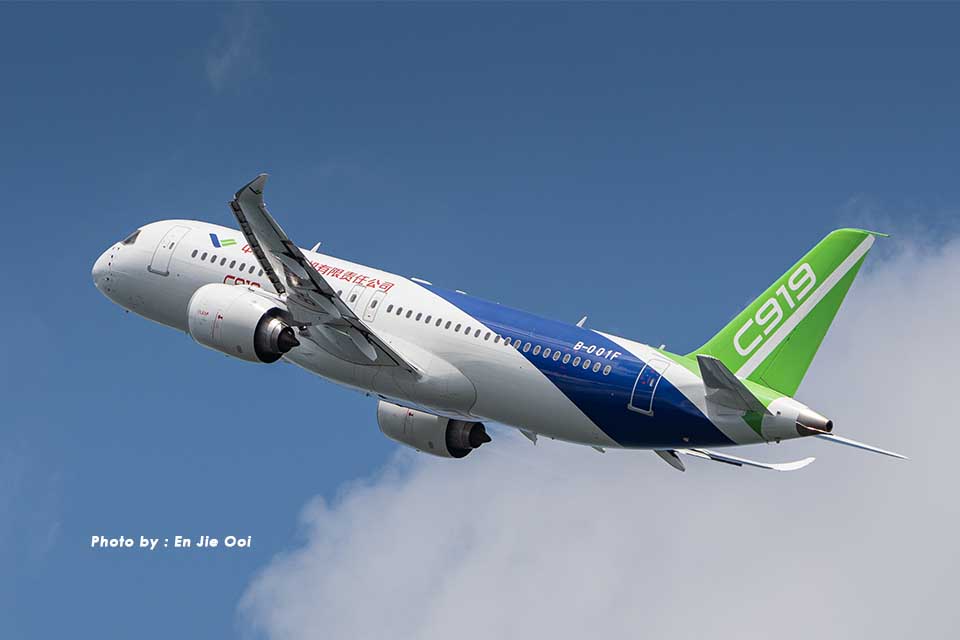
As the Dubai Airshow 2025 prepares to open its doors on November 17, the global aviation spotlight is turning once again to innovation, competition, and national pride.
Held every two years, this prestigious event will showcase the latest in commercial and military aviation — from advanced fighter jets to next-generation passenger aircraft. Among the most anticipated participants this year is China’s COMAC, set to display its homegrown jetliners as Beijing continues its push to challenge Western aerospace dominance.
The COMAC C919 — China’s Bid to Rival Airbus and Boeing
At the center of attention is the COMAC C919, China’s answer to the Airbus A320neo and Boeing 737 MAX families. Designed for short- to medium-haul routes, the C919 represents China’s determination to break into the global single-aisle aircraft market long dominated by Western manufacturers.
Powered by CFM International LEAP-1C engines, the C919 boasts advanced aerodynamic design, fly-by-wire flight controls, and composite materials to enhance fuel efficiency. With seating for 158 to 192 passengers and a range of up to 5,500 km, the aircraft offers airlines a modern, cost-effective solution tailored for regional and international routes.
Key features of the C919 include:
- 20% better fuel efficiency compared to older generation jets
- Advanced avionics and flight deck design inspired by Western standards
- Reduced maintenance costs and improved environmental performance
- Customizable cabin layouts for both premium and low-cost carriers
The C919’s participation in the Dubai Airshow signals China’s growing confidence in its aviation sector and its intent to market the jet aggressively to global buyers — including carriers in Asia, the Middle East, and Africa.
Vietjet Ends Operations of COMAC C909
While COMAC celebrates its international milestones, not all of its projects are flying high. In Vietnam, low-cost carrier Vietjet recently ended operations of two Chinese-made COMAC C909 (ARJ21-700) aircraft on October 18, following the expiry of a six-month lease agreement with Chengdu Airlines.
Introduced shortly after Chinese President Xi Jinping’s visit to Hanoi in April, the deployment of the C909s carried symbolic importance, marking the first use of Chinese-built commercial jets on Vietnamese domestic routes. Operating mainly between Hanoi, Ho Chi Minh City, and the scenic Con Dao Islands, the 90-seat regional jets served thousands of passengers during Vietnam’s busy travel seasons.
However, sources close to the matter confirm that the aircraft were withdrawn not due to technical flaws but economic and regulatory challenges. Vietjet’s decision reflects cost-efficiency pressures and the complexity of integrating non-Western aircraft into its fleet, which is otherwise dominated by more than 100 Airbus A320-family jets.
The C909 lease was initially intended to temporarily boost capacity amid global supply chain delays affecting Airbus and Boeing deliveries. Yet with the trial period now over and no renewal in sight, the experiment underscores the commercial and geopolitical hurdles Chinese aircraft still face in Southeast Asia’s competitive aviation landscape.
Looking Ahead
As COMAC prepares to showcase the C919 at Dubai, its success will depend not only on technical merit but also on international trust and market acceptance. While the C909’s short-lived stint in Vietnam highlights the challenges ahead, the C919’s ambitions signal a new phase in China’s journey to become a major player in the skies — one that could reshape the balance of power in global aviation.
For more aerospace news, check out JetlineIntel.
Want to buy aviation merchandise? Visit Jetshop.in.
To read Jetlinemarvel’s updates on Google News, head over to Google News.
