
Defence
Pakistan Delivers JF-17C Block III Jets to Azerbaijan for Combat Training
Pakistan’s JF-17C Block III fighters arrive in Azerbaijan for Exercise Indus Shield Alpha, confirming a $4.6B deal that deepens military cooperation and reshapes regional airpower dynamics.

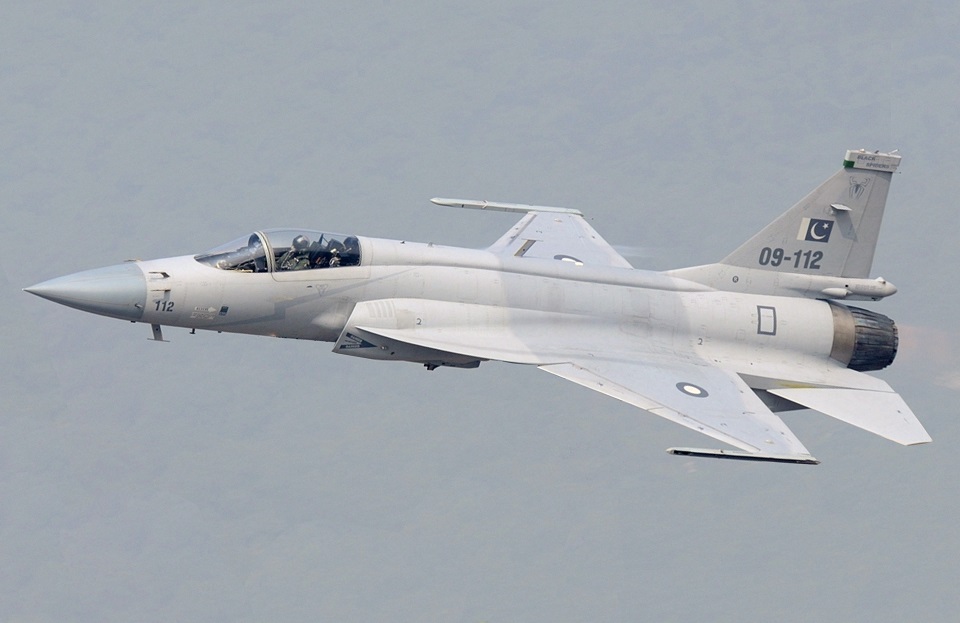
In a move that could reshape the aerial balance of power in the South Caucasus, Azerbaijan has taken delivery of the advanced JF-17C Block III fighter jets from Pakistan, signaling a new phase in the growing defense partnership between Islamabad and Baku.
The development underscores how strategic cooperation — once limited to political and diplomatic support — has now evolved into a full-fledged defense-industrial alliance backed by a landmark $4.6 billion aircraft deal and joint investment commitments.
The confirmation came after images of JF-17 Block III fighters surfaced at Azerbaijani airbases in mid-October 2025, sparking widespread speculation about a potential induction.
The Pakistan Air Force (PAF) later clarified that its JF-17 Block III aircraft had landed in Azerbaijan to participate in the bilateral aerial combat exercise “Indus Shield Alpha”, held on October 19, 2025. The deployment, conducted with the help of in-flight refueling by a PAF IL-78, demonstrated not only the aircraft’s range but also Pakistan’s ability to project its airpower across regions.
Strengthening Defense Ties
The exercise marks a significant milestone in Pakistan-Azerbaijan defense relations, which have deepened rapidly in recent years alongside close strategic cooperation with Türkiye.
The $4.6 billion agreement reportedly includes 40 JF-17C Block III aircraft, co-developed by Pakistan Aeronautical Complex (PAC) and China’s AVIC, with an additional $2 billion investment package tied to technology and maintenance support.
For Baku, this partnership represents a crucial step toward modernizing its air fleet with cost-effective yet powerful combat platforms capable of matching contemporary threats.
JF-17 Block III: The Game Changer
The JF-17C Block III isn’t merely an upgrade — it’s a major leap into 4.5-generation capability. Equipped with an Active Electronically Scanned Array (AESA) radar, infrared search and track (IRST), and advanced electronic warfare systems, the Block III variant offers detection and targeting capabilities once reserved for far more expensive jets.
The JF-17C Block III has a top speed of around 1,960 km/h.
It can carry a payload of up to 3,600 kg.
The aircraft has a range of about 3,482 km.
Key Highlights of the JF-17C Block III:
- AESA Radar: Enhanced target tracking and multi-target engagement.
- Digital Fly-by-Wire System: Superior agility and stability in complex maneuvers.
- Helmet-Mounted Display (HMD/S): Allows pilots to aim by sight alone.
- Infrared Search & Track (IRST): Enables stealth detection without radar emissions.
- Missile Approach Warning System (MAWS): Early detection of incoming threats.
- Composite Airframe: Reduced weight and higher fuel efficiency.
- Weapons Compatibility: Can deploy PL-15 and PL-10 air-to-air missiles, rivaling Western equivalents.
The aircraft’s holographic wide-angle HUD and chin-mounted hardpoint expand its versatility, while air-to-air refueling boosts endurance — an advantage clearly demonstrated in its nonstop ferry to Azerbaijan.
Strategic Significance
This development carries deep geopolitical meaning. Azerbaijan’s acquisition of the JF-17 Block III aligns it closely with Pakistan’s and Türkiye’s evolving defense ecosystem, potentially paving the way for integration of Turkish Gökdoğan and Bozdoğan missiles in future upgrades. The induction also enhances Baku’s ability to conduct beyond-visual-range (BVR) engagements, ensuring it maintains an edge over regional rivals.
For Pakistan, the deal reinforces its position as a reliable defense exporter, showcasing its capacity to deliver a modern, combat-proven fighter platform built in collaboration with China. The JF-17 program has emerged as a success story of affordability, performance, and adaptability, making it an increasingly attractive option for nations seeking high-end capability without the staggering costs of Western jets.
A New Chapter in Regional Airpower
As Exercise Indus Shield Alpha concluded, both nations reaffirmed their commitment to deepening defense ties. The Pakistan Air Force stated that the deployment reflects its “resolve to evolve and adapt to modern warfare while upholding a tradition of excellence.” For Azerbaijan, it marks a new chapter in its airpower evolution — one that brings advanced combat capability, regional prestige, and strategic independence.
With the arrival of the JF-17C Block III, Azerbaijan now joins a select group of operators fielding an advanced multirole fighter that blends Chinese technology, Pakistani production, and regional partnership — signaling the dawn of a new era in South Caucasus airpower.
For more aerospace news, check out JetlineIntel.
Want to buy aviation merchandise? Visit Jetshop.in.
To read Jetlinemarvel’s updates on Google News, head over to Google News.
