
Defence
India’s AMCA Set to Soar with Japan’s Abandoned i3 Fighter Technologies
Japan’s i3 fighter project may be cancelled, but its advanced tech—like the XF9-1 engine, fly-by-light controls, and DEWs—could power India’s AMCA and future air combat systems.

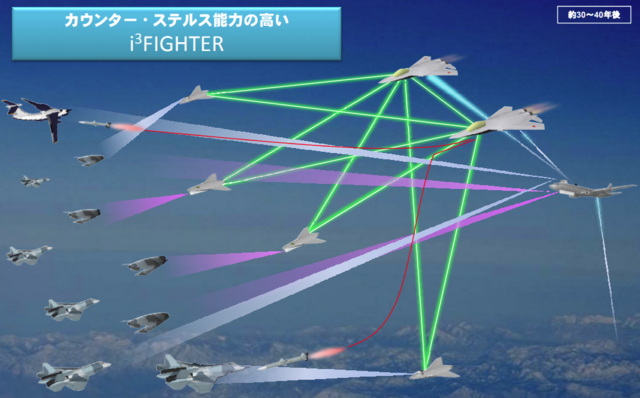
Back in 2010, Japan launched a bold plan to build its own sixth-generation stealth fighter, called the i3 Fighter. The name stood for Informed, Intelligent, and Instantaneous—designed to fight future air battles with unmatched speed, brainpower, and stealth.
Though Japan later cancelled the program, the technologies developed for it could now help India supercharge its own AMCA fighter jet and even support future sixth-gen projects.
Why Japan Started the i3 Fighter Project
After the U.S. refused to sell the F-22 Raptor to Japan in the late 1990s, Japan realized it needed to build its own advanced fighter to stay ahead of threats from China and Russia. The result was the i3 program, packed with futuristic features like:
- Advanced stealth materials
- Optical flight controls (fly-by-light)
- High-performance radar and sensors
- Directed energy weapons like lasers and microwaves
- Smart data sharing for real-time targeting
This tech was also tested on Japan’s X-2 Shinshin demonstrator aircraft, which flew for the first time in 2016.
Shift to Global Partnership: Why Japan Abandoned i3
In December 2022, Japan decided to stop the i3 program and instead teamed up with the UK and Italy to create a joint sixth-gen fighter under the Global Combat Air Programme (GCAP). This allowed Japan to share costs, speed up development, and align with like-minded allies.
But that doesn’t mean the i3 tech is wasted. In fact, Japan is now offering this technology to India, especially as New Delhi looks for partners to boost the development of its Advanced Medium Combat Aircraft (AMCA) and next-gen defense systems.
The XF9-1 Engine: Power That India Needs
One of the biggest gifts from Japan’s i3 program is the XF9-1 jet engine. This powerful engine is ideal for fifth- and sixth-gen jets. Its features include:
- 11 tons dry thrust
- 15 tons with afterburner
- Up to 20 tons of potential thrust
In June 2025, Japan offered this engine to India for the AMCA. Since India’s own engine development is facing delays, this engine could be a game-changer while India continues work with GTRE and Safran on an indigenous engine.
Fly-by-Light: Future-Proof Flight Controls
Instead of using traditional wires, Japan’s i3 used optical fibers to control the plane—this is called fly-by-light. It’s faster and immune to electronic attacks, which is critical in modern warfare. India’s AMCA currently uses digital fly-by-wire, but adopting Japan’s system could give it a serious edge against jamming and cyber threats.
Radar and Sensor Fusion: See Everything, Hit Anything
The i3 fighter was supposed to use a super-advanced AESA radar with gallium nitride (GaN) technology. This radar could detect even stealth aircraft and link with other sensors to give pilots a full 360-degree view.
India’s BEL is developing a similar radar for the AMCA. With Japan’s help, India could improve its radar range, precision, and ability to track multiple threats at once.
Cloud Shooting: Fighting as a Team
Japan developed a futuristic combat idea called “cloud shooting”—where a fighter jet can share targeting data with drones, satellites, and other aircraft in real time. This is very similar to India’s plan to use the AMCA alongside loyal wingman drones and UCAVs like Ghatak.
By tapping into Japan’s experience, India could fast-track its man-unmanned teaming (MUM-T) systems and boost battlefield coordination using AI and secure data links.
Laser and Microwave Weapons: Ready for the Future
The i3 was also meant to carry Directed Energy Weapons (DEWs) like lasers and high-power microwaves (HPM) to shoot down enemy missiles or blind enemy systems. India’s AMCA Mk2 is also expected to feature DEWs.
With access to Japan’s research, India could develop laser-based missile defense and anti-drone systems much faster and cheaper.
High-Speed Data Sharing: Mission Command from the Sky
Japan also focused on making the i3 a central command unit in the sky, controlling other drones and aircraft. This fits perfectly with India’s plan to make AMCA a smart leader of manned and unmanned squadrons.
Japan’s work on secure, high-speed data networks could give India a critical advantage in this area.
India Invited to Join GCAP: A New Chapter Begins
In early 2025, Japan officially invited India to join GCAP. This opens the door for India to access i3 technologies, co-develop next-gen systems, and be part of a global fighter project targeting entry by 2035.
For India, this is not just a technology boost—it’s a strategic opportunity to leap ahead in aerospace capability, while reducing reliance on imports and overcoming development delays.
Conclusion: Japan’s Abandoned Jet, India’s Rising Star
Japan may have cancelled its i3 fighter project, but the technology lives on—and now, India could be the biggest winner. From powerful engines to laser weapons, AI systems, advanced radars, and secure data links, the i3 program holds many of the keys to unlocking India’s future in air dominance.
If India and Japan strengthen this defense partnership, the dream of a truly indigenous, world-class Indian fighter jet may soon become reality.



