
Defence
How the US Navy Lost a $60 Million Jet worth of F/A-18 Super Hornet at red sea
These repeated losses raise serious questions about training, protocol, and leadership within the US Navy. How does a $60 million fighter jet fall off a ship in the middle of a military operation?

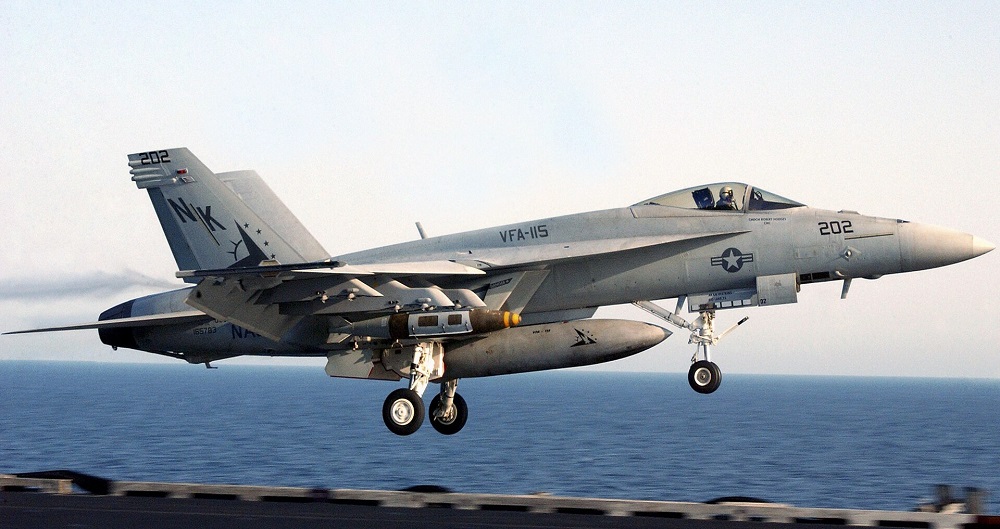
The US Navy, renowned for its resilience and the iconic motto “Don’t give up the ship,” has recently suffered a major setback in the Middle East.
Tensions in the region have escalated, and the Navy faced a significant loss: an F/A-18 Super Hornet jet valued at $60 million, which fell into the Red Sea during a military operation. This incident highlights growing challenges for the US military in the region, as various threats intensify.
The Red Sea Incident: A $60 Million Loss
According to reports, the US Navy lost an F/A-18 Super Hornet during evasive maneuvers to avoid a missile strike by Houthi rebels in Yemen. The attack targeted the USS Harry S. Truman aircraft carrier, and while the carrier managed to neutralize the incoming missiles, the fighter jet unfortunately slipped off the deck and plunged into the Red Sea.
The loss of a highly advanced fighter jet is not only a financial blow but also raises questions about the readiness and procedures within the US Navy. With a price tag of $60 million, this loss adds to a series of recent challenges for the US military in the Middle East.
The Rising Threat of Houthi Attacks
This incident is part of a larger pattern of escalating hostilities from Houthi rebels, who have been targeting US military assets, including drones and fighter jets. In the past few months, at least seven MQ-9 Reaper drones, each valued at $30 million, have been shot down by the Houthis. These losses have cost the US military over $330 million in equipment alone.
Despite the US military’s retaliation with airstrikes against Houthi targets, the rebels continue to remain defiant, sending a clear message: “We will keep striking until the aggression ends.”
The US Military’s Struggles in the Red Sea
The Red Sea has become a crucial hotspot for US military operations in the region. The USS Harry S. Truman has been deployed to carry out airstrikes against Houthi forces, but the US Navy is facing mounting difficulties. The incident involving the F/A-18 Super Hornet highlights the challenges the US military faces when dealing with unpredictable threats in such a vast operational area.
Losses like this raise concerns about the US military’s ability to respond to threats swiftly and effectively. With increasing limitations on base access in the region, the ability to track and neutralize incoming missiles has become a significant challenge.
A Pattern of Losses: The US Navy’s Expensive Mistakes
The Red Sea incident is not the first time the US Navy has experienced such a costly loss. Just a few months ago, the USS Harry S. Truman lost another Super Hornet to friendly fire. In 2022, an F/A-18 was blown off the deck by high winds. Together, these losses total $180 million in fighter jets alone.
These repeated losses raise serious questions about training, protocol, and leadership within the US Navy. How does a $60 million fighter jet fall off a ship in the middle of a military operation?
Houthi Attacks and the Growing Economic Strain
The Houthi rebels, using relatively low-cost drones and missiles, are effectively outgunning the US military in terms of cost efficiency. While the US continues to suffer significant losses, the Houthis are able to carry out their strikes with inexpensive weapons. This economic imbalance is becoming a major concern for Washington as it faces increasing financial and operational challenges.
Will the US Reconsider Its Strategy in the Middle East?
With every lost jet, drone, and friendly fire incident, the US military’s strategy in the Middle East is being questioned. While the Pentagon insists that the USS Harry S. Truman remains mission-capable, the mounting financial and reputational damage is hard to ignore. The question remains: will the US escalate further in the region, or will it reassess its approach to dealing with the ongoing conflict?
Conclusion: The Red Sea, A Costly Battlefield for the US Navy
The loss of the F/A-18 Super Hornet is a significant blow for the US Navy, both financially and reputationally. The Red Sea has proven to be a difficult and costly battleground, with repeated losses highlighting the growing challenges of military operations in the region. As tensions continue to rise, the US faces tough decisions regarding its future strategy in the Middle East.
What do you think? Is this a sign of deeper issues within US military operations, or just a reflection of the complexities of modern warfare? Share your thoughts in the comments below.
