
Defence
Why Does Pakistan Have Limitations on Using Its F-16s Against India?

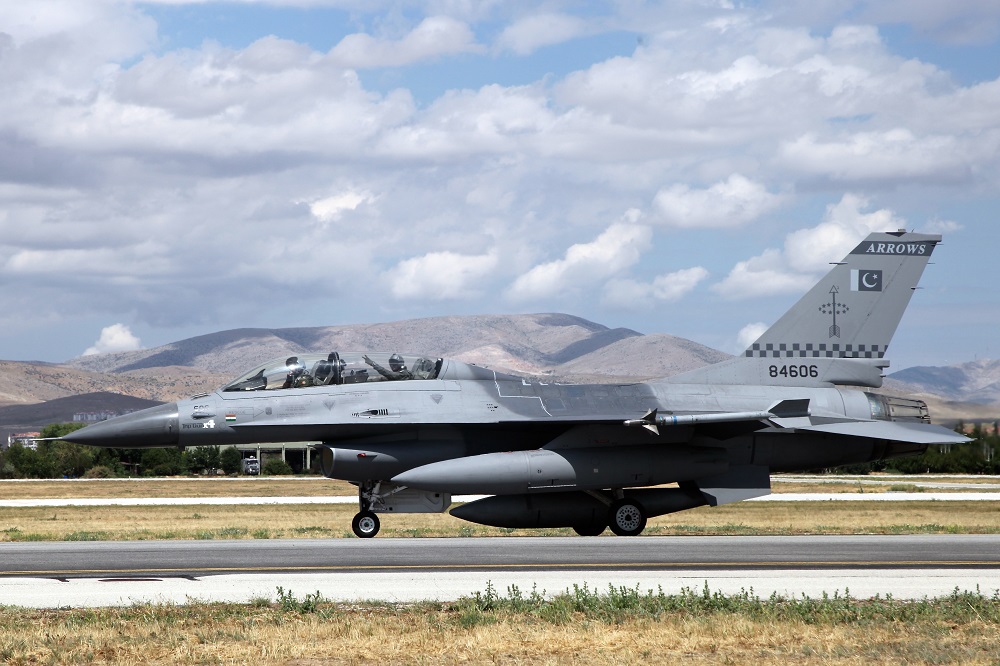
Welcome back to JetLine Marvel. In today’s article, we’ll dive deep into Pakistan’s F-16 fighter jets—once considered the backbone of the Pakistan Air Force—and how they now compare to India’s growing air power.
Pakistan received its first F-16s on January 13, 1983, through U.S. military aid during the Cold War. These jets, despite being powerful, came with strings attached—strict usage restrictions that continue to this day. The U.S. mandated that these jets could only be used for counter-terrorism and internal defense—not for offensive operations, especially not against India.
Today, Pakistan maintains a fleet of around 75 F-16s, spanning multiple variants—A, B, C, and D. They’re equipped with advanced missiles like the AIM-120C5 AMRAAM, which proved effective during the 2019 Balakot skirmish.
However, maintenance has become a serious issue. Financial constraints have slowed down procurement of spare parts, and in 2024, reports indicated that Pakistan defaulted on payments for parts through the U.S. Foreign Military Sales program.
The U.S. has since allocated $397 million over five years to help maintain the f-16 block 70 fleet—but with strict oversight. U.S. officials in Pakistan are tasked with monitoring their usage, ensuring they’re not deployed offensively or against India.
Due to these restrictions, Pakistan is increasingly relying on Chinese platforms like the JF-17 Thunder and the J-10C. China’s lack of export restrictions and its rapidly growing defense manufacturing base make it an appealing partner. Together, Pakistan and China are even marketing the JF-17 to third countries—strengthening a strategic, economic, and military alliance.
Meanwhile, India continues to expand and modernize its air force. The Rafale—India’s 4.5 generation fighter—outclasses the f-16 block 70 in radar range, weapons load, and sensor fusion. India currently operates 36 Rafales, each equipped with SCALP missiles capable of hitting targets over 300 kilometers away.
The indigenous Tejas Mk-1A is also proving to be a capable light combat aircraft, surpassing the JF-17 in several aspects and emerging as a threat to Pakistan’s older F-16s. Add to that the Su-30MKI and MiG-29s, now upgraded with advanced avionics and weapons systems—India’s technological edge is evident.
India is also eyeing fifth-generation platforms like the F-35 or Russia’s Su-57, and under the MRFA program, plans to acquire 114 new multirole fighters, with contenders including the F-15EX and more Rafales. Large-scale exercises such as Akraman and Gagan Shakti have showcased India’s readiness, integration capabilities, and air dominance.
If well-maintained, the F-16 remains a formidable jet with proven beyond-visual-range combat capabilities. In 2019, a Pakistani F-16 reportedly shot down an Indian MiG-21, proving its strength in experienced hands.
But without regular upgrades and proper maintenance, these jets face severe reliability issues—degraded avionics, radar systems, and weapons platforms reduce combat effectiveness. India’s S-400 air defense systems can also target F-16s long before they enter contested airspace, further narrowing Pakistan’s strategic options.
Following the April 2025 Pulwama terror attack in Kashmir, tensions have flared again. Pakistan’s F-16s, JF-17s, and J-10Cs are reportedly on high alert, while India continues large-scale drills. Despite this, India’s numerical and technological superiority, combined with Pakistan’s economic limitations, places the latter at a disadvantage.
In conclusion, unmaintained Pakistani F-16s would struggle significantly against India’s modern air fleet—particularly the Rafale and Mirage 2000. Even with proper maintenance, the lockheed martin f-16 fighting falcon is outclassed by India’s newer platforms and air defense systems.
While Pakistani pilots are experienced and tactically sharp, the growing gap in technology, logistics, and combat sustainability presents a major challenge. U.S. funding may keep the F-16s flying, but with strict oversight and usage restrictions, their strategic value in a future India-Pakistan conflict remains highly constrained.
For more aerospace news, check out JetlineIntel.
Want to buy aviation merchandise? Visit Jetshop.in.
To read Jetlinemarvel’s updates on Google News, head over to Google News.
