
Defence
F-35, Su-57, or Rafale: What’s Best for India’s Air Force? Price and Features

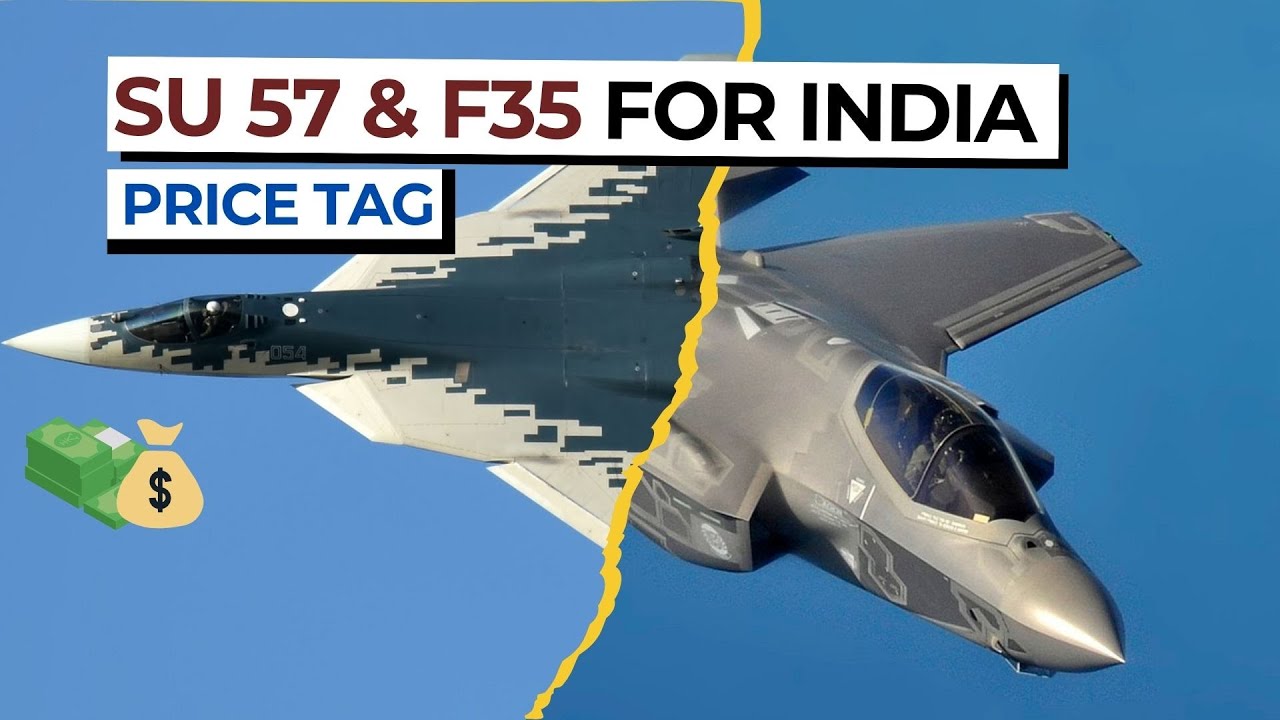
India’s Search for Advanced Fighter Jets: America and Russia Compete in the 5th-Gen Fighter Jet Race
India is actively seeking advanced fighter jets to bolster its air defense capabilities, and two global powerhouses, the United States and Russia, are vying to export their cutting-edge 5th-generation fighter jets to seize this opportunity.
This comes as India faces delays in the development of its domestically built Advanced Medium Combat Aircraft (AMCA), which is projected to be a 5th-generation fighter jet. The AMCA’s engine integration and testing phases remain uncertain, pushing India to explore international options to address immediate security concerns.
With rising geopolitical tensions and threats from neighboring countries, India urgently needs a 5th-generation fighter jet to bridge the gap for the next decade until the AMCA becomes operational.
US and Russia’s Competing Offers
Recently, Indian Prime Minister Narendra Modi visited the United States to strengthen bilateral ties. During this visit, the US government, current President Donald Trump, extended an open proposal to sell its F-35 Lightning II stealth fighter jets to India, bypassing traditional NATO restrictions. On the other hand, Russia has also presented competitive offers for its advanced fighter jets, though at different price points.
F-35 Lightning II: A Breakdown
- Price: The F-35A Conventional Take-Off and Landing (CTOL) variant is being offered to India at $104 million per unit (approximately ₹908 crores).
- Comparison: In contrast, India’s domestically built Tejas fighter jet costs around ₹670 crores, making the F-35 significantly more expensive.
- Features: The F-35 is a stealth fighter jet equipped with advanced avionics, integrated weapons systems, and anti-radar coating, making it a formidable asset in modern warfare.
- Maintenance Costs: However, the F-35 comes with high operational expenses. Its maintenance costs are approximately $32,327 per flight hour (around ₹28 lakhs), which could pose a financial challenge for any nation.
Why India Needs 5th-Gen Fighter Jets
India’s delay in developing the AMCA has created a critical gap in its defense capabilities. The country requires a reliable 5th-generation fighter jet to counter emerging threats and maintain air superiority in the region.
While the F-35 offers cutting-edge technology, its high acquisition and maintenance costs may influence India’s decision. Meanwhile, Russia’s competitive pricing and existing defense ties with India could make its offer more appealing.
Russia’s Su-57: A Cost-Effective Alternative to the F-35
While the US offers its advanced F-35 Lightning II to India, Russia has presented its Su-57, a 5th-generation stealth fighter jet, as a more affordable and strategically viable option.
Priced at approximately $50 million per unit, the Su-57 costs half as much as the F-35, making it an attractive choice for India. Additionally, Russia has proposed integrating advanced features into the Su-57 and leveraging India’s existing Su-30 MKI production facilities to quickly establish Su-57 manufacturing capabilities within the country.
Su-57: Key Features and Advantages
- Price: At $50 million per unit, the Su-57 is significantly cheaper than the F-35.
- Capabilities: The Su-57 is Russia’s answer to Western 5th-generation fighters like the F-35 and China’s J-20. It boasts advanced stealth technology, supermaneuverability, and state-of-the-art avionics.
- Operational Costs: The Su-57’s operating cost is approximately 24,000 per flight hour, which is considerably lower than the F−35’s 24,000 per flight hour ,which is considerably lowert han the F−35’s 32,327 per hour. This makes the Su-57 a more cost-effective option for long-term maintenance and operations.
India’s Rafale Fleet: Expanding Capabilities
India currently operates 36 Rafale fighter jets, which are 4.5-generation aircraft, under a$59,000 crore deal signed with France in 2016. Each Rafale unit costs around $1,638 crores, including training and weapon systems. While slightly more expensive than the F-35, the Rafale has proven to be a reliable asset for the Indian Air Force.
- Operating Costs: The Rafale’s operational cost is approximately $16,500 per flight hour (around ₹14.31 lakhs), making it more affordable to maintain than the F-35.
- Naval Expansion: In a significant move to enhance its maritime defense capabilities, the Indian Navy is set to acquire 26 Rafale M (Marine) fighter jets from Dassault Aviation in a deal worth ₹60,000 crore (USD 7.2 billion). This acquisition aims to strengthen India’s presence in the Indian Ocean Region (IOR) amid growing geopolitical challenges.
Comparing the Options: F-35 vs. Su-57 vs. Rafale
- F-35: Offers cutting-edge stealth and avionics but comes with high acquisition and maintenance costs.
- Su-57: A cost-effective 5th-generation fighter with advanced features and lower operational expenses.
- Rafale: A proven 4.5-generation aircraft with lower operating costs and the added benefit of existing infrastructure and training in India.
As India evaluates its options for advanced fighter jets, the competition between the US and Russia highlights the strategic importance of this decision. While the F-35 offers unmatched technology, the Su-57’s affordability and Russia’s proposal to localize production make it a strong contender. Meanwhile, India’s existing Rafale fleet and the upcoming naval variant deal further complicate the choice.
Ultimately, India’s decision will depend on balancing cost, operational efficiency, and strategic partnerships. Whether it opts for the F-35, Su-57, or expands its Rafale fleet, the move will significantly shape India’s air and naval defense capabilities in the coming years.



