
Defence
Why Indonesia Walked Away From Boeing’s F-15EX Deal
Why Indonesia walked away from Boeing’s F-15EX and shifted its fighter jet strategy toward Rafale and other platforms.

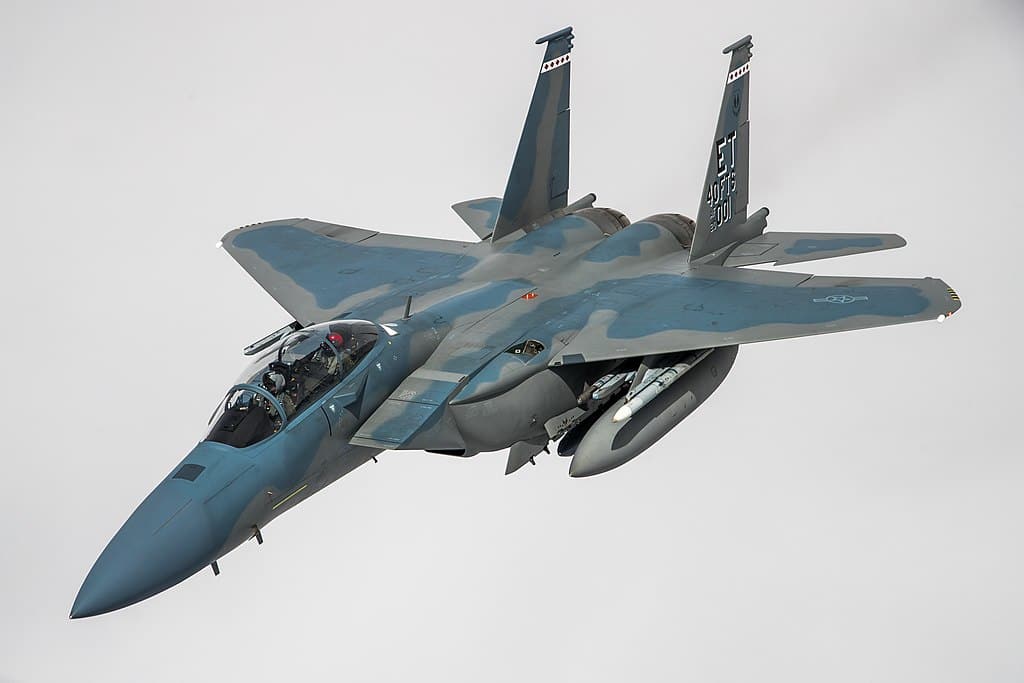
Indonesia is facing a major dilemma in fighter jet procurement as it tries to balance capability, cost, and fleet diversity. Operating a wide mix of aircraft from different countries has created long-term challenges in maintenance, logistics, and budgeting.
At the Singapore Airshow on February 3, 2026, Boeing officially announced that it is no longer pursuing the F-15 fighter jet deal with Indonesia. In this video, we break down why the F-15EX deal collapsed and what it means for Indonesia’s air power strategy.
Back in 2023, Indonesia’s Minister of Defense signed a Memorandum of Understanding (MoU) with Boeing for up to 24 F-15EX Eagle II fighters, sometimes referred to as the F-15ID or F-15DN, with an estimated value of nearly USD 13.9 billion. The deal was aimed at modernizing Indonesia’s aging air force and was subject to approval under the U.S. Foreign Military Sales (FMS) process.
While the U.S. State Department had earlier approved a potential sale of up to 36 aircraft, a final binding contract was never signed. Since then, Indonesia’s procurement priorities have shifted significantly.
Indonesia has already finalized a major contract with France for 42 Rafale fighter jets, valued at around USD 8.1 billion, with deliveries now underway. The first batch includes twin-seat Rafales, marking a key milestone in the Indonesian Air Force’s modernization drive.
At the same time, Indonesia is also:
- Exploring a future purchase of Turkey’s KAAN fifth-generation fighter
- Holding a stake in South Korea’s KF-21 Boramae program
- Stepping away from other potential deals, including used Mirage 2000 fighters from Qatar
These parallel commitments have placed heavy pressure on Indonesia’s defense finances. For 2026, Indonesia’s defense budget is estimated at around USD 9.5 billion, making the high cost of the F-15EX increasingly difficult to justify.
Compared to the F-15EX, the Rafale offers a lower acquisition cost, flexible financing, and a more politically diversified supply chain—one of the key reasons Indonesia appears to be favoring European fighter platforms going forward.
From Boeing’s perspective, the situation was clear. After nearly two years without progress beyond the MoU, and with no finalized contract from Indonesia, Boeing decided to withdraw from the competition entirely.
Boeing will now continue producing the F-15EX primarily for the U.S. Air Force, with production ramping up to around 24 aircraft per year, and with confirmed export customers such as Israel. The Indonesia program is effectively defunct.
Strategically, Indonesia is now focusing on:
- Diversifying suppliers to avoid over-reliance on any single country
- Managing fiscal constraints
- Replacing its aging fighter fleet in a phased and balanced manner
Indonesia still operates a significant number of Russian-origin aircraft, including the Su-30, and is looking to extend their relevance through upgrades. There is also growing interest in integrating advanced weapons, such as India’s BrahMos missile, onto upgraded Sukhoi platforms—similar to India’s Su-30MKI concept—enhancing strike capability without buying entirely new aircraft.
In summary, Boeing’s decision to stop offering the F-15EX to Indonesia reflects not just a failed deal, but a broader shift in Indonesia’s air force modernization strategy, shaped by cost, politics, and long-term sustainability.
For more aerospace news, check out JetlineIntel.
Want to buy aviation merchandise? VisitJetshop.in.
To read Jetlinemarvel’s updates on Google News, head over to Google News.
