
Defence
US to Supply Fighter Jet F404 Engines Monthly — Big Win for Tejas Mk1A
The US commits to monthly F404 engine deliveries for India’s Tejas Mk1A jets, supporting HAL’s production goals and advancing Indo-US defense ties.

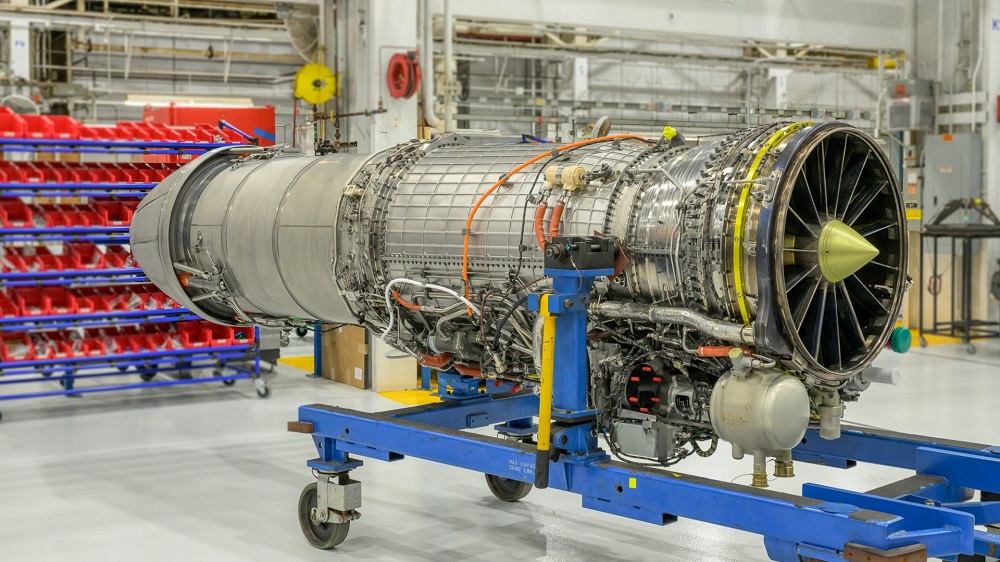
As India intensifies its push for self-reliance in defense manufacturing, a critical element still remains out of reach — jet engines. While India plans to produce over 500 indigenous fighter aircraft over the next two decades, the success of this vision hinges on reliable access to powerful aero-engines.
Now, in a major boost to India’s indigenous aviation programs, the United States has committed to supplying GE F404 engines—the heart of the HAL Tejas Mk1A—on a monthly basis through March 2026.
This move not only solves a long-standing supply chain bottleneck but also signals a deepening Indo-US aerospace partnership—one that will shape the future of India’s fighter jet fleet and defense ecosystem.
🇺🇸 Strategic Deliveries Begin from August
Following an 18-month delay in deliveries, the first F404 engine was finally handed over to India in April 2025, with another scheduled for July. Beginning August 2025, GE Aerospace will deliver two F404 engines per month to India, ensuring uninterrupted support for Hindustan Aeronautics Limited (HAL) as it ramps up production of the Tejas Mk1A variant.
India’s Defence Secretary R.K. Singh, speaking to CNBC-TV18, confirmed the schedule:
“The US will deliver F404 engines continuously till March 2026. These will be used to meet HAL’s target to deliver 12 Tejas Mk1A aircraft by the end of FY2026.”
What Powers the Tejas Mk1A: GE’s F404 Engine ✦
The F404-IN20 engine, a customized high-thrust variant of GE’s F404 family, has powered India’s Tejas Light Combat Aircraft (LCA) since the early 2000s. Here’s what makes the engine critical to India’s airpower strategy:
- Thrust: Provides over 19,000 pounds (85 kN) of thrust, enabling high speed and agility.
- Reliability: Designed for easy maintenance and rapid deployment, ideal for operational squadrons.
- Compact & Lightweight: Suits lightweight platforms like Tejas, offering a high thrust-to-weight ratio.
- Combat Proven: Used in multiple global fighter platforms including the F/A-18 Hornet and KAI T-50.
The F404’s reliability and adaptability make it the perfect match for the Tejas Mk1A, which is now entering mass production to bolster the IAF’s frontline fighter strength.
Beyond Mk1A: F414 Engines for Tejas Mk2 and AMCA
While the F404 powers the current generation of Tejas, its successor—the Tejas Mk2—along with India’s future 5th-generation Advanced Medium Combat Aircraft (AMCA), will be powered by twin F414 engines, GE’s more powerful offering in the same family.
India and the US are now close to finalizing a full technology transfer (ToT) agreement for the F414, which will be a cornerstone for AMCA development. While technical approvals are largely done, price negotiations are ongoing, according to officials at India’s Ministry of Defence.
Each AMCA will require two F414 engines, making the partnership even more critical for the long-term sustainability of India’s stealth fighter ambitions.
Broader Indo-US Defense Ties & Indigenous Push
India’s defense strategy isn’t limited to fighter jets. Defence Secretary R.K. Singh also revealed several key developments:
- Emergency procurement of U.S.-made Javelin anti-tank missiles is underway.
- India may place additional orders for Russian S-400 systems after current deliveries complete next year.
- Plans to establish an MRO facility for the S-400 system inside India are in progress, boosting sustainment capabilities.
He also emphasized the government’s intent to scale up drone warfare capabilities. A large procurement of drones is expected soon under the Buy Indian – IDDM (Indigenously Designed, Developed and Manufactured) category. Tenders for swarm drones, UAVs, and advanced unmanned systems will soon be released to fuel domestic development and readiness.
The Road Ahead: Engines as Strategic Leverage
As India sets ambitious targets to become a global aerospace manufacturing hub, engines remain its most critical dependency. The steady supply of F404 engines will not only keep HAL’s Tejas production on track but also lay the groundwork for deeper cooperation on engine technology through the F414 deal.
If all goes as planned, India could soon begin co-producing or even manufacturing fighter jet engines domestically, marking a true leap in defense self-reliance.
Conclusion:
With monthly deliveries of F404 engines secured till March 2026, India’s Tejas Mk1A program is back on course. More importantly, it reflects growing trust and cooperation between New Delhi and Washington, especially in areas once considered strategically sensitive. As India dreams bigger — from Tejas Mk2 to AMCA — it’s clear that the path to air dominance begins with a reliable engine at its core.
For more aerospace news, check out JetlineIntel.
Want to buy aviation merchandise? Visit Jetshop.in.
To read Jetlinemarvel’s updates on Google News, head over to Google News.
