
Defence
UK and Germany place more orders for the F-35 Fighter
In a strategic move amid rising global tensions, the UK and Germany have expanded their F-35 stealth fighter fleets, reinforcing NATO ties and reintroducing a nuclear strike role for the RAF.

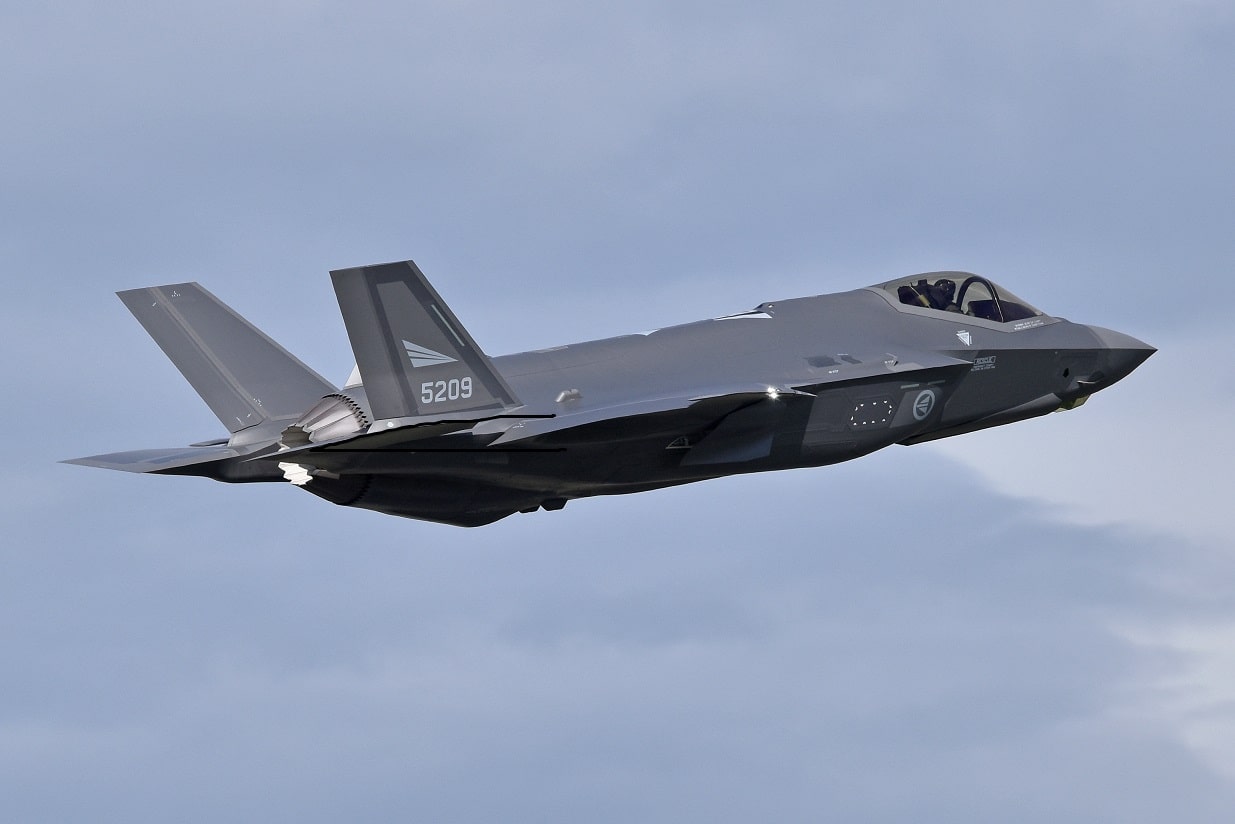
In a powerful display of military modernization and alliance solidarity, two of Europe’s most influential NATO members—the United Kingdom and Germany—are doubling down on their commitment to fifth-generation airpower.
With global tensions mounting and defense postures shifting rapidly in the face of Russian aggression and renewed nuclear deterrence strategies, both nations have made bold moves to secure their skies and strengthen transatlantic defense cooperation.
Their weapon of choice? The F-35 Lightning II—a cutting-edge stealth fighter jet that continues to dominate headlines and procurement lists across the globe.
UK Orders 12 F-35As, Reclaims Nuclear Strike Role
Just days before the NATO summit in The Hague, British Prime Minister Keir Starmer announced the country’s decision to acquire 12 F-35A Lightning II stealth fighters from Lockheed Martin. This marks a significant evolution in the UK’s defense policy—not only expanding its F-35 fleet but also reintroducing a nuclear strike role for the Royal Air Force (RAF) for the first time in over 25 years.
Until now, Britain’s nuclear deterrence relied exclusively on its Trident-equipped submarines, but the integration of F-35As signals a dual-delivery capability—adding flexibility and strategic depth to the nation’s deterrent forces.
This announcement also follows a dramatic emergency landing by an F-35 in Kerala, India, which drew international attention. Despite the mechanical hiccup, the incident ultimately reinforced the jet’s complexity, survivability, and robust engineering.
Germany Expands Its Fleet: 15 More F-35s Ordered
Meanwhile, Germany is expanding its F-35 acquisition with an additional 15 aircraft, bringing its total order to 50 units. Originally chosen to replace the aging Panavia Tornado fleet, the F-35 now stands as the cornerstone of Germany’s future airpower—capable of delivering both conventional and nuclear payloads.
Chancellor Friedrich Merz—while an advocate for a more autonomous European defense industry—has adopted a pragmatic approach in selecting the F-35, given its proven capabilities and immediate availability. While European alternatives like the Future Combat Air System (FCAS) remain in developmental limbo, the F-35 offers a ready-to-fly deterrent amid rising threats from Russia and growing NATO operational demands.
Kill Switch Rumors Rejected
The expanding F-35 adoption comes despite earlier speculation and unfounded accusations that the aircraft contained a so-called “kill switch”—a feature allegedly capable of disabling the jet’s systems remotely. Several European countries, including Germany, France, and Switzerland, had raised concerns.
However, Lockheed Martin has flatly denied the existence of such a capability, and no credible evidence has surfaced to support the claim. The continued procurement by Germany and the UK strongly suggests confidence in the aircraft’s integrity and performance.
Strategic Alignment with NATO Goals
Both Germany and the UK have made these purchases in line with NATO’s revised defense spending goals, which now recommend 5% of GDP, with at least 3.5% dedicated to core military needs. The UK has pledged to meet this target by 2035, reinforcing its front-line role in NATO’s evolving security architecture.
Moreover, the economic impact of the F-35 program is substantial. In Britain alone, the program supports over 20,000 jobs, with BAE Systems playing a critical role in the aircraft’s production alongside Lockheed Martin and Northrop Grumman.
One of the F-35’s most defining features is its stealth technology, which enables it to evade radar and infrared detection, penetrate contested airspace, and strike with surgical precision. This is accomplished through a blend of radar-absorbing materials, heat signature reduction, and internal weapon carriage.
Final Thoughts: F-35 at the Heart of Europe’s Defense Future
As Europe recalibrates its defense strategy for a new era of high-stakes deterrence and geopolitical uncertainty, the F-35 Lightning II stands at the center of transformation.
The UK’s return to airborne nuclear capability and Germany’s expanded fleet underline a shared resolve to deter aggression and strengthen NATO’s collective muscle. While debates over sovereignty and indigenous development continue, the urgency of today’s threats demands immediate, interoperable, and proven solutions.
For more aerospace news, check out JetlineIntel.
Want to buy aviation merchandise? Visit Jetshop.in.
To read Jetlinemarvel’s updates on Google News, head over to Google News.
