
Defence
HAL Nashik to Roll Out India’s Tejas MkII Fighters by 2032
After the successful maiden flight of the Tejas Mk1A, HAL’s Nashik plant is set to transition to producing the next-generation Tejas MkII from 2032-33,

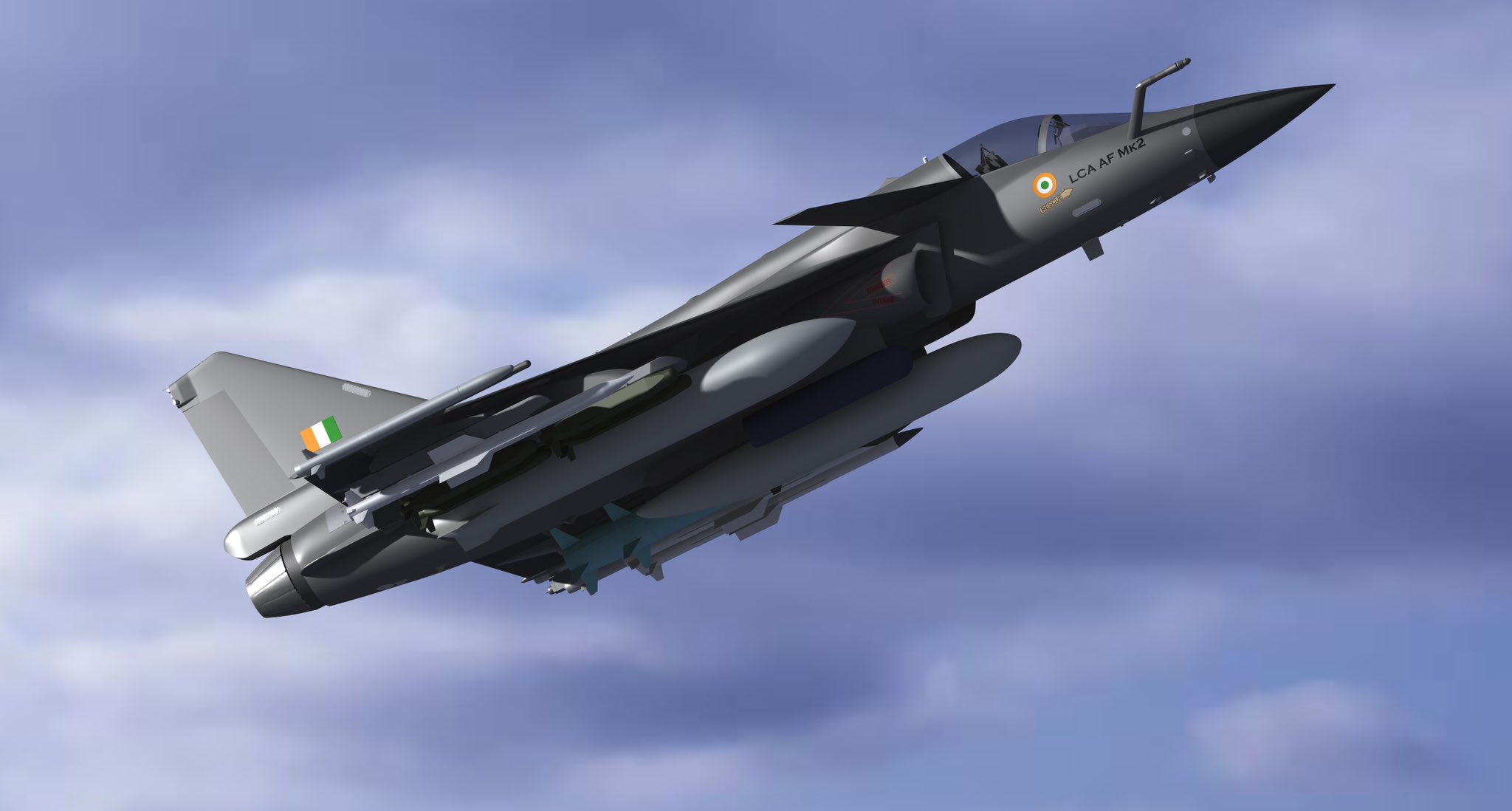
India’s march toward defense self-reliance has gained remarkable momentum. Fresh off the successful maiden flight of the Tejas Mk1A at Hindustan Aeronautics Limited’s (HAL) Nashik facility, the country is already setting its sights on the next major milestone — the production of the advanced Tejas MkII fighter jet.
This achievement not only symbolizes India’s growing confidence in indigenous aerospace capabilities but also marks a crucial step toward Atmanirbhar Bharat — a self-sufficient, technology-driven defense ecosystem.
HAL Nashik’s Next Mission: Tejas MkII Production
Confirming the news, HAL Chairman and Managing Director Dr. D.K. Sunil announced that the Nashik facility — which recently rolled out its first Tejas Mk1A — will transition to producing the Tejas MkII starting from 2032-33, once the aircraft achieves full operational clearance.
“The Nashik plant, our third dedicated Tejas production line, is optimized for high-volume output and will seamlessly adapt to the MkII once it’s ready,” Dr. Sunil stated.
Currently, Nashik is ramping up Mk1A output, joining HAL’s Bengaluru facility and an upcoming third line to boost Tejas production capacity to 24 aircraft annually by FY 2026-27, a major leap from the current eight per year.
Unique Features of Tejas MkII – India’s 4.5-Generation Fighter
The Tejas MkII represents a significant technological upgrade over its predecessor. Evolving from the proven Mk1A airframe, this 4.5-generation multi-role fighter integrates cutting-edge systems designed for air dominance and survivability in modern warfare.
Key Unique Features of Tejas MkII:
Powerful GE F414-INS6 Engine – Offers superior thrust and enables supercruise capability (sustained supersonic flight without afterburner).
Indigenous Uttam GaN AESA Radar – Provides long-range target detection, electronic warfare functions, and multi-target engagement.
Enhanced Avionics Suite – Advanced mission computer, wide-area displays, and fly-by-wire flight control for precision handling.
Extended Combat Radius – Over 1,500 km, allowing deep strike missions and expanded patrol reach.
Increased Payload Capacity – Supports up to 6.5 tons of weapons, including indigenous Astra missiles and guided bombs.
Modular Design – Simplifies maintenance and allows quick upgrades throughout its service life.
These features collectively position the Tejas MkII as a formidable answer to regional threats like China’s J-20 and Pakistan’s JF-17 Block III, ensuring India’s air superiority well into the next decade.
A Strategic Pivot for India’s Aerospace Future
The Nashik facility’s shift from Mk1A to MkII production underscores HAL’s commitment to an aggressive indigenization roadmap. This evolution will not only support the Indian Air Force’s (IAF) modernization goals but also ensure uninterrupted aircraft supply amid a squadron shortfall.
The IAF currently operates 31 active squadrons against a sanctioned strength of 42, and the 83 Mk1A fighters under contract (worth ₹48,000 crore) are expected to bridge this gap by 2029. Once the MkII enters mass production, Nashik will play a central role in manufacturing over 200 next-generation aircraft, while Bengaluru focuses on exports and upgrades.
HAL’s Expanding Industrial Ecosystem
Spanning over 200 acres and employing nearly 1,000 aerospace specialists, HAL Nashik has evolved from a MiG overhaul center to a hub of indigenous fighter jet production. Its first Mk1A prototype — aircraft LA-5053 — completed a flawless 45-minute sortie in October 2025, marking the start of a new chapter.
Despite supply chain challenges, particularly with engine deliveries from GE, Dr. Sunil remains optimistic:
“We are on track for 12 Mk1A deliveries by FY26 end. Supply chains are stabilizing, and Nashik is ready for MkII integration.”
The MkII program is also expected to energize India’s private defense sector, with Tata and Mahindra contributing advanced composites, avionics, and subsystems — reinforcing the country’s growing aerospace industrial base.
The Road Ahead
With the Tejas Mk1A now taking flight and the MkII on the horizon, HAL Nashik stands as a symbol of India’s aerospace evolution — from dependency to self-reliance. The coming decade will witness the fusion of indigenous innovation, private sector collaboration, and strategic foresight, propelling India closer to becoming a global aerospace manufacturing powerhouse.
For more aerospace news, check out JetlineIntel.
Want to buy aviation merchandise? Visit Jetshop.in.
To read Jetlinemarvel’s updates on Google News, head over to Google News.
