
Defence
KF-21 Boramae Sounds Impressive—So Why Isn’t India Buying It?
Despite its advanced design, South Korea’s KF-21 does not fit India’s fighter jet roadmap, as New Delhi prioritizes proven MRFA contenders and indigenous programs like Tejas Mk-2 and AMCA.

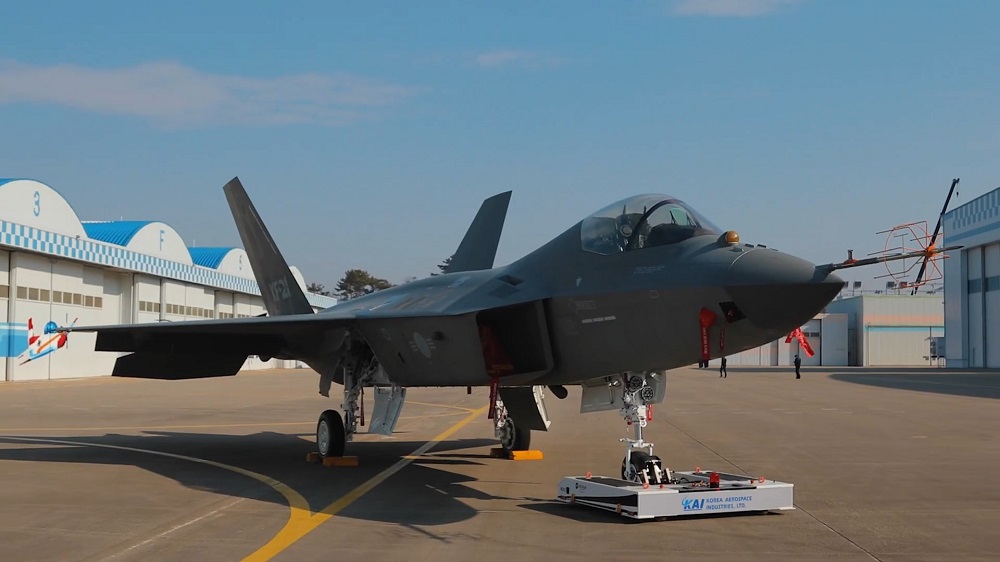
The KF-21 Boramae is South Korea’s most ambitious fighter aircraft program to date. Developed domestically by Korea Aerospace Industries (KAI), the jet represents a new generation of multirole fighters currently under production and flight testing in South Korea. This naturally raises the question: Is India interested in acquiring the KF-21?
The short answer is no—and here’s why.
India’s fighter acquisition strategy today follows a dual-track approach: accelerating indigenous development while selectively procuring proven foreign platforms that align with long-term strategic and industrial goals. At present, the Indian Air Force (IAF) is focused on addressing its squadron shortfall—currently around 30–31 squadrons against a sanctioned strength of 42—through a combination of domestic programs and limited foreign acquisitions under the “Make in India” framework.
On the foreign procurement side, India’s long-running MRFA (Multi-Role Fighter Aircraft) competition—covering 114 fighters—features established contenders such as the Dassault Rafale, Boeing F-15EX, Saab Gripen, and Russia’s Sukhoi Su-35 or Su-57. These platforms are either combat-proven or backed by mature production lines and extensive operational histories.
At the same time, India is heavily prioritizing indigenous programs. These include the HAL Tejas Mk-1A, the upcoming Tejas Mk-2, and most critically, the Advanced Medium Combat Aircraft (AMCA), which is intended to be India’s true fifth-generation stealth fighter. The AMCA prototype is expected in the next decade and forms the backbone of India’s long-term air combat strategy.
The KF-21, while impressive, does not neatly fit into this roadmap. Originally conceived as a joint program between South Korea and Indonesia, Indonesia’s role was later reduced due to financial constraints, leaving South Korea to carry the program largely on its own. The aircraft has already conducted multiple test flights and is expected to enter service in the 2026–2028 timeframe.
However, despite often being described as a fifth-generation fighter, the KF-21 is more accurately classified as a 4.5-generation-plus aircraft in its initial blocks. It lacks full stealth characteristics, particularly internal weapons bays in early variants, which are critical features for true fifth-generation fighters—especially when measured against regional threats such as China’s J-20.
Another key consideration is dependency on U.S.-origin components. The KF-21 is powered by the General Electric F414 engine, the same engine family selected for India’s Tejas Mk-2 and potentially for AMCA variants. While this commonality has advantages, it also introduces export control risks and long-term dependency—an issue India is actively trying to reduce through indigenous engine development.
Although the KF-21 is expected to be relatively cost-effective and upgradeable, it remains unproven in combat and would add another aircraft type to an already diverse IAF inventory. India is cautious about introducing additional platforms that demand new logistics, training, and maintenance ecosystems—especially when more advanced domestic projects are underway.
From South Korea’s perspective, the KF-21 is being actively marketed to close allies such as Poland, the Philippines, Peru, and the UAE. India, however, is not a primary target market, nor has there been any official indication of serious bilateral talks regarding the aircraft.
In summary, India is not pursuing the KF-21 because it does not align with current priorities. New Delhi is focused on:
- Finalizing proven contenders under the MRFA program
- Accelerating indigenous fifth-generation development via AMCA
- Avoiding additional unproven platforms
- Preserving strategic autonomy and industrial self-reliance
Until India’s own next-generation fighters—such as Tejas Mk-2 and AMCA—are operational, the IAF is more likely to rely on existing assets and selective interim solutions, possibly including limited cooperation with Russia, rather than introducing a new and still-evolving aircraft like the KF-21.
For more aerospace news, check out JetlineIntel.
Want to buy aviation merchandise? VisitJetshop.in.
To read Jetlinemarvel’s updates on Google News, head over to Google News.
