
Airport
India to Build AI-Powered Island Airport Inspired by China & Japan
Mumbai is poised for a major aviation milestone with plans for India’s first artificial island airport near the Vadhvan seaport.

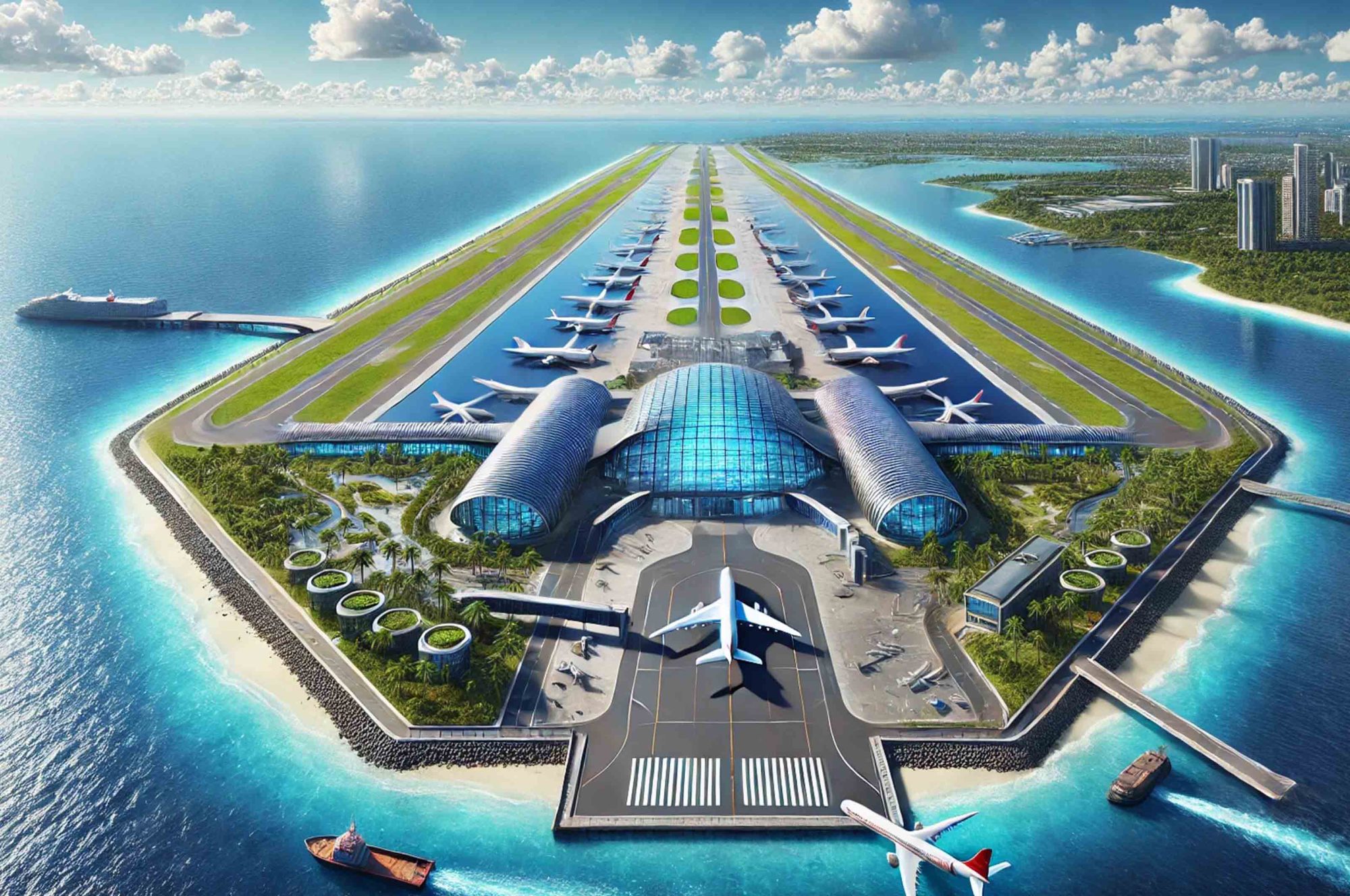
As the aviation industry and technology continue to evolve at an unprecedented pace, India is gearing up for a groundbreaking leap in airport infrastructure.
Following in the footsteps of global aviation giants, the country is set to witness the development of its first-ever offshore airport, a move that could redefine air travel in the region.
Mumbai, India’s bustling financial capital, is already poised for a major aviation boost. In April, the much-anticipated Navi Mumbai International Airport will finally be inaugurated, addressing the city’s growing air traffic demands.
However, the excitement doesn’t end there. Reports now suggest that Mumbai could soon be home to India’s first airport built on an artificial island, similar to China’s Dalian Jinzhou Bay International Airport and Japan’s Kansai International Airport.
A Futuristic Offshore Airport Near Mumbai
The proposed airport will be constructed near the Vadhvan seaport, located approximately 120 km from the existing Chhatrapati Shivaji Maharaj International Airport in Mumbai. The project has recently received initial approvals from the environment and defense ministries, as well as the Maharashtra government.
This new facility is expected to revolutionize Indian aviation by incorporating cutting-edge AI-powered digital twin technology.
The advanced system will create a real-time, integrated view of airside, landside, and terminal operations, optimizing efficiency and enhancing passenger experience. Leveraging IoT, predictive analytics, and real-time data, the platform will improve coordination, enhance safety, and reduce operational costs.
Strategic Location Near Vadhvan Seaport
The artificial island airport is planned near the Vadhvan seaport in Palghar, a major infrastructure project worth ₹76,000 crore ($9.1 billion). Once completed, Vadhvan will be among the world’s top 10 seaports, significantly boosting trade and connectivity.
The port, whose foundation stone was laid by Prime Minister Narendra Modi in August last year, is being developed in two phases—the first by 2030 and the second by 2039.



