
Aviation
Airbus A350 Freighter Hits a Major Setback – What’s Causing the Delay?
Airbus struggles with A350 production delays due to fuselage shortages but remains confident in the A350F’s potential to transform air cargo operations.

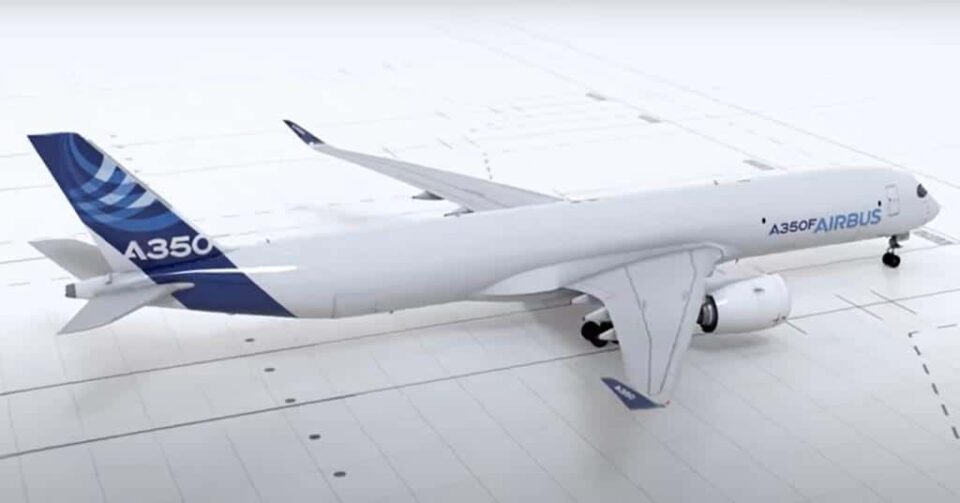
A major highlight of Airbus’s recent success is the growing demand for the A350F, a next-generation freighter set to transform air cargo operations.
Designed with the world’s largest main deck cargo door, the A350F streamlines the loading and unloading process, making air freight more efficient. Built with advanced composite materials, the aircraft is lighter, more fuel-efficient, and offers lower operational costs while reducing its environmental footprint.
However, Airbus faces challenges in ramping up A350 production due to ongoing supply chain disruptions, particularly delays in fuselage components.
Airbus Struggles with A350 Production Delays
Airbus is grappling with delays in fuselage part deliveries from Spirit AeroSystems, causing production bottlenecks for its A350 series, industry sources report.
These supply chain issues have raised concerns about whether Airbus can increase production beyond the current rate of approximately six jets per month through 2025 and possibly into 2026.
The company has set an ambitious target to raise A350 production to 12 jets per month by 2028. However, persistent disruptions, particularly in fuselage supplies, cast doubt on meeting this goal within the expected timeframe.
A350F: The Future of Air Freight
Despite these challenges, Airbus is making steady progress on the A350F. Major components are already being developed in France and Germany, with assembly expected to begin in Toulouse next year. The A350F is poised to redefine air cargo operations with unmatched efficiency, range, and payload capacity.
- Exceptional Range & Payload: With a maximum takeoff weight of 280 metric tons and a payload capacity of up to 100 metric tons, the A350F is designed for long-haul operations with minimal refueling. This makes it a formidable competitor to Boeing’s 777F and 747-8F freighters.
- Fuel Efficiency & Cost Savings: Thanks to its composite materials, the A350F offers significant fuel savings, reducing costs for airlines and cargo operators.
Cost-Efficiency Through Commonality
A key advantage of the A350F is its high commonality with the A350 passenger variant. Airlines operating both models benefit from:
- 100% commonality in engine spares and tooling
- 99% commonality in airframe tools
- 98% commonality in overall spares
This reduces maintenance costs, simplifies fleet management, and boosts operational efficiency.
Airbus’s Outlook: Optimism with Challenges
While Airbus remains committed to increasing A350 production, supply chain disruptions pose significant obstacles. The company is actively working with suppliers to resolve delays, but sources indicate a meaningful production increase beyond six jets per month may not be feasible before 2026.
Still, with strong demand for the a350 freighter and a market shift towards more fuel-efficient aircraft, Airbus remains optimistic. Meeting production targets and overcoming supply chain hurdles will be critical for maintaining its competitive edge in the wide-body aircraft market.



