
Airlines
US DOT Approves Merger: Alaska Airlines & Hawaiian Airlines Finalize Deal

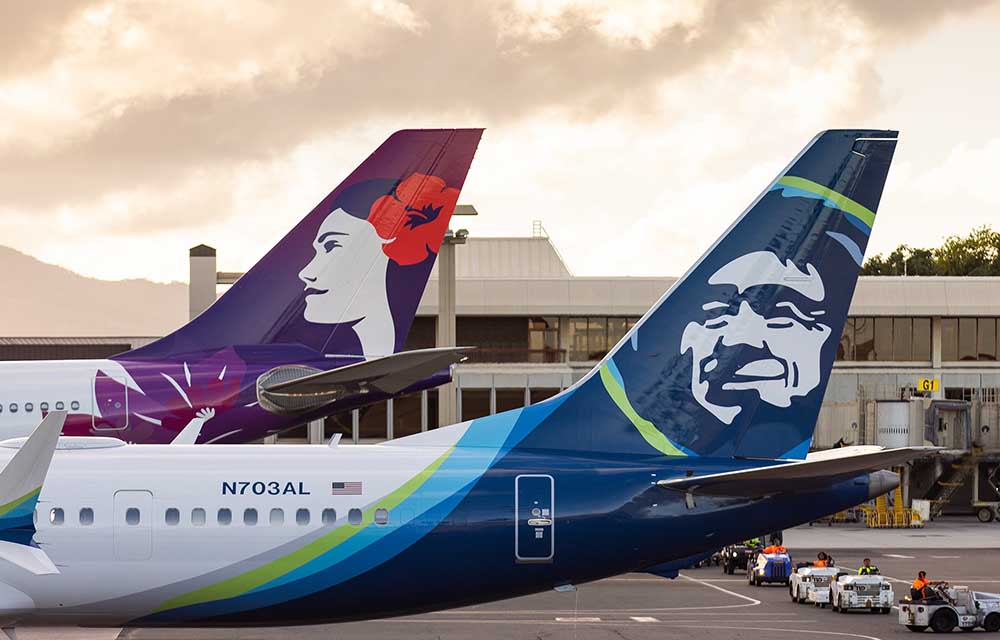
In a significant development for the aviation industry, the U.S. Department of Transportation (DOT) has issued an order granting an exemption for the transfer of international route authorities in the merger of Alaska Airlines and Hawaiian Airlines.
The merger, which is expected to be completed in the coming days, represents a major consolidation in the airline sector. Under the terms of the exemption, Alaska Airlines and Hawaiian Airlines are required to adhere to several key public-interest protections.
Emirates Rolls Out Refurbished Boeing 777s Across Six U.S. Destinations
These stipulations are aimed at preserving service quality and consumer benefits as the merger progresses. Specifically, the airlines must protect the value of rewards, maintain existing service levels on crucial Hawaiian routes to the continental U.S. and inter-island routes, and support rural services.
Additionally, they are required to ensure competitive access at the Honolulu hub airport, offer fee-free family seating, provide alternative compensation for controllable disruptions, and lower costs for military families.
This proactive approach by the DOT marks a new phase in the Department’s merger review process. For the first time, airlines are required to agree to binding, enforceable public-interest protections as a condition for closing their merger.
Japan Airlines Rolls Out Free Domestic Flights to International Passengers
This move highlights the DOT’s commitment to safeguarding public interests and ensuring that mergers do not undermine service quality or competition. As part of the merger agreement, Alaska Airlines will assume approximately $900 million in Hawaiian Airlines’ debt.
Despite this substantial financial responsibility, Alaska plans to retain Hawaiian as a separate brand, which will negate the need for repainting aircraft. To secure approval from the DOT, the airlines agreed to maintain current service levels on key routes where competition is limited.
The exemption granted by the DOT allows Alaska and Hawaiian to finalize their merger while remaining separate and independently operated until the Department completes its review of the transfer application. If the transfer is approved, the public-interest protections will remain in effect for six years.



