
Defence
India–France to Co-Develop 120kN Engine for AMCA with Complete Technology Transfer
Safran and GTRE are set to co-develop a 120 kN engine for India’s AMCA, using an AMCA prototype as a flying test bed to fast-track

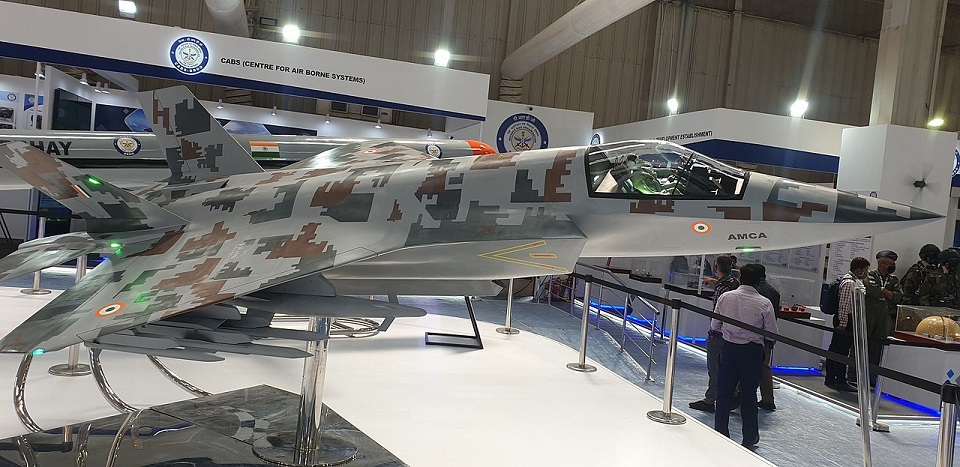
India’s journey toward self-reliance in defense technology has reached a defining milestone.In a landmark collaboration, France’s aerospace giant Safran and India’s Gas Turbine Research Establishment (GTRE) are set to co-develop a next-generation 120 kN fighter jet engine, marking one of the most ambitious defense technology projects in the country’s history.
Valued at $7 billion, the partnership will produce nine prototype engines over the next 12 years, laying the foundation for India’s first truly indigenous high-thrust combat powerplant.
The project will fuel two key aircraft programs — the Advanced Medium Combat Aircraft (AMCA) for the Air Force and the Twin Engine Deck Based Fighter (TEDBF) for the Navy — both central to India’s fifth- and sixth-generation fighter ambitions.
A New Era of Indigenous Engine Development
The new turbofan, based on Safran’s proven M88 core, will deliver 73 kN dry thrust and 120 kN with afterburner, with scalability up to 140 kN for future stealth platforms.
Advanced technologies — including Full Authority Digital Engine Control (FADEC), variable-cycle architecture, and 2,100 K turbine inlet temperature — promise a 20% performance boost over current F414 engines.
To accelerate development, an AMCA prototype will serve as a flying test bed (FTB) instead of the earlier proposed Rafale test aircraft. This approach minimizes redesign risk, ensures direct integration with the AMCA airframe, and shortens the certification timeline by up to three years.
One prototype will be configured in a hybrid setup — one engine bay with the new 120 kN unit and the other with a GE F414 — allowing real-time performance comparisons during flight tests by 2031.
Safran’s Expertise Meets India’s Ambitions
This 50:50 joint venture merges Safran’s global experience in advanced jet engines with GTRE’s deep research legacy. All intellectual property rights (IPR), including cutting-edge single-crystal turbine blade technology, will rest with India’s Defence Research and Development Organisation (DRDO) — a decisive move toward complete technological sovereignty.
These blades, capable of enduring extreme heat and stress, are vital for the engine’s efficiency, longevity, and stealth performance.
Role in AMCA and TEDBF Programs
The engine will be pivotal for both the Air Force and Navy’s next-gen fighters. For the Navy’s TEDBF, which will replace MiG-29K jets, higher thrust will mean greater agility, range, and payload capacity for carrier operations.
For the Air Force’s AMCA, the MkI variant will initially fly with GE F414 engines from 2028, with the Safran-GTRE powerplant entering service in the MkII version by 2035 — making it the first Indian stealth fighter powered by an indigenous engine.
Industrial Participation and Strategic Impact
The program also opens the door for India’s private defense sector, with Tata, L&T, and Adani Defence expected to contribute to manufacturing and integration. This will ensure domestic capability expansion and long-term technology absorption within the country’s industrial base.
Prime Minister Narendra Modi has repeatedly highlighted indigenous engine development as essential for defense independence. The Safran-GTRE collaboration embodies this vision — not merely as a defense partnership, but as a strategic investment in India’s aerospace future, strengthening the nation’s quest for technological self-reliance and global defense leadership.
For more aerospace news, check out JetlineIntel.
Want to buy aviation merchandise? Visit Jetshop.in.
To read Jetlinemarvel’s updates on Google News, head over to Google News.
