
Aviation
Armenia Eyes HAL Su-30MKI to Counter Azeri-Pak Airpower
In response to Azerbaijan’s growing airpower backed by Pakistan, Armenia is eyeing India’s Su-30MKI fighters as a cost-effective and combat-proven alternative. This potential deal highlights Armenia’s shifting defense strategy and India’s rising role as a global arms supplier.

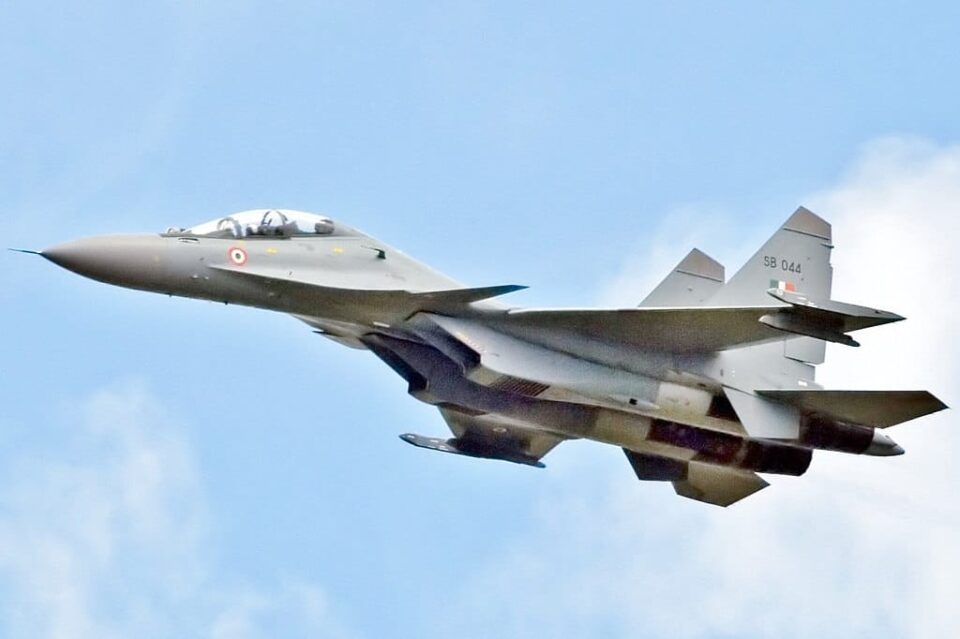
In a rapidly shifting defense landscape, Armenia is recalibrating its military strategy in response to Azerbaijan’s growing airpower—now bolstered by a $4.6 billion fighter jet deal with Pakistan. As Baku prepares to induct 40 next-generation JF-17 Thunder Block III jets, Yerevan is turning to New Delhi for a powerful answer: India’s Su-30MKI fighter jets.
A Strengthening India-Armenia Partnership
In a landmark development, Armenia recently became the first foreign buyer of India’s Akash air defense system, marking a significant milestone in bilateral defense ties. Now, Yerevan is looking to deepen that partnership by initiating high-level negotiations to acquire Indian-built Su-30MKI fighter aircraft.
The Su-30MKI, co-developed by India and Russia and produced domestically by Hindustan Aeronautics Limited (HAL), is widely regarded for its long-range strike capabilities, agility, and integration with indigenous weapons. Its success in frontline operations has caught Armenia’s attention as it seeks to counterbalance Azerbaijan’s rapidly advancing air capabilities.
Strategic Balancing Act
Armenia’s interest in the Su-30MKI is driven by security concerns after Azerbaijan’s massive procurement of JF-17 Block III jets from Pakistan—a fighter equipped with modern avionics and long-range PL-15 missiles. The Yerevan government sees the Su-30MKI as a strategic equalizer—offering both advanced combat performance and cost-efficiency.
India’s Advantage: Combat-Proven and Cost-Effective
India’s Su-30MKI fleet has proven its worth, especially during Operation Sindoor, where the jets demonstrated precision strikes and deep penetration capabilities. Armenia’s potential acquisition of this platform would not only bolster its deterrence posture but also simplify integration, thanks to its existing fleet of Su-30SM jets.
It’s designed to fly in all weather and perform air-to-air and ground attacks. It can fly with autopilot and use radar to navigate at low altitudes. The Su-30 can attack both air and ground targets alone or in groups. As of 2024, about 600 of these jets have been built.
Experts believe HAL’s upgraded Su-30MKI package—featuring India-made Astra beyond-visual-range missiles, Rudram anti-radiation missiles, and even BrahMos cruise missiles—offers a far superior and affordable package compared to Western alternatives.
Mutual Benefits and Industrial Ties
Beyond procurement, Armenia is reportedly exploring upgrades for its Su-30SM fleet using Indian technology. This includes weapons integration, avionics modernization, and pilot training partnerships, enhancing both interoperability and sustainability.
In a potential strategic shift, Armenia may cancel a pending order for eight additional Su-30SM jets from Russia, choosing instead to invest in HAL-produced Su-30MKIs under India’s “Make in India” initiative. This not only supports Indian industry but also positions Armenia as a defense partner invested in long-term cooperation.
Looking Ahead
As regional tensions rise in the South Caucasus, Armenia’s outreach to India for Su-30MKIs symbolizes a growing trust in India’s defense ecosystem. With shared concerns over airspace dominance and national sovereignty, this budding partnership could mark the beginning of deeper military and strategic collaboration.
For more aerospace news, check out JetlineIntel.
Want to buy aviation merchandise? Visit Jetshop.in.
To read Jetlinemarvel’s updates on Google News, head over to Google News.
