
Aviation
Why is India Purchasing the Rafale Rather Than the F 15

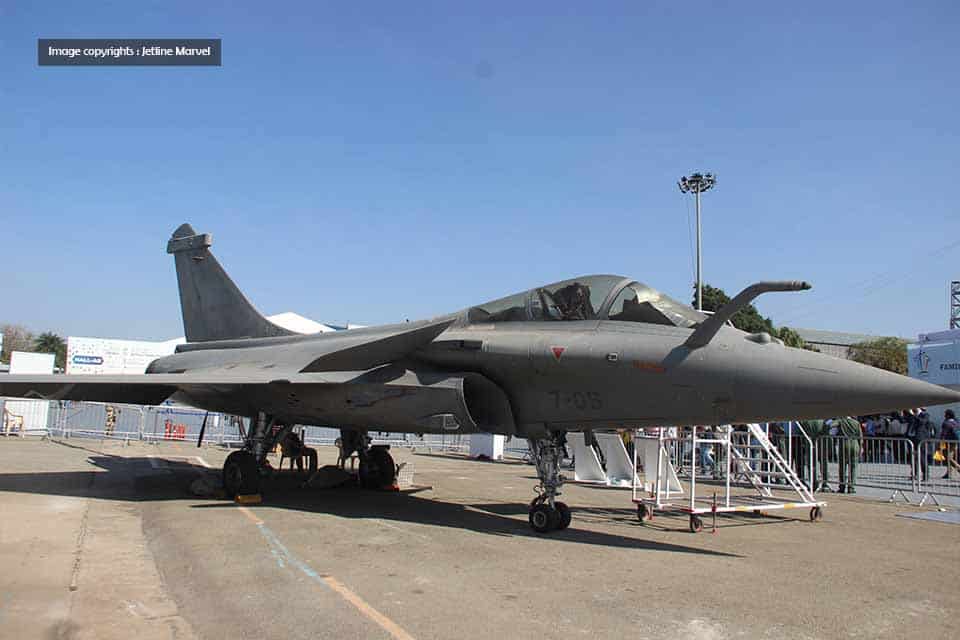
When India finalized its decision to purchase the Dassault Rafale fighter jets, many questioned why the Indian Air Force (IAF) chose the French aircraft over the American F-15 Eagle and its advanced variants, especially considering the F-15’s powerful capabilities and lower price.
However, the choice wasn’t based solely on cost but on multiple strategic, operational, and geopolitical factors that made the Rafale a better fit for India’s defense requirements.
1. Multirole Capabilities
The Rafale is a true multirole aircraft, capable of air superiority, ground attack, reconnaissance, and nuclear deterrence, making it highly versatile for IAF operations. Its ability to seamlessly switch roles mid-mission gives it a distinct advantage in combat scenarios.
Rafale Specifications:
- Engines: 2 × Snecma M88-2 afterburning turbofans
- Max Speed: 1,912 km/h (Mach 1.8)
- Combat Range: 1,850 km
- Ferry Range: 3,700 km
- Service Ceiling: 50,000 ft
- Weapons Load: 9,500 kg
On the other hand, the F-15EX is also a formidable fighter, derived from the F-15E Strike Eagle, and boasts an impressive weapons payload.
F-15EX Specifications:
- Engines: 2 × General Electric F110-GE-129
- Max Speed: Mach 2.5
- Combat Radius: 1,100 miles (1,770 km)
- Service Ceiling: 60,000 ft
- Weapons Load: 13,300 kg
While the F-15EX has superior payload capacity, the Rafale’s balanced design ensures it remains agile and adaptable for multi-mission capabilities.
2. Stealth and Low Observability
While the F-15EX boasts sheer power and weapons capacity, it lacks significant stealth features. The Rafale, in contrast, has reduced radar cross-section (RCS) due to its design, making it less detectable in combat.
The F-15EX’s RCS is considerably larger, making it more visible on enemy radars, whereas the Rafale’s semi-stealth design ensures greater survivability in high-threat environments.
3. Operational Requirements and Terrain Compatibility
India’s diverse geography—from deserts to high-altitude regions like Ladakh—demands an aircraft that can operate efficiently in challenging conditions. The Rafale has been tested for high-altitude operations, making it ideal for India’s strategic needs.
Additionally, the Rafale’s superior instantaneous turn rate (ITR) gives it an edge in dogfighting scenarios, making it more maneuverable in close combat situations.
4. Indigenous Production and Technology Transfer
India’s defense procurement policy prioritizes technology transfer and local production. The Rafale deal included provisions for technology transfer and collaboration with Hindustan Aeronautics Limited (HAL), supporting India’s long-term goal of developing indigenous fighter jets. The Make in India initiative played a crucial role in the selection process.
The F-15EX, while an excellent aircraft, did not come with similar technology transfer offers, making it less appealing from a self-reliance perspective.
5. Strategic Partnerships and Geopolitical Considerations
India and France share a long-standing defense relationship, covering not just aircraft but also submarines and space collaborations. France has been a reliable supplier, ensuring India receives full access to critical technology without geopolitical restrictions.
In contrast, the U.S. has historically imposed restrictions or sanctions on India, raising concerns about long-term dependability.
6. Cost Considerations – Total Cost of Ownership
Although the F-15EX may have a lower initial price, the total cost of ownership (including maintenance, operational costs, and long-term upgrades) for the Rafale is more favorable. Its advanced technology, better fuel efficiency, and lower maintenance requirements make it a cost-effective choice in the long run.
