
Defence
Why HAL May Not Build India’s 5th-Gen AMCA Fighter
In a historic first, HAL may be out of the AMCA race as private players move forward—highlighting delivery delays, IAF urgency.

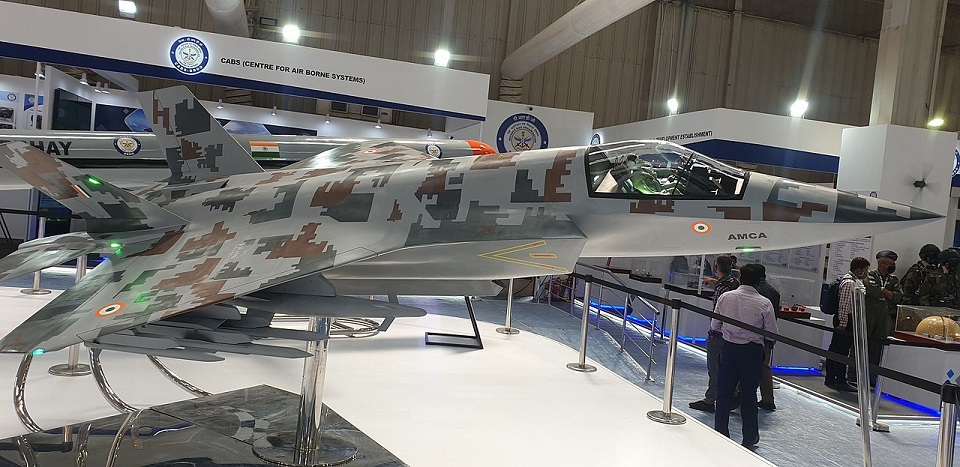
In a major shift for India’s defense aviation sector, Hindustan Aeronautics Limited (HAL)—the country’s flagship public-sector aircraft manufacturer—has reportedly been excluded from the race to develop the Advanced Medium Combat Aircraft (AMCA), India’s ambitious fifth-generation stealth fighter program.
For the first time in the history of indigenous combat aircraft development, HAL will not lead or participate in one of India’s most critical military aviation projects. Reports indicate that the state-run company failed to meet the mandatory criteria during the evaluation of bids, particularly due to its massive order book (valued at over ₹2 trillion), which raised concerns about its capacity to deliver on time.
HAL has responded by stating it has received no official communication from the Defence Research and Development Organisation (DRDO) or relevant authorities regarding any exclusion, and it is therefore unable to comment on media speculation at this stage.
The AMCA program, led by the Aeronautical Development Agency (ADA) under DRDO, is India’s most advanced fighter jet initiative to date. The aircraft is designed to feature stealth capabilities, artificial intelligence integration, compatibility with unmanned systems, and long-range targeting. It is expected to become the mainstay of the Indian Air Force (IAF) from the 2030s onward.
The initial phase involves building five prototypes and one structural test specimen, with the project valued at around ₹15,000 crore. The IAF plans to induct at least 120 of these jets in the first batch.
Of the seven consortia (public and private) that submitted bids last year, only three private-sector-led players have advanced to the next stage—submission of cost bids. These are:
- Tata Advanced Systems Limited
- Larsen & Toubro (in partnership with others like Bharat Electronics and Dynamatic Technologies)
- Bharat Forge (Kalyani Group, teamed with BEML and Data Patterns)
The lowest bidder among these is likely to secure the role of industry partner for prototype development, marking a historic move toward greater private-sector involvement in frontline fighter programs.
This development comes amid ongoing criticism of HAL’s delivery track record. The company has faced repeated delays across key projects:
- Tejas Mk-1A: A ₹48,000 crore program to replace aging MiG-21s. The contract was signed in 2021 with deliveries expected within three years, but as of early 2026, not a single aircraft has been handed over. HAL recently stated that five jets are ready (after weapons trials), but induction remains pending due to certification, operational clearances, and engine supply issues. The IAF plans a further review in May 2026 before accepting deliveries.
- Engine development: HAL has struggled with programs for jet trainer and helicopter engines, sanctioned in 2018 but still incomplete after eight years, due to procurement delays and other gaps.
In May 2025, IAF Chief Air Chief Marshal AP Singh publicly criticized HAL, noting that “not a single project” had been completed on time and questioning the practice of signing contracts for unachievable timelines.
Additional setbacks include the crash of a Tejas fighter at the Dubai Air Show in November 2025 (an older model), with investigations ongoing.
These issues are particularly pressing given the IAF’s squadron shortfall: The force currently operates 29 squadrons against a sanctioned strength of 42.5, equating to a deficit of roughly 200 jets (one squadron = 18 aircraft).
The exclusion from AMCA is not about phasing out HAL entirely—the company retains vast infrastructure, talent, and legacy—but about injecting competition and urgency. The IAF chief has advocated for multiple suppliers to meet urgent needs, and private players are being encouraged to step up.
If the reports hold true, this should serve as a wake-up call for HAL. Timelines and reliable delivery matter in national security. Healthy competition could drive better performance across the board, ensuring India builds the modern airpower it needs.
For more aerospace news, check out JetlineIntel.
Want to buy aviation merchandise? VisitJetshop.in.
To read Jetlinemarvel’s updates on Google News, head over to Google News.
