
Defence
Turkey Set to Scrap S-400, Eyes Return to F-35 Program
Turkey purchased the S-400 from Russia in 2017 under a $2.5 billion deal, with deliveries completed in 2019

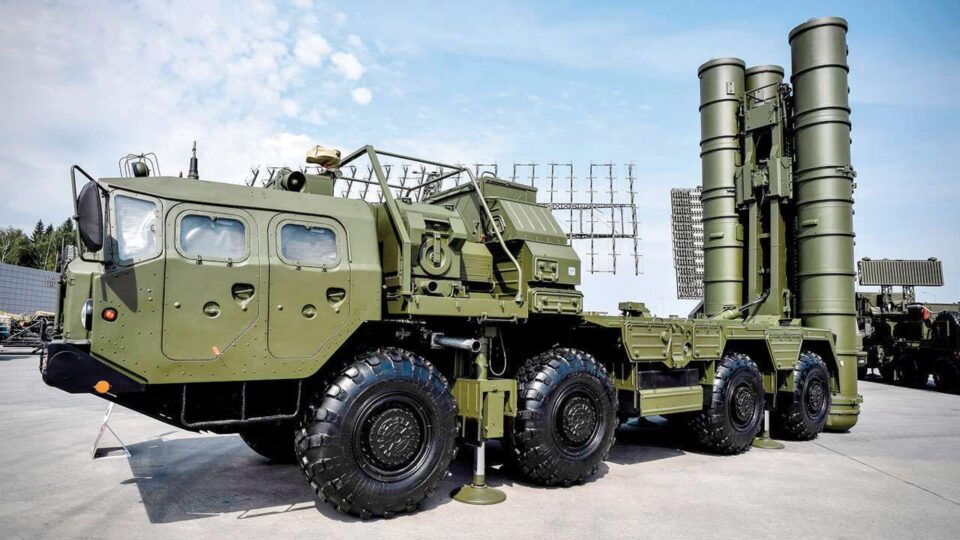
Turkey appears closer than ever to reversing one of its most controversial defence decisions of the past decade.
After years of strained ties with Washington over the Russian-made S-400 system, Ankara is now signaling a major course correction—one that could bring it back into the fold of the world’s most advanced fighter jet programme, the F-35.
A top U.S. official has now hinted that a breakthrough may be just four to six months away, potentially reshaping the strategic air power dynamics of the entire region.
U.S. Envoy Signals Breakthrough in S-400 Deadlock
Speaking at a conference in Abu Dhabi, U.S. Ambassador to Türkiye Tom Barrack revealed that Ankara is “moving toward eliminating” its Russian S-400 air defence system. Barrack said Turkey has resolved the system’s internal operational issues but emphasized that its presence itself remains a major obstacle in Washington’s eyes.
He expressed confidence that the long-standing dispute could be resolved within four to six months, marking the clearest indication yet that Ankara may be preparing to fully remove the S-400 from its inventory.
How the S-400 Deal Triggered a Crisis
Turkey purchased the S-400 from Russia in 2017 under a $2.5 billion deal, with deliveries completed in 2019. The U.S. had repeatedly warned Ankara that the advanced Russian radar system was incompatible with NATO networks—especially the sensitive stealth architecture of the F-35.
When Türkiye proceeded with the acquisition:
- It was expelled from the F-35 Joint Strike Fighter (JSF) program in 2019
- Turkish defence firms were hit with CAATSA sanctions
- The U.S. blocked Ankara from receiving 100 F-35 jets, despite Turkey having already paid $1.4 billion
Washington argued that the S-400’s powerful radar could compromise the F-35’s stealth signature, while Ankara insisted the system would not be integrated with NATO infrastructure.
If the S-400 Goes, the F-35 Returns
A complete removal—either deactivation or return—of the Russian system is a non-negotiable condition for Turkey to rejoin the F-35 programme.
If Ankara proceeds, it would:
- Regain access to fifth-generation F-35 fighters
- Restore defence industrial cooperation with the U.S.
- Rebalance regional air superiority in Turkey’s favour
However, the mechanism for removing or transferring the S-400 has not yet been publicly disclosed.
A previous suggestion of selling the S-400 to a third country is restricted by end-user clauses. Selling it back to Russia remains one of the few feasible options—after which Moscow could potentially transfer it to another operator such as India.
S-400 vs F-35: A Quick Battlefield Comparison
Despite being very different platforms, both the S-400 and F-35 have recently proven their combat value.
S-400 Air Defence System
- Role: Defensive shield, denies enemy air superiority
- Strength: Long-range detection & interception
- Recent Performance: Demonstrated high accuracy in India during Pakistan’s May 2025 drone and missile barrage
F-35 Stealth Fighter
- Role: Offensive spearhead for deep-strike missions
- Strength: Stealth, sensor fusion, SEAD/DEAD capability
- Recent Performance: Used by Israel in deep strikes inside Iran; escorted B-2 bombers in Operation Midnight Hammer
In essence:
S-400 stops enemies from entering your skies. F-35 enters enemy skies undetected.
They are opposites in purpose—and incompatible for any country planning to operate the F-35.
Why Turkey’s Appetite for S-400 Has Declined
Turkiye’s interest in the S-400 has eroded for several reasons:
- Zero NATO Integration: The system will never be connected to the NATO air defence network.
- Aging Missiles: The interceptor shelf-life has declined, reducing combat readiness.
- Storage & Maintenance Risks: The inactive S-400s reportedly stored at a secret location require Russian servicing—an action that could trigger more U.S. sanctions.
- Shift Toward Indigenous Systems: Turkey is prioritizing homegrown defence technologies, making S-400 integration impractical.
- Blocked F-35 Participation: Remaining loyal to the S-400 means permanently losing access to the F-35.
Geopolitical Ripple Effects
If Turkey re-enters the F-35 ecosystem, it would dramatically reshape the regional balance of air power. Greece, Israel, and multiple Gulf states already field or are acquiring the jet, and Turkey’s inclusion would further intensify the region’s airpower race.
Meanwhile, countries like Switzerland are reassessing their own F-35 orders, potentially opening new procurement pathways.
Conclusion
Turkey’s willingness to abandon the S-400 marks a pivotal turning point in its defence posture. If Ankara proceeds, the next few months could witness:
- The end of a major U.S.–Turkey diplomatic rift
- The revival of Turkey’s F-35 ambitions
- A reconfiguration of strategic balances across Europe and the Middle East
The world now watches as Turkey decides whether to trade Russia’s S-400 for America’s most advanced stealth fighter—potentially rewriting its defence future.
For more aerospace news, check out JetlineIntel.
Want to buy aviation merchandise? VisitJetshop.in.
To read Jetlinemarvel’s updates on Google News, head over to Google News.

You must be logged in to post a comment Login