
Aviation
Turkey Reveals KAAN Fighter Jet Price as Indonesia Orders 48 Units

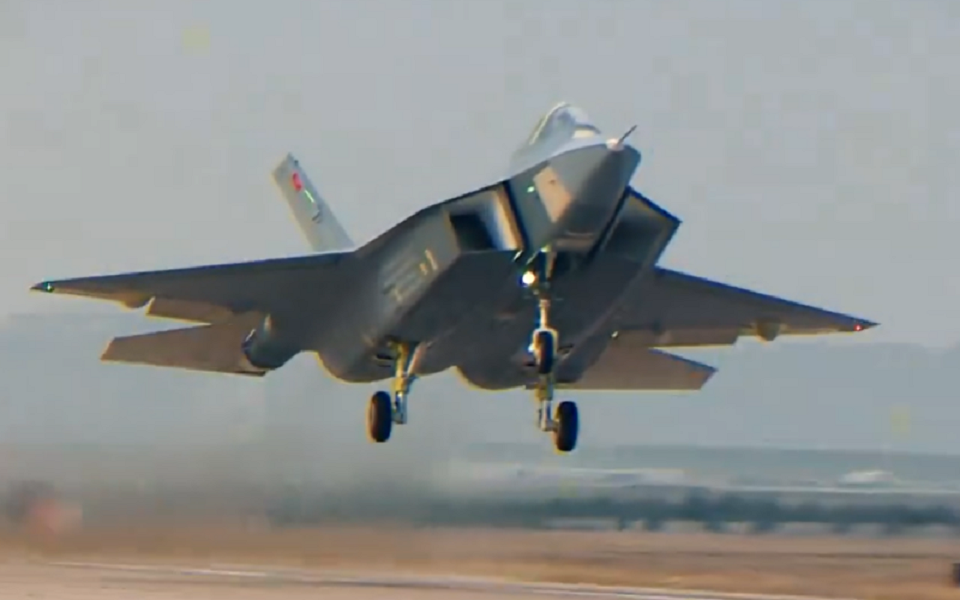
In a significant realignment of defense partnerships, Indonesia has officially become the first export customer for Turkey’s fifth-generation fighter jet, the Kaan, developed by Turkish Aerospace Industries (TAI).
Announced on July 11, 2025, this landmark deal to procure 48 Kaan fighter jets—valued at approximately $10 billion USD—signals a bold shift in Indonesia’s defense procurement strategy.
With $8.1 billion already committed, each jet is estimated to cost around $192 million, placing it on par with the U.S. F-35 and slightly above the French Rafale, of which Indonesia is also acquiring 42 units.
Modernizing for a New Era
Indonesia’s air force currently operates a mix of aging fourth-generation platforms such as the F-16, many of which are nearing retirement.
The acquisition of the Kaan, a stealth-capable, twin-engine fighter designed for both air-to-air and air-to-ground operations, is a major step toward modernizing its air capabilities.
The jet features reduced radar cross-section, advanced avionics, and network-centric warfare capabilities—making it suitable for operations in the increasingly contested Indo-Pacific region, especially amid rising tensions in the South China Sea.
Beyond Procurement: Industrial and Strategic Value
The Kaan deal isn’t just about acquiring hardware. It includes significant technology transfer and co-production agreements, enabling Indonesia to participate in component manufacturing and leverage its domestic aerospace industry.
This aligns with Jakarta’s long-term vision of achieving defense self-reliance, boosting its industrial base, and reducing dependence on foreign suppliers.
Importantly, the deal sidesteps traditional export control barriers. Since the Kaan is produced domestically in Turkey, it does not require third-party permissions for export—offering Indonesia more strategic independence compared to systems sourced from the U.S. or Europe.
Geopolitical Realignment and Non-Alignment Strategy
Indonesia’s pivot toward Turkey also reflects its broader non-aligned foreign policy, aimed at avoiding over-reliance on any one military bloc.
By choosing Turkey, a NATO member but not a superpower, Indonesia diversifies its partnerships beyond traditional suppliers like the U.S., France, Russia, or China—particularly after facing U.S. sanctions threats over the earlier Sukhoi Su-35 deal.
This strategy also allows Indonesia to hedge against global uncertainties, while still accessing advanced defense technologies without the political strings often attached to deals from larger powers.
Turkey’s Rise in Asia
Turkey, meanwhile, is emerging as a key defense partner in the Islamic and developing world. Its influence is growing not just in Southeast Asia but also in South Asia.
Notably, Ankara has reportedly offered to co-produce the Kaan in Pakistan, much like China’s joint development of the JF-17 with Islamabad. This expanding footprint is reshaping Asian defense dynamics and offering countries an alternative to both Western and Eastern suppliers.
Turkey’s recent IDEF 2025 defense expo saw strong interest from regional and Islamic countries alike—demonstrating growing confidence in Turkey’s defense sector and its positioning as a strategic middle ground in global arms markets.
Challenges Ahead: Budget, Logistics, and the Engine Dilemma
Despite the strategic appeal, the deal comes with challenges. Indonesia has a history of shifting procurement plans and is often limited by its defense budget, which hovers around 1% of its GDP.
Moreover, managing multiple fighter platforms—including the Rafale, South Korea’s KF-21 (in which Indonesia holds a stake), and potential interest in F-15s or Su-35s—could strain its logistical, operational, and training resources.
A major unresolved issue is the engine. The current Kaan prototypes use U.S.-made engines, but Turkey is seeking an independent solution.
Several players are in contention to supply the final engine for full-scale production, including Rolls-Royce (UK), Safran (France), and Russia.
Whichever country wins the contract could gain not only financially but also politically, given the growing international interest in the Kaan.
The economic implications are substantial. Any nation supplying engines for the Kaan stands to profit significantly as orders increase from Middle Eastern, African, and Islamic countries. The engine, therefore, is not just a technical choice—it’s a geopolitical and economic bargaining chip.
A Rising Contender
Following a successful maiden flight, the Kaan has drawn growing attention from potential buyers across the Middle East and Asia.
Its combination of stealth, multi-role capability, competitive pricing, and political flexibility makes it a compelling choice for countries seeking next-gen capabilities without falling into the influence of superpower alliances.
In Summary
Indonesia’s decision to acquire Turkey’s Kaan fighter jet represents far more than a military purchase—it’s a calculated move blending modernization goals, economic pragmatism, industrial growth, and geopolitical agility.
By stepping away from traditional defense suppliers and embracing a rising player like Turkey, Indonesia is helping shape a new multipolar defense order in Asia—one driven not just by hardware, but by independence, resilience, and strategic foresight.
