
Latest News.
These are the most Fuel-Efficient airplanes in the World

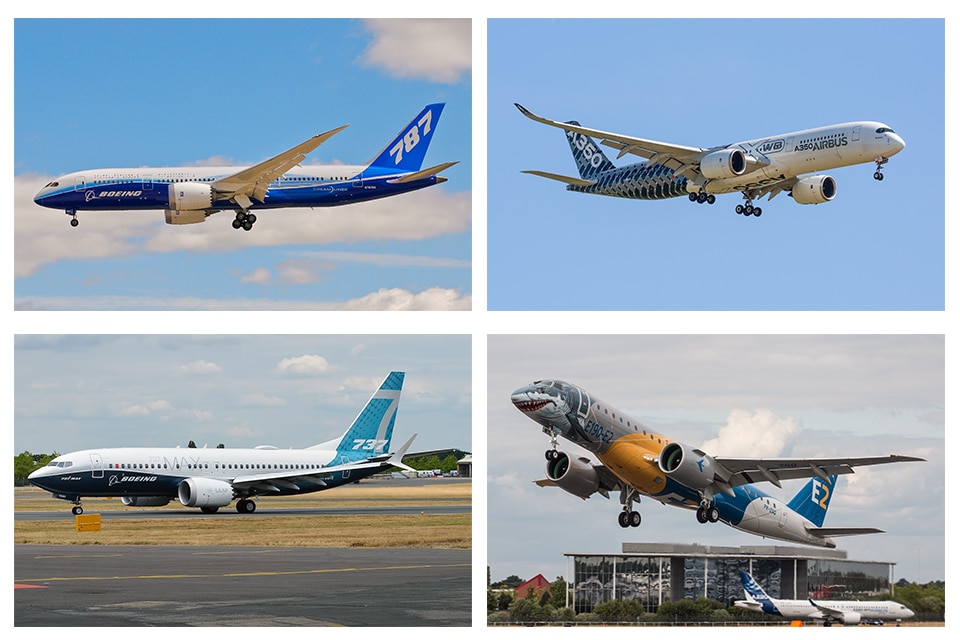
Fuel efficiency is a cornerstone of the aviation industry, driven by the dual need to cut costs and minimize the environmental impact of air travel. With rising concerns over climate change and the growing urgency to reduce greenhouse gas emissions, airlines are prioritizing innovations and strategies to enhance fuel efficiency. Here, we explore some of the most fuel-efficient aircraft in the skies today and how they contribute to more sustainable aviation.
Why Fuel Efficiency Matters
Fuel costs make up a significant portion of an airline’s operational expenses, often accounting for 20–30% of total costs. Beyond economic considerations, fuel efficiency is integral to reducing emissions, aligning with global sustainability goals. With advancements in design, materials, and technology, modern aircraft are more fuel-efficient than ever, paving the way for greener skies.
Top 6 Fuel-Efficient Aircraft
Let’s take a closer look at six aircraft leading the charge in fuel efficiency:
1. Boeing 787 Dreamliner
The Boeing 787 Dreamliner is a pioneer in fuel efficiency, thanks to its innovative features:
- Lightweight Composite Structure: Reduces overall weight significantly.
- Advanced Aerodynamics: Improves flight performance.
- Efficient Engines: Cuts fuel consumption by up to 20% compared to older models.
- Key Stats:
- Range: Up to 7,635 nautical miles.
- Maximum flight duration: ~15–16 hours without refueling.
2. Airbus A350 XWB
Designed with sustainability in mind, the Airbus A350 XWB (Extra Wide Body) excels in both efficiency and performance:
- Enhanced Aerodynamics: Streamlined for better fuel economy.
- Advanced Materials: Uses lightweight composites to lower fuel consumption.
- Efficient Engines: Optimized to reduce emissions.
- Key Stats:
- Range: Up to 8,000 nautical miles.
- Maximum flight duration: ~17 hours without refueling.
3. Boeing 737 MAX
Despite its initial challenges, the Boeing 737 MAX has emerged as a fuel-efficient workhorse:
- Redesigned Winglets: Improve aerodynamics.
- Advanced Engines: Deliver higher fuel efficiency.
- Key Stats:
- Range: Approximately 3,850 nautical miles.
- Maximum flight duration: ~6–7 hours without refueling.
4. Airbus A320neo
The Airbus A320neo (New Engine Option) is a next-generation upgrade to the popular A320 series:
- Efficient Engines: Deliver 15–20% better fuel efficiency than older variants.
- Lighter Materials: Reduce overall weight.
- Key Stats:
- Range: Up to 3,650 nautical miles.
- Maximum flight duration: ~6 hours without refueling.
5. Embraer E2 Series
The Embraer E2 Series, including the E175-E2, E190-E2, and E195-E2, is tailored for regional operations with an emphasis on efficiency:
- Advanced Aerodynamics: Optimize performance.
- Efficient Engines: Reduce fuel burn and emissions.
- Key Stats:
- Range: Up to 3,400 nautical miles.
- Maximum flight duration: ~6 hours without refueling.
6. Bombardier CSeries (Airbus A220)
Originally developed by Bombardier, the Airbus A220 is a game-changer in the regional jet category:
- Lightweight Design: Reduces fuel consumption.
- Modern Engines: Enhance fuel efficiency by 20% compared to older regional jets.
- Key Stats:
- CS100 Range: Up to 3,400 nautical miles.
- CS300 Range: Up to 3,200 nautical miles.
- Maximum flight duration: ~5–6 hours without refueling.



