
Defence
In Operation Sindhoor, Pakistan Lost $340M Worth of AWACS and Fighters
The destruction of two Saab 2000 Erieye AWACS during Operation Sindoor inflicted a $340M blow on Pakistan, far surpassing its fighter jet losses.

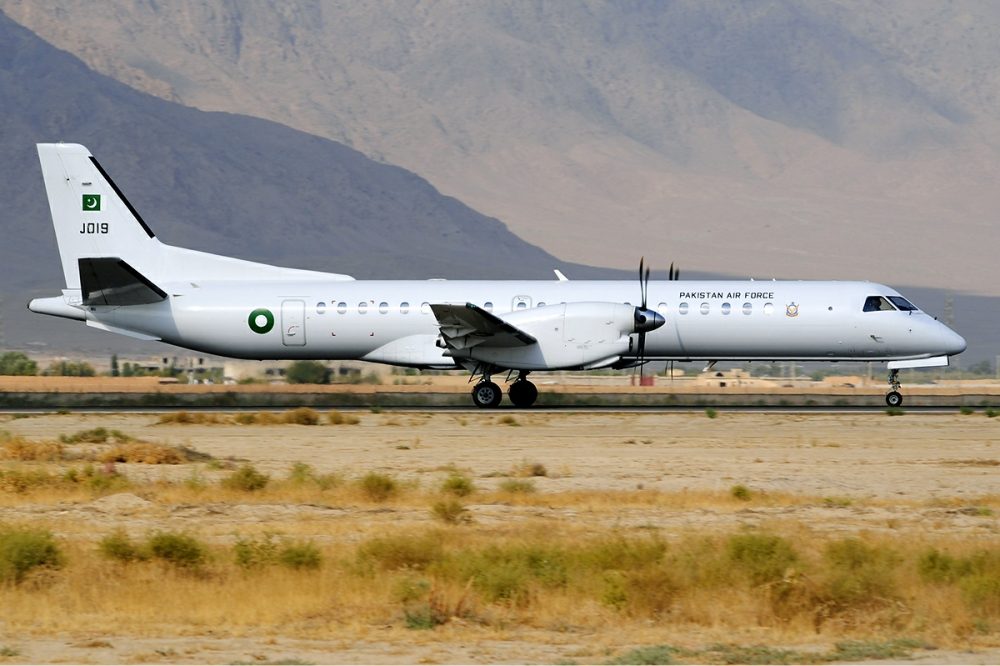
Three months have passed since the fierce Indo-Pak aerial conflict under Operation Sindoor, and new revelations continue to shed light on the heavy price paid by the Pakistan Air Force (PAF).
According to multiple sources, including a retired PAF Air Marshal, the losses endured by Pakistan extend far beyond fighter jets.
While both nations claimed victories in the skies, one truth has emerged with clarity: Pakistan’s most devastating setback was the destruction of two high-value Saab 2000 Erieye Airborne Early Warning and Control (AEW&C) aircraft—losses that outweigh even the downing of F-16s, JF-17s, and Mirage-IIIs in both financial and strategic terms.
India and Pakistan’s Conflicting Claims
In the immediate aftermath of the May 2025 conflict, Pakistan was quick to announce that it had downed five Indian fighter jets, including three Rafales.
India, however, dismissed this claim, taking time to verify its battle assessments before declaring that it had destroyed five Pakistani fighter jets and one large aircraft.
Indian Air Force (IAF) Chief, Air Chief Marshal A.P. Singh, confirmed on August 9 that:
“We have at least five fighters confirmed killed and one large aircraft, which could be an ELINT or AEW&C aircraft, taken out from a distance of about 300 kilometers—the largest-ever recorded surface-to-air kill.”
Dassault Aviation CEO Eric Trappier further refuted Pakistan’s claims, clarifying that only one Indian Rafale was lost, and that too due to a technical malfunction at high altitude, not enemy fire.
The Catastrophic Blow: Saab 2000 Erieye AWACS Losses
The gravest setback for Pakistan came with the confirmed destruction of two Saab 2000 Erieye AEW&C aircraft. One was downed mid-air by an Indian S-400 Triumf missile at an unprecedented range of 314 kilometers, while the second was obliterated on the ground by a precision BrahMos strike on Bholari Airbase.
Each Erieye aircraft, procured at $160 million and now valued at approximately $170 million in 2025, formed the backbone of Pakistan’s air defense and command infrastructure. The combined $340 million loss, representing 22% of PAF’s Erieye fleet, is not only Pakistan’s largest financial hit in Operation Sindoor but also a crippling blow to its strategic capabilities.
These platforms, equipped with AESA radar capable of detecting aerial threats up to 450 km away, were central to coordinating PAF fighter operations. Their destruction has left significant gaps in Pakistan’s situational awareness and command chain.
Fighter Jet Losses: Operationally Painful, Financially Lighter
While fighter jets accounted for the bulk of PAF’s losses, their financial impact was smaller in comparison to the Erieye disaster.
- F-16 Fighting Falcons: Between 4–8 lost. Four Block 52D models alone represented losses of $174–349 million, while older F-16A/B variants cost significantly less (~$20–25 million).
- JF-17 Thunder: At least 1–4 destroyed, each worth $25–30 million, totaling up to $120 million.
- Mirage-III: Multiple second-hand Mirage-IIIs were lost, with negligible financial value ($5–10 million each), though their depletion further weakens Pakistan’s already aging fleet.
Operation Sindoor: India’s Offensive
Launched on May 7, 2025, after a deadly terrorist attack in Pahalgam, Operation Sindoor saw the IAF unleash precision strikes on 11 PAF airbases and 9 terror camps in Pakistan and Pakistan-occupied Jammu & Kashmir (PoJK). Supported by the S-400 Triumf and MR-SAM systems, India used advanced weapons like BrahMos and SCALP-EG to neutralize high-value targets, inflicting heavy material and psychological damage on the PAF.
Strategic Fallout
The loss of two Saab 2000 Erieye AEW&C aircraft represents not just a financial drain of $340 million but also a crippling reduction in Pakistan’s airborne surveillance and battle management capability. Unlike fighter jets, which can be replenished over time, replacing such strategic assets demands years of procurement, integration, and specialized training.
With the PAF now facing a 22% reduction in its AEW&C fleet, its ability to monitor, coordinate, and counter Indian aerial threats has been severely impaired—a legacy of Operation Sindoor that will haunt Pakistan’s defense establishment for years to come.
For more aerospace news, check out JetlineIntel.
Want to buy aviation merchandise? Visit Jetshop.in.
To read Jetlinemarvel’s updates on Google News, head over to Google News.
