
Aviation
HAL–Russia Alliance Rekindles IL-276 Project for IAF Transport Tender
The IL-276, backed by HAL and Russia, re-enters India’s MTA race with FADEC engines, promising local production, tactical airlift capability, and a boost to Indo-Russian defence ties.

India today stands at the brink of true self-reliance in defence, guided by the vision of Atmanirbhar Bharat.
With the Indian Air Force (IAF) set to release its long-awaited Multi-Role Transport Aircraft (MTA) tender, Russia and Hindustan Aeronautics Limited (HAL) are preparing a joint pitch that could reshape the nation’s tactical airlift capabilities and reinvigorate Indo-Russian defence cooperation.
This move not only highlights India’s growing emphasis on indigenous production and technology transfer but also reaffirms Moscow’s role as one of New Delhi’s most reliable defence partners.
Resurrecting a Decade-Old Dream
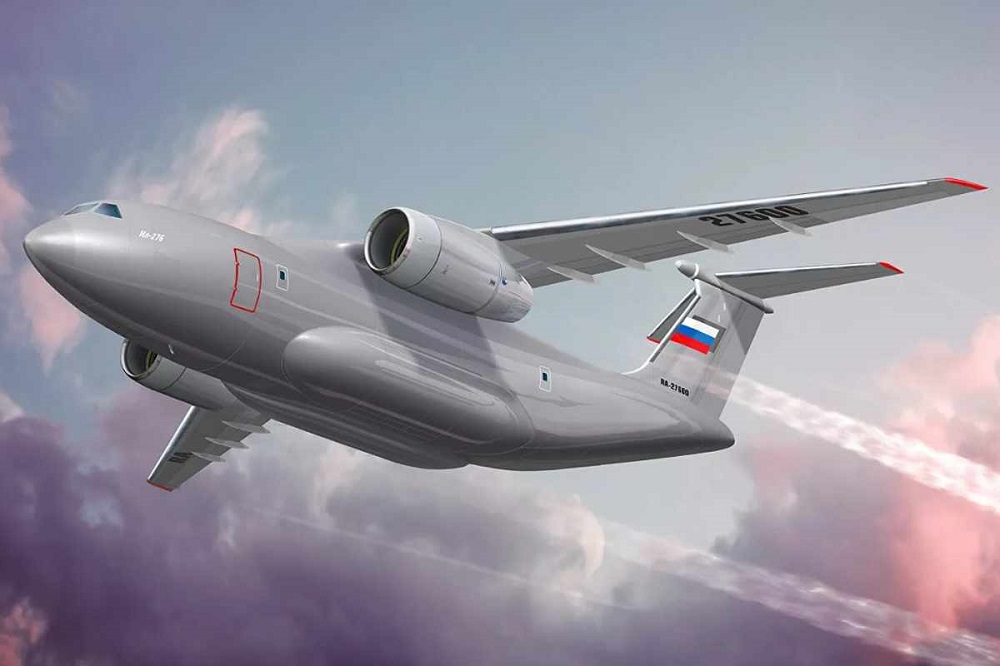
According to sources, Russia is re-entering the competition with the Ilyushin IL-276, a medium transport aircraft proposed in collaboration with HAL. This marks the revival of a joint venture first signed in 2008, which originally envisioned a 20-tonne-class transporter to replace the IAF’s ageing An-32 fleet.
The earlier $3 billion deal collapsed in 2016 over disagreements on engines—India demanding FADEC-equipped powerplants for modern avionics integration and safety, while Moscow insisted on its indigenous PD-14A turbofan without FADEC. Unable to bridge the divide, India walked away.
Fast-forward to 2025, Russia now claims to have solved the issue. United Aircraft Corporation (UAC) sources suggest the revived IL-276 will feature an upgraded PD-14LM engine with FADEC, co-developed with India’s Gas Turbine Research Establishment (GTRE).
While details remain unclear—whether it’s a fully indigenous upgrade, a hybrid solution, or even a Western engine license—the inclusion of HAL in final assembly promises up to 60% local production and offsets, aligning strongly with Make in India.
IL-276 Features: Bridging a Capability Gap
The IL-276 is designed with a 20-tonne payload capacity and short takeoff and landing (STOL) capability, making it ideal for operations from austere Himalayan airstrips in Ladakh and the Northeast. This places it above the C-130J Super Hercules (18-tonne capacity) and just below Embraer’s KC-390 Millennium (26-tonne), giving it a “middle path” advantage.
Analysts describe the IL-276 as a “Goldilocks aircraft”—not too heavy like the C-17 Globemaster, not too light like the C-295. Its balance of payload, range, and ruggedness could make it the perfect fit for IAF’s requirement of 40–80 aircraft for troop transport, artillery movement, and humanitarian operations.
Russia–India Defence Ties: From Su-30MKI to Su-57
The IL-276 proposal is not emerging in isolation—it reflects the broader resilience of Indo-Russian defence cooperation. One of the most successful examples of this partnership is the Sukhoi-30MKI fighter jet, which today forms the backbone of the IAF.
Not only is it assembled at HAL’s Nashik facility, but a large percentage of its components are also manufactured in India. This arrangement has stood the test of time, underscoring Moscow’s willingness to adapt to India’s industrial and operational needs.
Building on this legacy, Russia is also putting forward a bold new proposal: offering India its Su-57 fifth-generation fighter jet under a potential co-production model. Sources suggest Russia is exploring local manufacturing of the Su-57 in India, with HAL once again eyed as a production partner.
The Su-57, Russia’s answer to the American F-35 Lightning II, combines stealth, advanced avionics, and formidable weapon systems.
Unlike many Western deals, Moscow has reportedly indicated openness to sharing critical source codes—allowing India to integrate indigenous missiles, customize upgrades, and retain operational independence. If realized, this would represent one of the most unprecedented technology-sharing arrangements India has ever secured.
The Road Ahead
As the IAF prepares to release the Request for Proposal (RFP) within weeks, the IL-276 has re-emerged as a serious contender. Backed by HAL and fortified by upgraded engine technology, it could fill a crucial tactical gap while bolstering India’s aerospace manufacturing ecosystem.
For HAL, the deal would inject fresh momentum into its transport aircraft division beyond fighters like the Tejas Mk2. For Russia, it offers a chance to reaffirm strategic trust, at a time when geopolitical dynamics are shifting post-Ukraine conflict.
Whether through the IL-276 or advanced offerings like the Su-57, the Russia–India partnership continues to evolve—adapting old frameworks, resolving past disagreements, and charting new pathways for future cooperation.
For more aerospace news, check out JetlineIntel.
Want to buy aviation merchandise? Visit Jetshop.in.
To read Jetlinemarvel’s updates on Google News, head over to Google News.
