
Aviation
Airbus Considers FAL in India, Faces Competition from Embraer and NAL
Amid India’s aviation boom, Airbus weighs building a local assembly line as competition intensifies from Embraer and the revival of India’s own RTA-90 program.

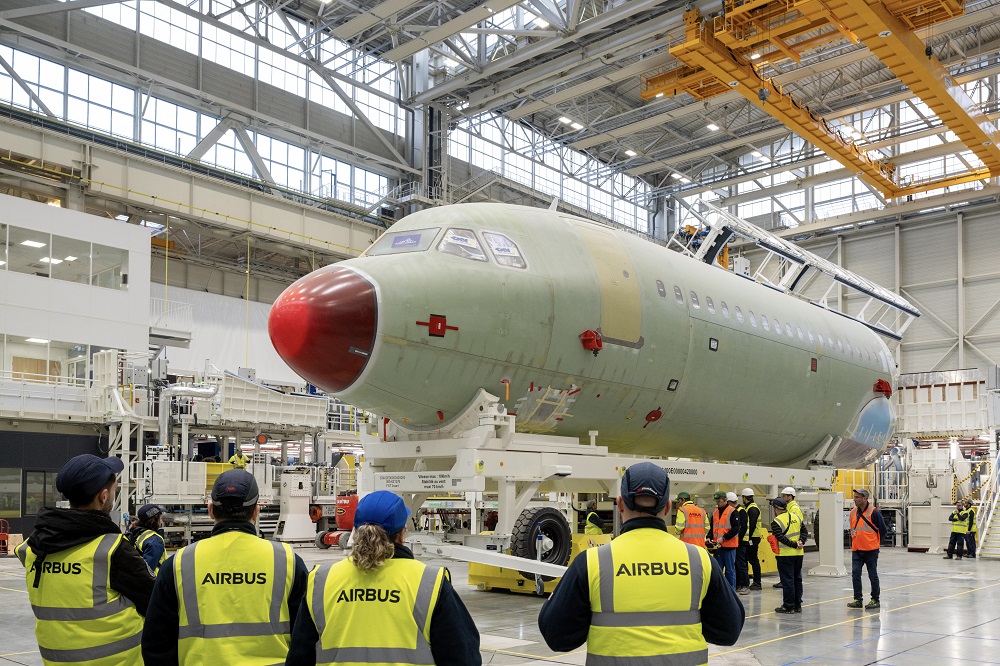
As India’s skies grow busier and the aviation sector races toward record-breaking expansion, global aerospace giants are eyeing the subcontinent not just as a market—but as a manufacturing hub.
With surging aircraft orders from Indian carriers and rising geopolitical emphasis on self-reliance, Airbus is reportedly evaluating a proposal to establish a Final Assembly Line (FAL) in India, setting the stage for a major shift in global aviation production. According to report from Idrw.org.
India Pushes for Self-Reliance in Aerospace Manufacturing
Driven by the government’s “AatmaNirbhar Bharat” (self-reliant India) mission, the Civil Aviation Ministry is actively working to bring aircraft manufacturing to Indian soil. In this context, Airbus is seriously considering a proposal to establish a Final Assembly Line (FAL) in India—an initiative aligned with the country’s goal of reducing dependency on foreign-built aircraft.
The timing couldn’t be more strategic. With IndiGo and Air India placing combined orders for over 1,200 aircraft, Airbus sees a golden opportunity to deepen its industrial footprint while responding to local demand more efficiently.
Airbus Faces Rivalry from Embraer and Domestic RTA-90 Project
However, Airbus isn’t alone in its pursuit. Brazilian aerospace firm Embraer has also expressed interest in setting up a local FAL to produce its E175 regional jets, intensifying the competition. India’s growing aviation market has become a battleground, and the race to localize production is heating up.
Further complicating the decision is India’s own RTA-90 program, which the Civil Aviation Ministry is reportedly considering reviving. Spearheaded by the National Aerospace Laboratories (NAL), the RTA-90 aims to develop an indigenous regional aircraft tailored for Tier-II cities, tapping into the vast local supplier base. If greenlit, it could challenge both Embraer and Airbus by offering a fully domestic alternative.
Airbus and Tata Group Already Advancing Helicopter FAL in India
Parallel to these developments, Airbus Helicopters and Tata Advanced Systems Limited (TASL) have announced plans to build a Final Assembly Line for helicopters in India—the first private-sector helicopter manufacturing plant in the country.
The facility will assemble the H125 light utility helicopter, not only for Indian customers but also for export to neighboring countries. From avionics and dynamic components to engine integration, the plant will handle a full spectrum of production tasks. Airbus expects the FAL to be fully operational within 24 months, with the first “Made in India” H125 helicopters to be delivered in 2026.
This initiative not only strengthens Airbus’ relationship with Tata but also serves as a proof-of-concept for future fixed-wing aircraft assembly lines.
Strategic Stakes and Global Supply Chain Implications
Airbus already has a strong industrial partnership in India through its C295 military transport aircraft program, also in collaboration with Tata. Expanding this partnership with a commercial aircraft FAL would further solidify Airbus’s long-term role in India’s aviation ecosystem.
But the decision isn’t simple. Airbus must carefully weigh immediate production pressures, rival offers, and India’s domestic ambitions. Choosing the right location, partner, and aircraft model will be crucial in determining the long-term success of a potential Indian FAL.
Conclusion: The Future of Aviation May Be Built in India
As negotiations continue, the outcome could reshape not only India’s role in the global aviation supply chain but also the strategies of aerospace giants navigating this high-growth market. Whether Airbus, Embraer, or India’s own RTA-90 wins the race, one thing is clear: India is not just flying more—it’s preparing to build what it flies.



