
Aviation
US Air Force Outlines 10-Year Plan to Expand Fighter Fleet to 1,500 Jets
America’s air superiority is being tested—the Air Force says it needs 1,500 more fighters in the next decade to stay ahead in the race for the skies.

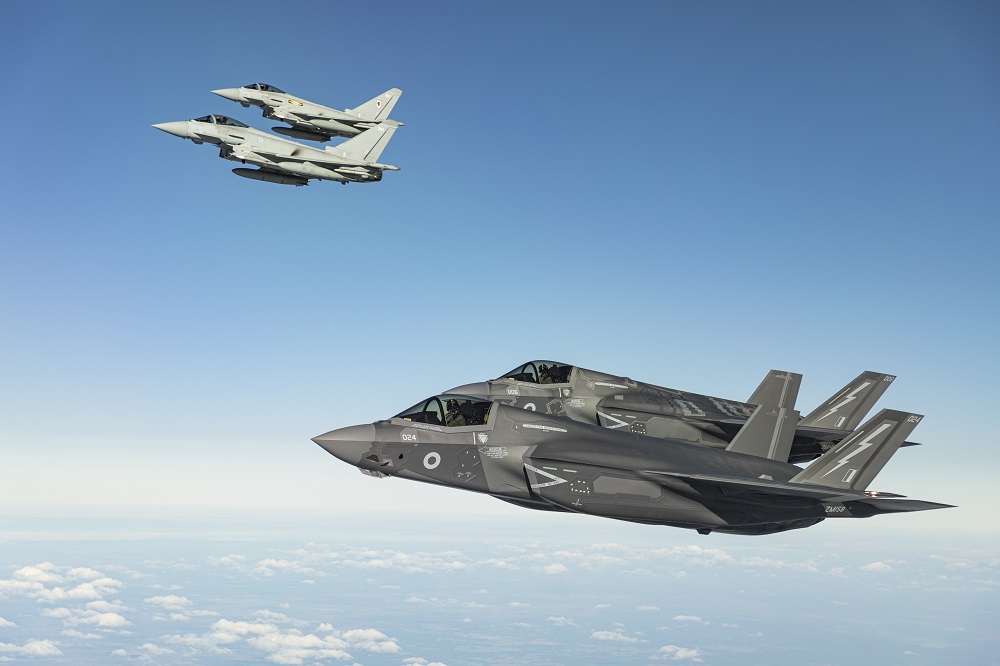
In an era where air superiority can decide the fate of entire wars, the United States Air Force is sounding the alarm.
Facing rapid modernization from global rivals like China and Russia, the USAF says its current fleet simply won’t cut it for the battles of tomorrow. To stay ahead, America’s air arm needs more jets, faster production, and smarter integration.
Let’s dive into the new 10-year plan that could reshape U.S. air power for the next generation.
According to a report obtained by Inside Defense, the U.S. Air Force has outlined a bold goal — it needs over 1,500 combat-ready aircraft in the next decade to meet its national defense requirements.
The unclassified 10-year fighter roadmap calls for a fleet of 1,558 operational fighters, a major leap from the 1,271 jets projected for fiscal year 2026. Achieving that target means ramping up production of both the F-15EX Eagle II and the F-35A Lightning II, while continuing to modernize the Air Force’s existing aircraft.
The service plans to not only boost fifth-generation production but also accelerate development of the Next Generation Air Dominance (NGAD) platform — often referred to as the F-47 — the U.S. Air Force’s sixth-generation stealth fighter.
Over the next decade, the Air Force aims to procure more F-15EX, F-35A, and NGAD aircraft to strengthen homeland defense and meet priorities outlined in the Interim National Defense Strategic Guidance.
If fully realized, the plan could place around 1,369 combat-capable fighters on the ramp by early 2030, marking one of the most ambitious fleet expansions in recent history.
[Balancing Growth and Retirement]
To make room — and funding — for these advanced platforms, the Air Force will retire older, less capable aircraft. All remaining A-10 Thunderbolt IIs are set to retire by 2026, and even some F-22 Raptors—once the pinnacle of stealth dominance—will begin to phase out as newer platforms take over.
Meanwhile, the Air National Guard will retain 24 fighter squadrons beyond 2045, gradually transitioning to a fleet centered around the F-15EX, F-16, and F-35.
[Shrinking Advantage, Rising Urgency]
Despite still holding decisive advantages in combat integration, logistics, and sixth-generation development, U.S. dominance is being challenged. Rivals are catching up faster than anticipated, narrowing the margin of superiority the U.S. has enjoyed for decades.
Analysts warn that to maintain its edge, Washington must accelerate fifth-gen fighter output, expand munitions production, deploy loyal-wingman drones, and train pilots for complex, jammed, data-heavy battlefields where speed and connectivity matter as much as stealth.
[Conclusion – The Race for Air Dominance]
The next decade will be crucial. The United States and its allies are not yet outmatched—but they are being matched faster than ever before. What happens in these next ten years will determine whether air dominance remains an American advantage or evolves into a contested, constantly shifting balance of power.
Because in modern warfare, the nation that owns the skies — owns the future.
For more aerospace news, check out JetlineIntel.
Want to buy aviation merchandise? Visit Jetshop.in.
To read Jetlinemarvel’s updates on Google News, head over to Google News.
