
Aviation
Russia and China Set to Showcase These Next-Gen Aircraft at Dubai Airshow
Dubai Airshow 2025 will spotlight Russia’s upgraded Yak-130M, Su-57 fighter, and China’s COMAC C919 — marking a new chapter in global aerospace competition.

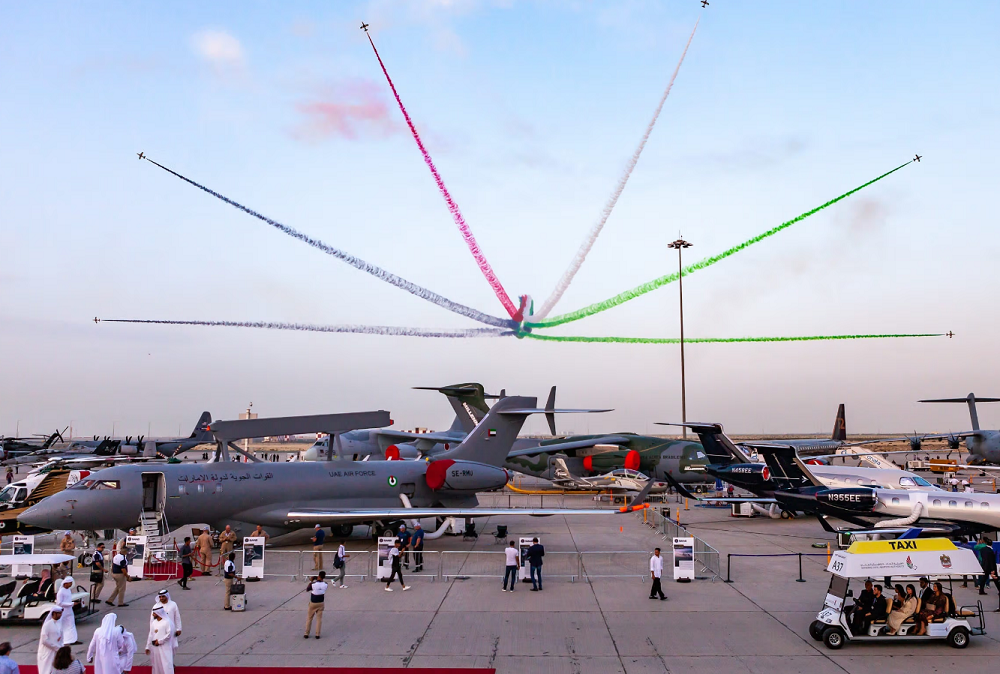
As the Dubai Airshow 2025 prepares for takeoff from November 17 to 21, the global aerospace stage is set for a stunning display of aviation innovation and rivalry.
Held every two years, this prestigious event brings together the world’s leading aerospace giants — showcasing everything from futuristic fighter jets to next-generation passenger aircraft. This year’s spotlight shines brightly on Russia and China, both eager to assert their growing influence in global aviation.
Russia’s state defense conglomerate Rostec has confirmed an impressive lineup for Dubai Airshow 2025, including the international debut of the upgraded Yakovlev Yak-130M advanced jet trainer, the Su-57E fifth-generation fighter, and the Kamov Ka-52 attack helicopter.
Also joining the display will be the Ansat-M light helicopter, featuring new VK-650V engines developed under Moscow’s import substitution program.
According to Rostec, the Yak-130M has undergone significant modernization — featuring upgraded avionics, enhanced weapon systems, and the ability to operate in all weather conditions. The aircraft is optimized for training pilots of fourth- and fifth-generation fighters, while also capable of light strike missions, making it a versatile platform for export markets.
Rostec boldly claims that its Su-57 remains “the world’s only fifth-generation fighter proven in large-scale combat operations,” directly contrasting Western platforms such as the F-35, which has seen limited operational deployments by the US, Israel, and the UK.
Meanwhile, China’s COMAC is making headlines of its own. The company will showcase its C919 — Beijing’s first homegrown passenger jet designed to challenge the Airbus A320neo and Boeing 737 MAX.
Equipped with CFM LEAP-1C engines, fly-by-wire controls, and advanced composite materials, the C919 offers 20% better fuel efficiency, lower maintenance costs, and reduced emissions. Seating 158 to 192 passengers, it promises a cost-effective alternative for airlines in Asia, the Middle East, and Africa.
Together, Russia and China’s high-profile participation underscores a shifting balance in global aerospace — as emerging powers seek to redefine aviation’s future beyond Western dominance.
For more aerospace news, check out JetlineIntel.
Want to buy aviation merchandise? Visit Jetshop.in.
To read Jetlinemarvel’s updates on Google News, head over to Google News.
