
Defence
Turkey Unveils New GÜÇHAN Engine That May Power KAAN Fighter in the Future
Turkey unveils the powerful GÜÇHAN jet engine, showcasing advanced propulsion technology, prototype progress, and its strategic role in the KAAN fifth-generation fighter program and future aerospace independence.

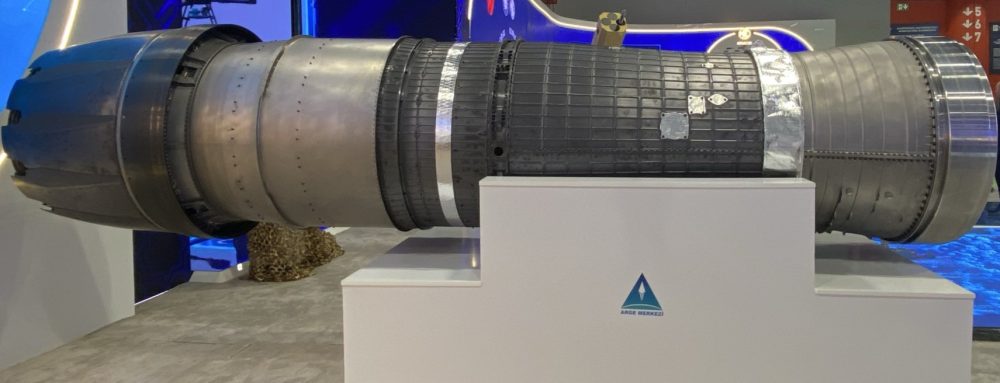
Turkey has taken a significant step in its military aviation journey with the unveiling of the GÜÇHAN fighter jet engine — a project that reflects far more than technological progress. It signals Ankara’s growing ambition to achieve full independence in advanced aerospace propulsion systems.
Revealed at SAHA Expo 2026 in Istanbul by the Turkish Ministry of National Defense’s R&D Center, GÜÇHAN is being positioned as a potential cornerstone for the country’s next-generation KAAN stealth fighter program.
High-Thrust Performance in a Competitive Class
One of the most striking aspects of GÜÇHAN is its reported performance. The engine is said to produce approximately 42,000 pounds of thrust with afterburner, placing it in the same league as some of the most advanced fighter jet engines in the world, including those powering fifth-generation platforms like the F-35-class engines.
This level of output highlights Turkey’s intent to compete in the upper tier of military aviation propulsion technology, where only a handful of countries currently operate.
Design Philosophy: Built for Combat Supremacy
GÜÇHAN is designed as a low-bypass turbofan engine, optimized specifically for supersonic flight, agility, and extreme combat conditions. Unlike commercial engines that prioritize fuel efficiency, this design focuses on raw performance, acceleration, and operational flexibility in high-threat environments.
Prototype Development and Testing Phase
According to Turkish defense officials, six prototype engines have already been produced. The next critical phase — qualification and calibration testing — is expected to begin later in 2026.
This stage will be essential in determining whether the engine can transition from a prototype concept into a reliable, flight-ready system.
Breakthrough in Turbine Blade Technology
Perhaps the most notable claim surrounding GÜÇHAN is Turkey’s reported success in developing single-crystal turbine blades domestically.
This is a major milestone in aerospace engineering.
Single-crystal turbine blades are among the most technically demanding components in modern jet engines, capable of withstanding extreme heat and mechanical stress. Only a small number of countries globally have mastered this manufacturing capability, making it a critical indicator of advanced propulsion expertise.
Role in the KAAN Fighter Program
GÜÇHAN is closely tied to Turkey’s KAAN fifth-generation fighter jet program. While early prototypes of KAAN are expected to rely on imported GE F110 engines, the long-term vision is to transition toward fully indigenous propulsion systems.
Alongside GÜÇHAN, Turkey is also developing another major engine program — the TF35000 through TEI — reflecting a dual-track strategy in achieving engine independence.
Strategic Drivers Behind Engine Development
Turkey’s push for indigenous jet engines has been shaped by geopolitical realities. Export restrictions, particularly following tensions related to the S-400 air defense system acquisition, have highlighted vulnerabilities in relying on foreign propulsion technologies.
In response, Turkey has accelerated investment in a broader aerospace ecosystem, including drone engines, helicopter turboshafts, missile propulsion systems, and now high-thrust fighter jet engines.
The Engineering Challenge Ahead
Despite the progress, developing a modern fighter jet engine remains one of the most complex engineering challenges in the world.
A prototype is only the beginning. True operational capability requires years of rigorous testing, including extreme temperature endurance, vibration resistance, bird strike testing, and long-duration reliability trials.
History shows that even advanced aerospace nations have struggled with this process. Programs like India’s Kaveri engine, China’s early WS-series developments, and several Russian engine initiatives faced long timelines before achieving maturity.
Beyond the Engine Core: Hidden Complexities
Full independence in jet propulsion involves far more than the engine core itself. Turkey must also master:
- Advanced thermal coatings
- FADEC (digital engine control systems)
- High-precision manufacturing
- Thermal management systems
- Long-term maintenance and overhaul infrastructure
Without these supporting technologies, achieving sustained operational readiness becomes difficult.
The Road to the 2030s
Experts widely believe that Turkey’s journey toward complete engine independence will extend well into the 2030s. Early KAAN fighters are likely to continue using imported engines, while domestic alternatives gradually mature and integrate into future production blocks.
Conclusion: A Symbol of Long-Term Ambition
GÜÇHAN represents more than just a new engine — it represents a strategic vision. It signals Turkey’s intent to move from assembly-based defense production toward full-scale technological sovereignty in one of the most difficult fields of aerospace engineering.
However, the ultimate measure of success will not be prototype announcements or exhibition displays. It will be determined by real-world performance — flight hours, operational reliability, and the ability to sustain a fully indigenous fighter jet engine in active service.
If successful, GÜÇHAN could mark one of the most defining milestones in Turkey’s modern defense industry evolution.
