
Defence
Could Russia’s AL-51 Engine Power India’s AMCA?
The AL-51 offers significantly more thrust than the GE F414 and could boost AMCA’s performance, but integrating the Russian engine would require major design changes, additional testing, and could impact the fighter’s development timeline.

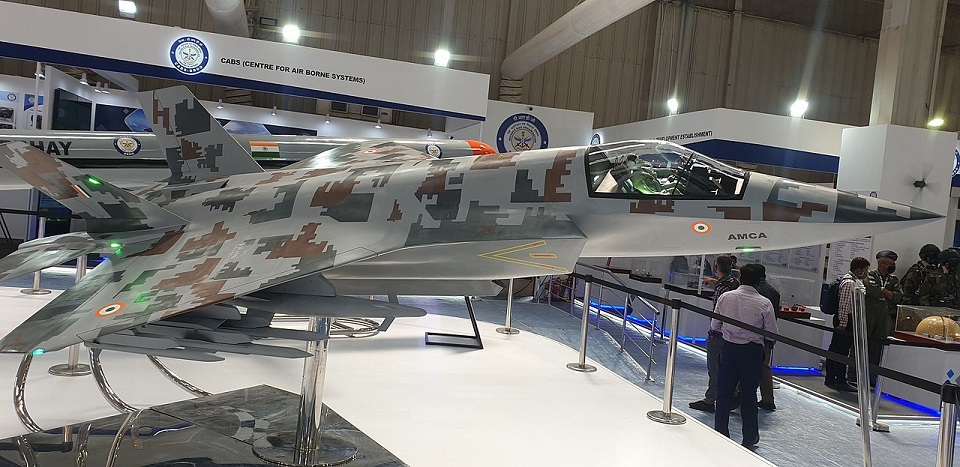
What if India’s Advanced Medium Combat Aircraft, or AMCA, was powered not by the American GE F414 engine, but by Russia’s powerful new AL-51 engine?
It’s a question that has generated significant discussion among defense analysts and aviation enthusiasts.
At first glance, the idea sounds very attractive. The AL-51, also known as Izdeliye 30, is Russia’s next-generation fighter engine developed for the Su-57 stealth fighter. It is designed to deliver exceptional performance, with estimates suggesting up to 162 to 177 kilonewtons of thrust with afterburner. That’s substantially more powerful than the GE F414 engine currently selected for the AMCA Mk1.
The AMCA’s first version is expected to fly with two GE F414-INS6 engines, each producing around 98 kilonewtons of thrust. This engine has already been chosen because it is available, proven, and helps keep the AMCA program on schedule.
However, the AL-51 is a much larger and heavier engine. While the AMCA’s design reportedly includes some growth potential for future engine upgrades, integrating the Russian powerplant would not be a simple plug-and-play process.
Engine bays would likely need modifications. Air intakes and exhaust sections could require redesigns. Engineers would also need to recalibrate the aircraft’s center of gravity and strengthen certain structural components to accommodate the larger engine.
In short, fitting the AL-51 into the AMCA is technically possible, but it would involve significant engineering work, extensive testing, and additional development costs.
So why consider it at all?
The answer is simple—performance.
A more powerful engine could provide better acceleration, improved climb rates, greater payload capacity, and potentially even allow for a heavier and more capable AMCA variant in the future. Some versions of the AL-51 family are also expected to feature advanced stealth-optimized nozzles, helping reduce radar and infrared signatures.
Russia has reportedly proposed engine solutions based on AL-51 technology, including the 177S variant, for India’s future fighter programs. Such an arrangement could potentially involve technology transfer and joint development opportunities as well.
But there is a catch.
India’s current roadmap is focused on the GE F414 for AMCA Mk1 and an indigenous or jointly developed engine in the 110 to 120 kilonewton class for AMCA Mk2. Switching to the AL-51 at this stage could introduce delays and complicate an already ambitious fifth-generation fighter program.
For now, the AL-51 remains an interesting alternative rather than a confirmed option. The engine certainly offers impressive performance, but integrating it into the AMCA would require balancing capability gains against additional cost, complexity, and development time.
So, while an AL-51-powered AMCA is technically feasible, India’s priority remains clear—get the AMCA flying on schedule with the F414, and then move toward a more advanced indigenous engine for future variants.
The question is, if Russia offers full technology transfer for the AL-51, should India consider it for AMCA Mk2? Let us know your thoughts in the comments below.



