
Aviation
Heroic airtankers are battling the Los Angeles wildfire.

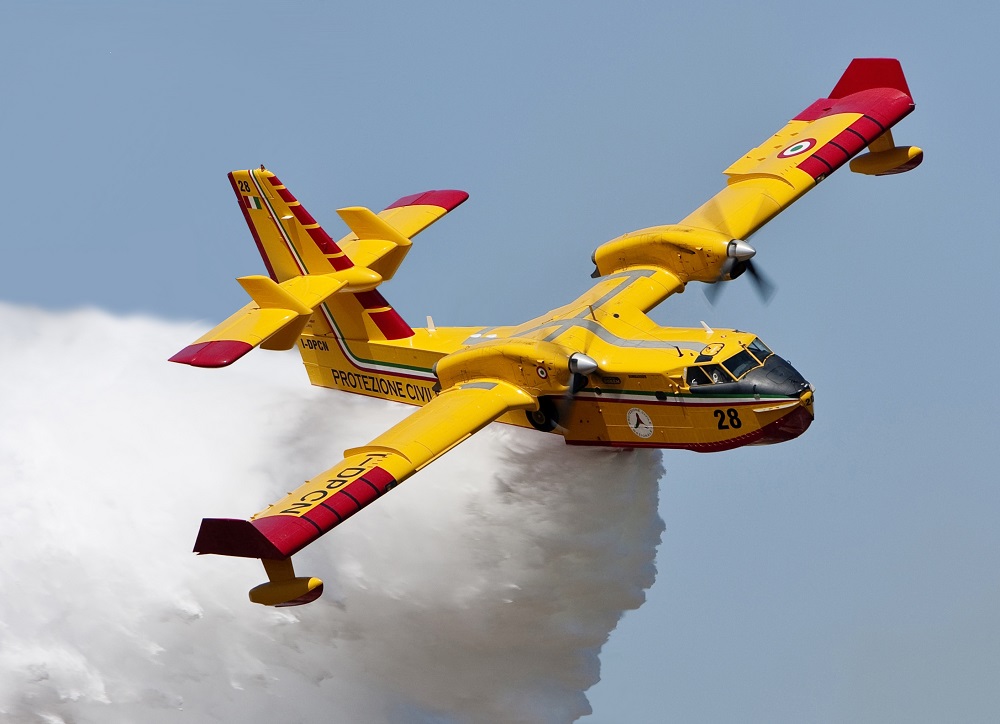
California, particularly Los Angeles, is currently grappling with its first wildfire of the season, which is rapidly spreading across the region, destroying thousands of homes and valuable properties.
Despite the heroic efforts of firefighters, the blaze continues to rage due to factors like climate change and strong winds exacerbating the situation. However, a few courageous heroes from the firefighting teams are on the ground, and aerial fighters are also being deployed to assist in the battle.
This article will highlight some of the best firefighting aircraft that have made a significant impact in reducing wildfires.
Canada air CL415 Super Scooper
One of the most renowned firefighting aircraft is the Canadair CL-415, also known as the “Super Scooper.” This specialized amphibious aircraft is designed specifically for aerial firefighting.
Manufactured by Canadair (later Bombardier and Viking Air), the CL-415 is an upgraded version of its predecessor, the CL-215, and is known for its exceptional wildfire-fighting capabilities.
The CL-415 is equipped with large tanks that can hold up to 6,137 liters (1,621 gallons) of water or fire retardant. Its remarkable ability to scoop water directly from lakes or oceans in just 12 seconds makes it highly effective in rapidly suppressing fires.
Top 6 Best Airplane Movies to Watch on Netflix
This aircraft can operate on both land and water, which allows it to access remote areas and water bodies near wildfire zones that might otherwise be difficult to reach.
Powered by two Pratt & Whitney Canada PW123AF turboprop engines, the CL-415 delivers reliable and robust performance in tough conditions. It has an operational range of about 2,500 kilometers (1,550 miles), enabling it to support extended firefighting missions without the need for frequent refueling.
With a crew of two, the aircraft’s cockpit offers excellent visibility, while advanced avionics and systems enhance navigation and safety during complex firefighting operations.
C130 Herculus Aircraft
In response to a massive wildfire near Los Angeles, the U.S. Air Force has activated its specially modified C-130 Hercules aircraft for firefighting missions. Originally a military cargo plane, the C-130 has been modified to combat wildfires in affected regions.

Operated by a propeller system, these aircraft are readily available and can be quickly deployed. They load fire retardant from the ground and operate in fire-affected areas, making them a crucial asset in emergency firefighting efforts.
Riyadh Air Receives First Boeing 787 Dreamliner but Won’t Carry Passengers
Equipped with the Modular Airborne Firefighting System (MAFFS), these C-130s are designed to tackle large-scale wildfires that threaten homes, infrastructure, and ecosystems. The MAFFS unit can hold up to 3,000 gallons of water or fire retardant, enabling the aircraft to perform precise, high-volume drops over fire lines, significantly slowing the fire’s spread.
The C-130s can drop fire retardant from altitudes of 150 to 200 feet above ground level, allowing for accurate targeting of fire lines. Each aircraft can conduct multiple sorties daily, providing rapid support to local firefighting efforts where it’s needed most. These aircraft are a vital component of coordinated efforts with local agencies to combat the ongoing wildfire.
DC 10 Very Large Airtanker
These large airtankers, known as VLATs (Very Large Airtankers), are capable of carrying significant loads of fire retardant, allowing them to deliver thousands of gallons in a single drop. Due to their size, VLATs are less maneuverable compared to smaller airtankers.

They typically drop fire retardant from at least 250 feet above the vegetation. One of the largest aircraft used in firefighting today is the DC-10, which follows the B747 that was once used for similar purposes. While only a few DC-10s are currently in operation, they are still critical to firefighting efforts in certain regions.
This Airline Now Accepts Surfboards and Bicycles & Other Sports Equipment
The DC-10, which supports wildland firefighters on the ground, can deliver up to 9,400 gallons of fire retardant at once. Managed by the U.S. Forest Service, the VLAT contracts help ensure that these aircraft are available for large-scale fire suppression.
The DC-10 VLAT can carry up to 12,000 gallons (45,400 liters) of fire retardant, far exceeding the capacity of standard air tankers. Its massive capacity reduces the number of sorties required to suppress extensive fires, making it highly effective for covering long stretches of fire lines.
Equipped with a custom-designed constant-flow tank system, the aircraft can release its entire load in one pass or conduct segmented drops for precise targeting. The fire retardant is released from low altitudes, typically between 200-300 feet above the ground, ensuring the accuracy of the drops.
Thanks to its jet engine, the DC-10 can travel at speeds up to 580 mph (933 km/h), allowing it to reach wildfire zones quickly. With a range of approximately 3,800 miles (6,115 km), the DC-10 is ideal for deployment in remote areas or even international locations, providing fast, efficient support for firefighting operations.
Los Angeles Fire Department (LAFD) helicopters
Helicopters play a crucial role in firefighting operations, particularly in California, where they are essential for quickly accessing wildfire zones and performing precise water drops. These helicopters are deployed in short phases, rapidly carrying and dropping water on the affected areas to help combat the fire.
The Los Angeles Fire Department (LAFD) operates a top-tier Air Operations Unit based at Fire Station 114 on the grounds of Van Nuys Airport (KVNY). The LAFD’s helicopter fleet consists of five medium-duty and two light-duty helicopters, staffed around the clock by a team of pilots, aeromedics, and helitac personnel.
The multi-mission profile of the LAFD Air Operations includes not only brush fire suppression but also air ambulance transport, high-rise fire response, and hoist rescues, making them an integral part of the city’s firefighting and emergency response capabilities. This dedicated fleet ensures that the LAFD can respond quickly and effectively to a variety of challenges during wildfire seasons.
