
Aviation
FAA Testing Underway: Boeing 777X Edges Closer to Approval

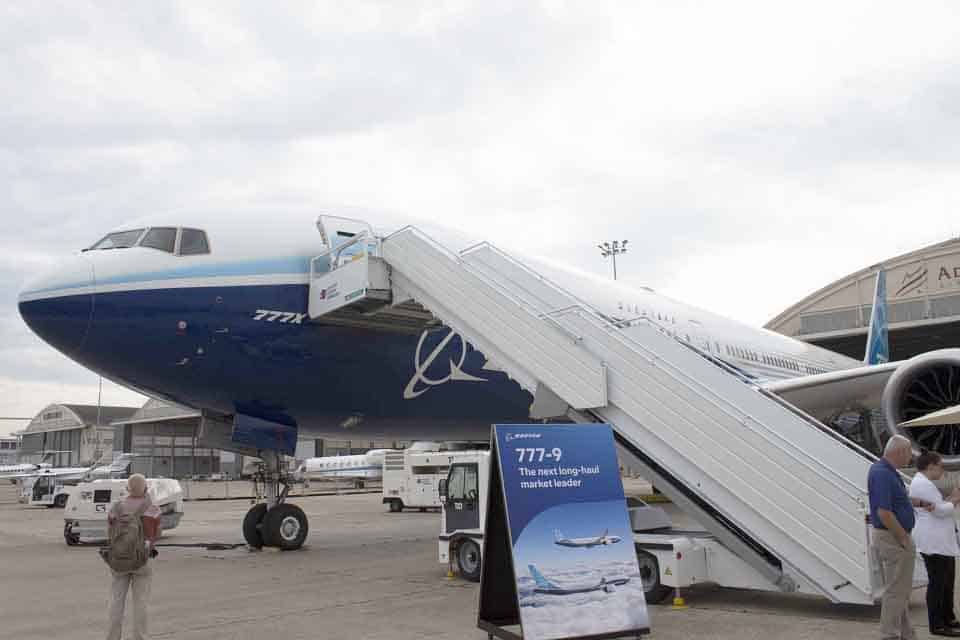
Boeing is finally bringing good news to its fans as the 777X moves into the final stages of certification. So far, the aircraft has not encountered any major issues, according to the FAA.
Testing continues under various conditions, including different weather scenarios and extreme structural evaluations, all of which have been successfully completed.
Boeing resumed flight testing of the 777X in January 2025 after a pause that began in August 2024, when a structural issue with the thrust links was discovered during routine maintenance on the test fleet.
This issue involved a severed thrust link on one aircraft and cracks found in others, prompting Boeing to ground all four 777-9 test aircraft. The company replaced the affected components and conducted additional rework, with testing resuming on January 16, 2025, when a 777-9 test plane completed a flight from Boeing Field in Seattle to Moses Lake, Washington.
This marked a significant step forward after a five-month hiatus, though FAA representatives were not onboard for that specific flight, indicating it was a functional check rather than a certification flight.
Since resuming, the test program has been active. Posts on X indicate that test aircraft WH001 (N779XW) and WH002 (N779XX) have been involved in ongoing flights:
- WH001 has been notably busy, conducting FAA certification test flights. On March 11, it flew to Clinton-Sherman Airport in Oklahoma for brake testing, arriving on March 12. On March 14, it underwent crosswind testing at Lubbock Airport, facing extreme winds of 40-60 knots to evaluate its performance under challenging conditions. As of March 20, WH001 was again at Clinton-Sherman Airport for further testing with the FAA.
- WH002 was active on March 17, heading to Moses Lake for testing, showing that multiple test aircraft are now operational. Boeing’s focus remains on achieving certification for the 777-9, the first variant of the 777X family, with a current target for first deliveries in 2026.
- The company secured Type Inspection Authorization (TIA) from the FAA in July 2024, allowing certification flights with FAA personnel onboard to begin, though the August grounding delayed progress.
- The resumption of testing in 2025, combined with the recent activity of WH001 and WH002, suggests Boeing is pushing to complete the rigorous flight test program, which has already logged over 1,200 flights and 3,500 hours prior to the latest updates.
However, challenges persist. The 777X program, initially launched in 2013 with a planned 2020 entry into service, has faced multiple delays due to technical issues (e.g., GE9X engine problems, thrust link failures), regulatory scrutiny, the COVID-19 pandemic, and a machinists’ strike in 2024.
These setbacks have pushed the timeline, with Boeing incurring a $2.6 billion pre-tax earnings charge in 2024 due to the delays. Customer airlines like Lufthansa ( expecting delivery in summer 2026), Emirates, and Cathay Pacific (both now anticipating 2027 or later) have expressed frustration, reflecting ongoing uncertainty about the exact entry-into-service date.
In summary, the latest updates show Boeing actively conducting test flights with FAA involvement as of mid-March 2025, focusing on critical performance aspects like braking and crosswind handling. While progress is evident, the certification timeline remains fluid, with 2026 as the current goal, though further delays remain a possibility given the program’s history.
The Boeing 777X was recently spotted at Clinton Sherman Airport undergoing landing gear brake tests as part of its FAA certification process. These tests ensure that the aircraft’s braking system meets the required safety and performance standards.
Brake testing verifies the system’s reliability, stopping distance, and integration with the aircraft’s advanced technology, ensuring safe operations under various conditions. As of March 24, 2025, the Boeing 777X testing program has made significant progress.
Before entering commercial service, every new aircraft must undergo extensive testing of its major components, including the fuselage, engines, avionics, wings, radar, landing gear, interior lighting, vibration resistance, sound levels, power generation, and more. These evaluations are crucial for obtaining type certification.
Although the 777X is an upgraded version of the Boeing 777, it features significant design changes, including a redesigned fuselage, extended wings, and the largest engines ever fitted to a twin-engine jet. These enhancements improve efficiency, range, and durability.
Following Boeing’s past quality issues with the 737 MAX, the FAA has implemented stricter certification requirements. Boeing continues to coordinate with regulatory authorities to ensure compliance.
Despite delays, many airlines have maintained confidence in the 777X. Carriers like Air India and Korean Air have even increased their orders, anticipating the aircraft’s entry into service.
Currently, Boeing aims to launch the 777X in the first quarter of 2026, provided testing and certification proceed as planned.
What are your thoughts on the Boeing 777X’s development? Let us know in the comments!
