
Tech
China is solving F-22’s stealth coating cracks with 3,000-year-old silk weaving tech
China’s innovative approach could provide a strategic edge by reducing maintenance costs and increasing operational readiness.

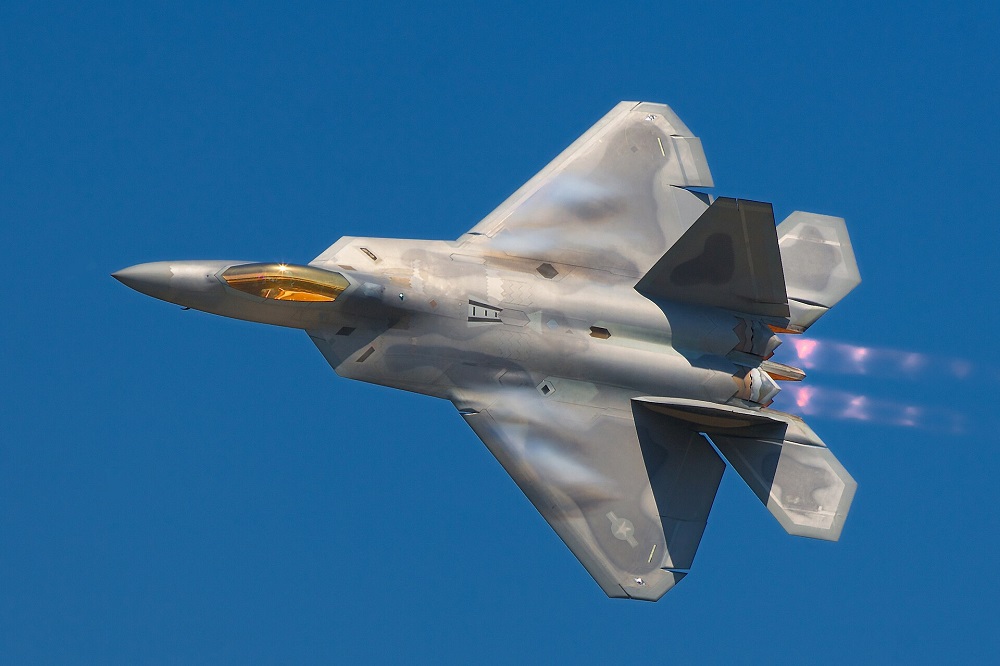
China is rapidly advancing technologically, innovating at an unprecedented pace, experimenting with new ideas, and testing groundbreaking solutions. Now, it is leveraging ancient traditional methods to enhance modern stealth technology.
According to reports from Chinese sources, researchers have adapted the 3,000-year-old jacquard weaving technique to solve the long-standing issue of stealth coating degradation.
Unlike conventional polymer-based radar-absorbent materials (RAM) used in aircraft like the F-22 Raptor, China’s Chengdu J-20 stealth fighter reportedly incorporates a dual-layer composite fabric woven with quartz fibers and stainless steel yarns.
Key Advantages of China’s Jacquard-Woven Stealth Material
This cutting-edge approach provides several benefits over conventional stealth coatings:
✅ Stronger & More Durable – Resists delamination and maintains integrity in extreme conditions, including high humidity and sandstorms.
✅ Superior Radar Absorption – Absorbs 90.6% of radar waves across the 8–26 GHz spectrum, significantly enhancing stealth efficiency.
✅ Longer Service Life – Reportedly lasts 18 months, compared to the F-22’s RAM, which requires reapplication every three weeks.
✅ Cost-Effective – Reduces maintenance expenses by 75%, lowering the high upkeep costs associated with stealth aircraft.
In contrast, the F-22’s RAM deteriorates quickly under extreme conditions such as high-speed flight, sand erosion, and coastal humidity.
Maintenance logs reveal that the U.S. Air Force spends over $60,000 per flight hour and requires RAM reapplication every three weeks, resulting in high costs and frequent maintenance downtime. Meanwhile, China’s jacquard-woven stealth material reportedly extends service life to 18 months, reducing costs by 75%.
Historically, jacquard weaving dates back to the Shang dynasty (1600–1046 BC) and was later refined during the Han dynasty (206 BC–220 AD). Ancient Chinese looms, capable of intricate designs, were precursors to modern programmable textile machines.
By integrating conductive yarns into this woven structure, Chinese engineers have created a stealth material that not only absorbs radar waves efficiently but also withstands extreme environmental stressors.
Satellite imagery analyzed by defense experts suggests China is rapidly expanding its stealth aircraft production using this advanced material. With J-20 sorties increasing by 22% over the Taiwan Strait in 2024, China’s innovative approach could provide a strategic edge by reducing maintenance costs and increasing operational readiness.



