
Aviation
Faster Than Concorde? China Unveils COMAC C949 at Mach 1.6
COMAC C949, China’s latest supersonic airliner, promises ultra-fast travel with reduced sonic booms, aiming to compete with NASA’s X-59

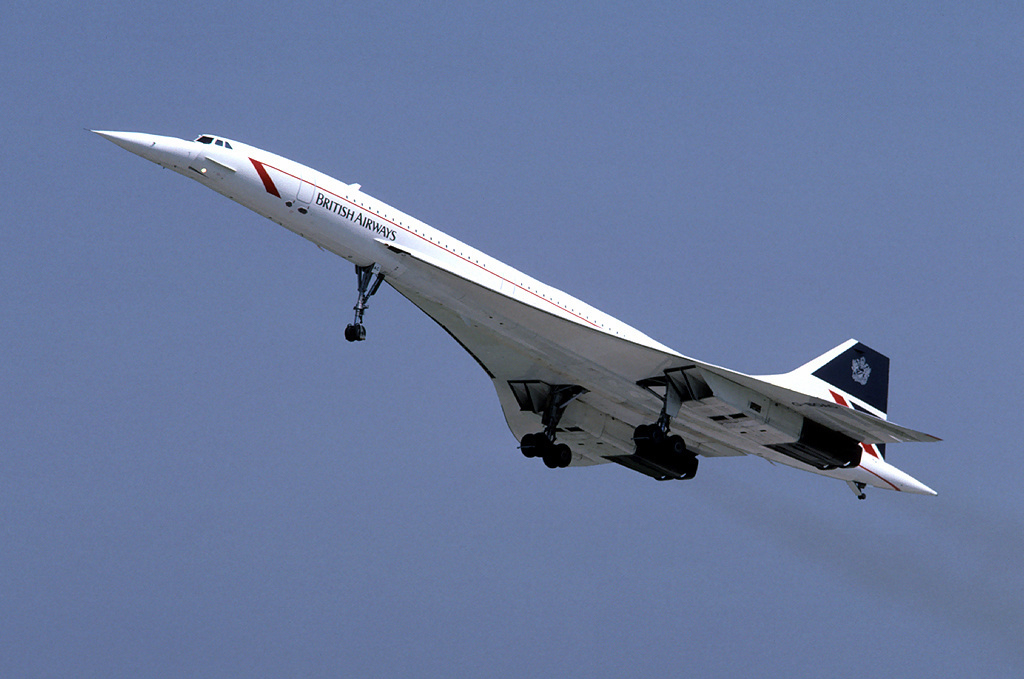
China is rapidly advancing its aviation sector, developing cutting-edge aircraft, fighter jets, and aerospace innovations.
Now, in a bold move to compete with supersonic projects like Boom Supersonic’s Overture, China has unveiled the COMAC C949—a supersonic airliner that promises to revolutionize high-speed travel.
A Supersonic Leap for China
The state-owned Commercial Aircraft Corporation of China (COMAC) has announced its plans for the C949, a next-generation supersonic passenger jet.
Designed to surpass the capabilities of the retired Concorde, this aircraft boasts an impressive range of 11,000 kilometers—50% farther than the Concorde’s 7,200 kilometers. One of the most groundbreaking advancements of the C949 is its significantly reduced sonic boom.
Producing only 83.9 Perceived Level in decibels (PLdB)—comparable to the noise level of a hairdryer—the jet’s quiet supersonic flight could overcome the regulatory challenges that have long restricted overland supersonic travel.
To understand the significance of the C949, one must look back at COMAC’s origins. Founded in 2008, COMAC was established with a national mission: to reduce China’s reliance on Western aircraft manufacturers like Boeing and Airbus.
The company first made headlines with the ARJ21, a regional jet, followed by the C919, a narrow-body airliner meant to compete with the Boeing 737 and Airbus A320. While these projects faced delays and technical hurdles, COMAC steadily matured its capabilities—laying the groundwork for more ambitious endeavors.
Now, with the C949, COMAC steps boldly into the high-tech world of supersonic passenger aviation, challenging not just commercial rivals, but global perceptions of Chinese aerospace innovation.
Competing on a Global Stage
The C949 will enter a race against other high-speed aviation projects, such as NASA and Lockheed Martin’s X-59. Experts suggest that whichever project succeeds in developing a commercially viable supersonic jet will redefine the future of air travel.
Reports indicate that COMAC aims to bring the C949 into service by 2049, coinciding with the 100th anniversary of the People’s Republic of China. The aircraft is expected to accommodate between 28 and 48 passengers in a premium, business-class-style configuration.
With its extended range, the C949 will enable ultra-fast global travel, making routes like Shanghai (PVG) to Los Angeles (LAX) possible in just five hours.
Market Potential and Future Prospects
Wu’s research team estimates that around 45 million passengers could benefit from supersonic travel annually—about 1% of global air travelers. Initially, flights will operate on trans-Pacific routes over oceans to mitigate noise concerns and regulatory limitations.
Innovative Aerodynamic Design
The C949 incorporates cutting-edge engineering features to minimize noise and improve efficiency:
- A shape-shifting fuselage with a curved “reverse-camber” midsection to weaken shock waves and delay sonic boom formation.
- A long, needle-like nose that splits the leading shock wave into three softer pulses.
- Special aerodynamic bulges near the engines to scatter exhaust turbulence and further reduce noise.
- An artificial intelligence-powered control system to manage the aircraft’s complex aerodynamics at high speeds.
Powerful Engineering and Propulsion
The C949 will be powered by twin adaptive-cycle turbofan engines, allowing it to cruise at Mach 1.6 in “low-boom” mode or Mach 1.7 in “eco” mode at an altitude of 16,000 meters. To maintain stability during flight, the aircraft will feature a dynamic fuel system that redistributes 42,000 kilograms of fuel across seven tanks to optimize balance.



