
Aviation
Boeing Moves Closer to Certification with All 4 777X Test Flights
Boeing’s 777X enters the final stages of certification, with all four test aircraft contributing to rigorous flight testing under varying conditions.

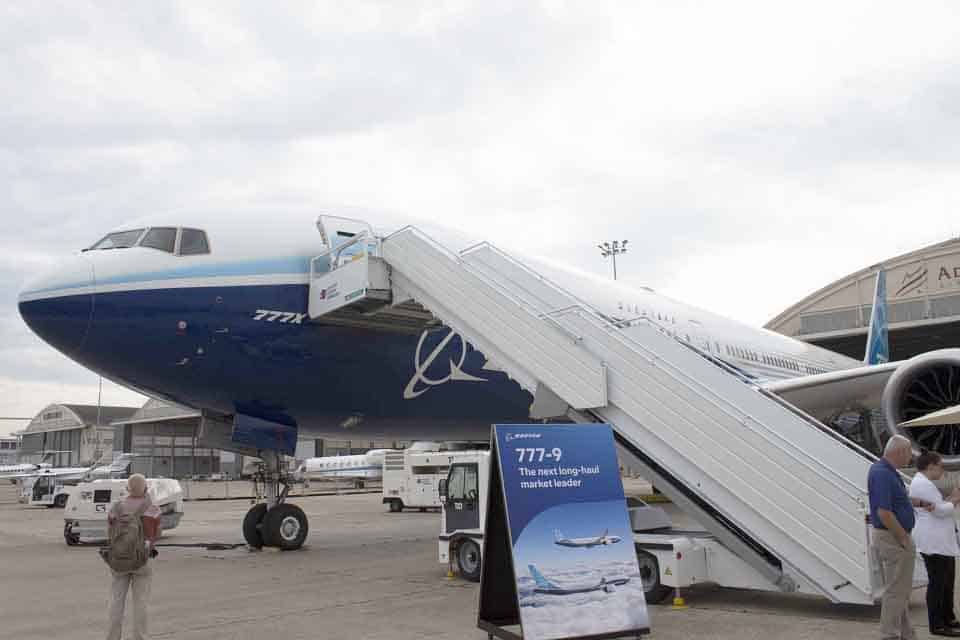
Boeing is finally delivering exciting news to aviation enthusiasts as the 777X enters its final stages of certification. After months of rigorous testing, the aircraft has remained largely trouble-free, with no major issues reported, according to the FAA.
Now, with all four test aircraft actively involved, the company is one step closer to making the 777X a reality for the world’s airlines.
The flight testing of the 777X is in full swing, with Boeing utilizing all four of its dedicated test aircraft in various phases of the certification process. Testing continues under a variety of conditions, including different weather scenarios and extreme structural evaluations, and so far, everything has gone according to plan.
A Steady Path Toward Certification
Flight testing officially resumed on January 16, 2025, with a 777-9 aircraft taking off from Boeing Field in Seattle and heading toward Moses Lake, Washington. Since then, Boeing has made steady progress, with no major technical setbacks as it works toward completing the certification process.
On April 13, 2025, Boeing reactivated its fourth 777X test aircraft, WH004, registered N779XZ, at Seattle’s Paine Field International Airport (PAE). The aircraft’s transponder was activated under the callsign ‘BOE777,’ and the flight testing resumed with impressive precision. This marks the next step in the certification process, bringing the fourth test aircraft into play after the successful involvement of the first three.
Key Players in the 777X Test Fleet
Each of the four test aircraft plays a crucial role in ensuring the 777X meets all safety, performance, and reliability standards. Here’s a look at how each aircraft contributes to the certification journey:
WH001 (N779XW) – The System Specialist
This aircraft is responsible for testing a variety of systems, including avionics, brakes, flutter, icing conditions, stability and control, as well as low-speed aerodynamics. Its role is crucial in ensuring that the 777X’s fundamental systems are up to the highest standards.
WH002 (N779XX) – The Automation Expert
Focused on testing the auto-land system, this aircraft also evaluates ground effects and validates the aircraft’s stability and control. It plays a vital role in confirming that the 777X can handle complex automated operations safely and reliably.
WH003 (N779XY) – The Power Analyzer
This aircraft is dedicated to testing the auxiliary power unit (APU), checking avionics, measuring flight loads, and assessing propulsion performance. It’s critical in evaluating the aircraft’s overall performance and efficiency, especially with its power systems.
WH004 (N779XZ) – The Endurance Prover
The fourth test aircraft is tasked with testing the Environmental Control Systems (ECS), ETOPS (Extended-range Twin-engine Operational Performance Standards) capabilities, noise compliance, and overall system reliability. It plays a key role in ensuring that the aircraft meets all the stringent requirements for long-haul operations.
Moving Closer to the Future of Long-Haul Travel
With each test aircraft fulfilling a specific role, Boeing is ensuring that the aircraft will meet the highest performance, safety, and environmental standards. The boeing 777 promises to be a game-changer, offering unmatched efficiency, capacity, and reliability for airlines worldwide.
In the coming months, as the certification process progresses, we can expect further updates on the boeing 777 jet journey toward entering commercial service. Boeing’s dedication to rigorous testing will ensure that when the boeing 777 finally takes to the skies with passengers aboard, it will be ready for a smooth and groundbreaking future in aviation.
For more aerospace news, check out JetlineIntel.
Want to buy aviation merchandise? Visit Jetshop.in.
To read Jetlinemarvel’s updates on Google News, head over to Google News.



